


The Moon’s Frozen Treasure Chests
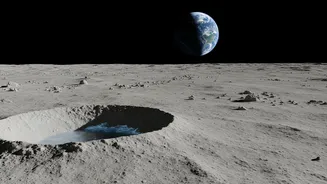
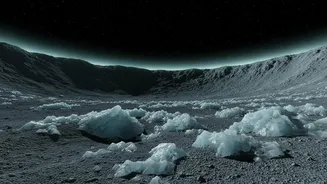
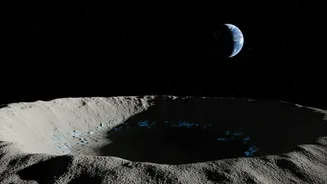
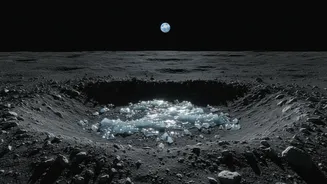
For decades, scientists speculated about water on the Moon. The idea seemed plausible: in the Moon's polar regions, the Sun hangs perpetually low on the horizon, casting permanent shadows into the bottom of deep craters. These areas, known as Permanently
Shadowed Regions (PSRs), are some of the coldest places in the entire solar system, with temperatures plunging below -160°C. At these frigid temperatures, they act as natural cold traps, preserving water ice for potentially billions of years. Missions like India's Chandrayaan-1 and NASA's Lunar Reconnaissance Orbiter (LRO) used remote sensors to confirm the presence of hydrogen and surface ice signatures, particularly in these polar PSRs. This was a monumental discovery, shifting the conversation from 'if' there is water on the Moon to 'how much' and 'in what form'.
Why Scratching the Surface Isn’t Enough
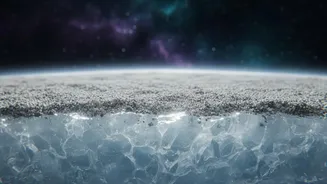
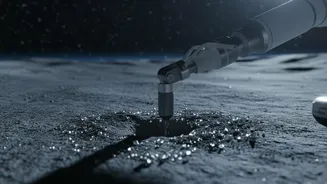
Observing from orbit has its limits. Spectrometers can detect water molecules on the immediate surface, and radar can hint at ice deposits, but these methods don't tell the whole story. They can't easily distinguish between a fine frost, ice mixed in with soil (regolith), or a thick, solid sheet of ice buried just a few centimetres or metres down. Recent studies have even suggested that surface ice might be less abundant than initially hoped, existing in small pockets rather than vast fields. This is why subsurface analysis is the critical next step. To truly assess the Moon's water resources, we need 'ground truth' data. This means deploying rovers and landers equipped with tools that can penetrate the lunar regolith. Techniques like drilling, ground-penetrating radar, and even seismic analysis, which measures how vibrations travel through the ground, are being developed to map out what lies beneath the dust.
From Presence to Practicality
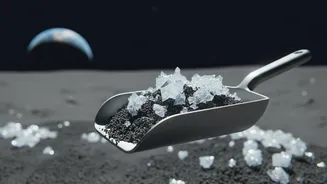
Subsurface soil analysis provides three key insights that orbital data cannot. First is quantity. A drill core can reveal the concentration of ice by weight and the thickness of the ice-bearing layer, allowing for a much more accurate estimate of the total water reserves in a given area. Second is form. Is the water present as fine ice crystals mixed with soil, which might be harder to extract, or as more consolidated, purer ice layers? Understanding the physical state of the ice is crucial for designing the right extraction technology. Third is accessibility. Subsurface analysis helps us understand the geotechnical properties of the lunar soil—its density, composition, and strength. This information is vital for determining whether the ground is suitable for landing heavy equipment, building infrastructure, and, most importantly, for mining operations. Knowing if you have to dig through solid rock or loose soil to get to the ice changes the entire engineering challenge.
The Blueprint for a Lunar Economy
The quest for lunar water isn't just a scientific curiosity; it's the foundation of a future lunar economy. The practice of using local materials in space, known as In-Situ Resource Utilization (ISRU), is seen as essential for making long-term space exploration sustainable. Launching anything from Earth is incredibly expensive. If astronauts can harvest water on the Moon, they have a source for drinking water and growing plants. More significantly, water (H2O) can be split into hydrogen and oxygen. This provides breathable air for habitats and the two key components of rocket propellant. A Moon with accessible water reserves could become a refueling station for missions deeper into the solar system, including to Mars. Therefore, analyzing the subsurface soil to confirm the extent and viability of these water ice deposits is the first step in turning science fiction into a workable business plan for humanity's future in space.