




What Exactly Is Rice Water?
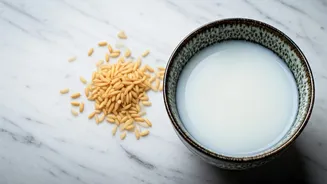
At its simplest, rice water is the starchy liquid left behind after soaking or boiling rice. This milky-white fluid, which many of us discard without a second thought, is rich in vitamins, minerals, and amino acids that are naturally present in rice. For
centuries, long before it became a hashtag, women across Asia have harnessed this humble byproduct as a powerful beauty treatment for their hair and skin. It’s not a new invention; it's a timeless tradition that has found a new audience in the digital age, promising a low-cost, natural alternative to expensive commercial products.
An Ancient Secret, Not a New Trend
The practice of using rice water is steeped in history. Its most famous proponents are the Yao women of Huangluo village in China, who hold a Guinness World Record for their famously long, dark, and healthy hair, which they attribute to washing it with fermented rice water. This tradition has kept their hair strong and free of grey well into old age. Similarly, court ladies during the Heian Period in Japan (794 to 1185 AD) were known for their floor-length hair, which they maintained by bathing it in rice water, known as 'Yu-Su-Ru'. So, while social media may have made it famous for a new generation, its roots go back centuries, proving its staying power.
The Purported Hair and Skin Benefits
Why the sudden craze? Proponents claim an impressive list of benefits. For hair, rice water is said to detangle, strengthen, increase shine, and promote growth. The key component often cited is inositol, a carbohydrate that can reportedly penetrate damaged hair and repair it from the inside out. For skin, it's used as a gentle cleanser and toner. People claim it can soothe irritation, tighten pores, reduce redness from acne and eczema, and leave the skin feeling soft and bright. The antioxidants present, such as ferulic acid, are believed to fight skin damage.
But Does Science Back It Up?
This is where things get a bit cloudy. While the anecdotal evidence and historical use are compelling, rigorous scientific proof is limited. A 2010 study suggested that inositol remains in the hair even after rinsing, offering continued protection. However, most claims are not backed by large-scale, peer-reviewed clinical trials. Dermatologists generally agree that rice water is harmless for most people and that its nutrients could offer some surface-level benefits. The amino acids can temporarily fortify the hair shaft, and the starches can create a coating that adds volume and shine. For skin, its anti-inflammatory properties are plausible, but it’s not a substitute for medically prescribed treatments for conditions like severe acne or eczema.
How to Make Your Own at Home
Ready to try it yourself? Making rice water is incredibly simple. There are two popular methods: 1. **The Soaking Method (Quick):** Take half a cup of uncooked rice (any kind will do), and rinse it once to remove any dirt. Then, place the rinsed rice in a bowl with 2-3 cups of water and let it soak for at least 30 minutes, or until the water turns cloudy. Swirl it around a bit to help release the nutrients. Strain the water into a clean jar, and it's ready to use. 2. **The Fermented Method (More Potent):** Follow the same soaking process, but instead of using the water immediately, let it sit at room temperature for 12 to 24 hours. The fermentation process lowers the pH of the water, bringing it closer to the hair's natural pH, and is believed to enhance its nutrient profile. Once it has a slightly sour smell, it's ready. You can store it in the fridge for up to a week. Use it as a final hair rinse after shampooing or apply it to your face with a cotton pad.
A Word of Caution Before You Start
While natural, rice water isn't for everyone. It contains a fair amount of protein, which can lead to 'protein overload' for certain hair types, especially low-porosity hair. This can make the hair feel dry, stiff, and brittle over time. If you notice this happening, reduce the frequency of use. For skin, always do a patch test on a small area to ensure you don't have an adverse reaction. Don't expect it to be a miracle cure overnight; like any beauty routine, consistency and listening to your own body are key.