
Reading the Air of Distant Worlds
Answering the biggest questions often starts with the smallest clues. In the hunt for life beyond Earth, that means sifting through the atmospheres of exoplanets—planets orbiting stars other than our Sun. By analysing the light that passes through or is
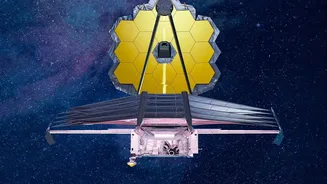
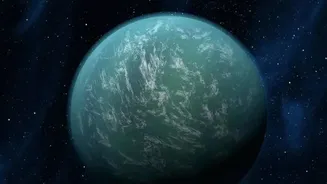
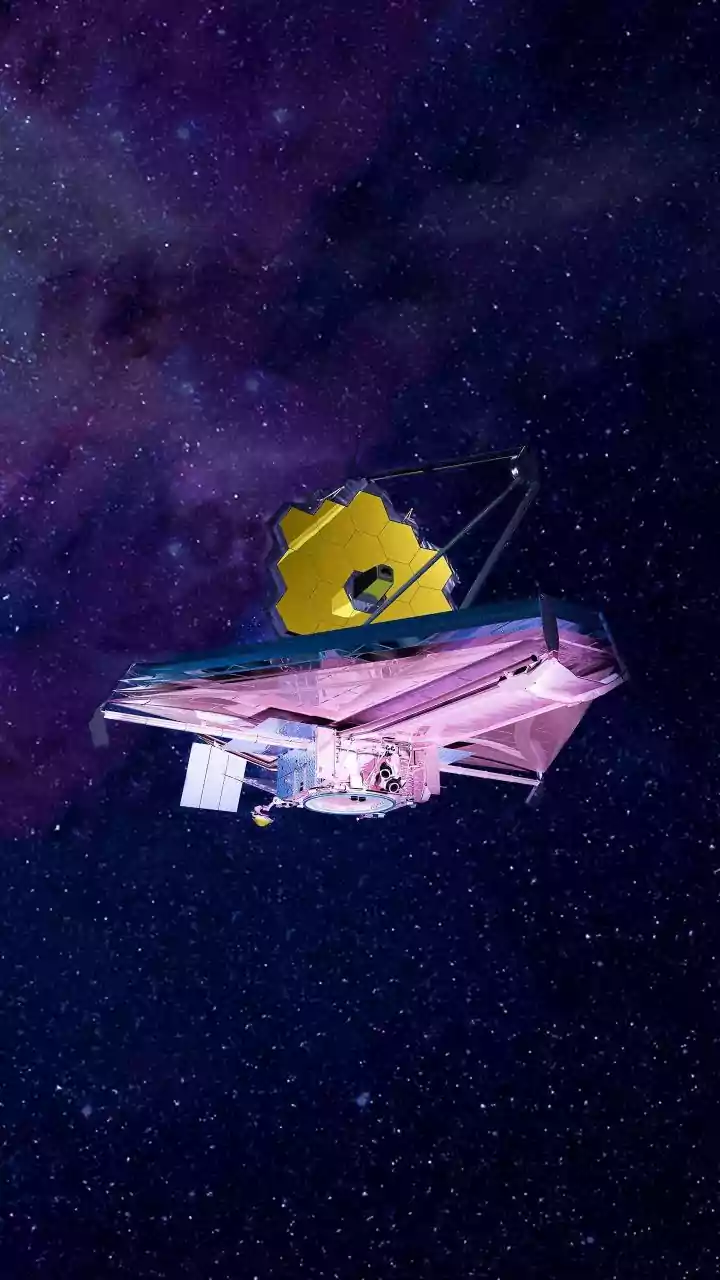
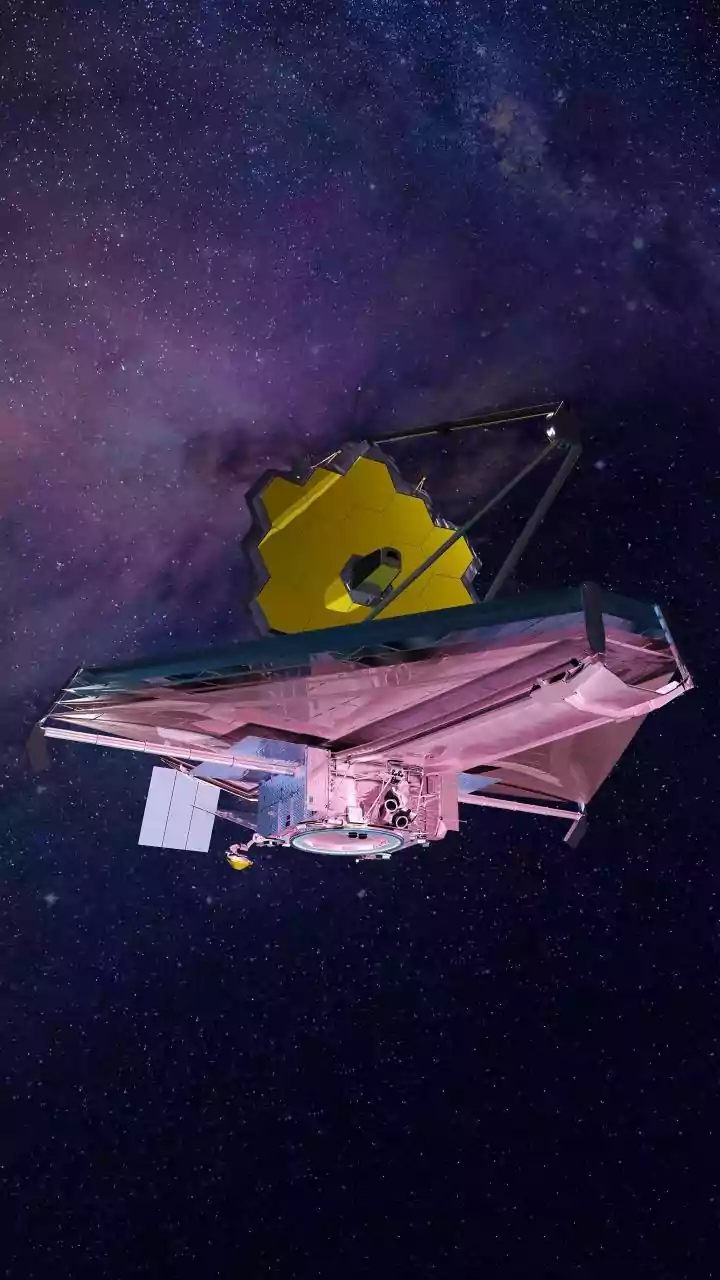
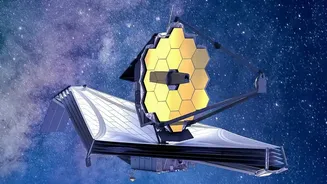
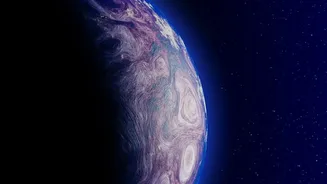
emitted by these atmospheres, scientists can detect the chemical fingerprints of various gases. For years, this was a painstaking process with limited results. But with the power of the James Webb Space Telescope (JWST), we have entered a new era of cosmic chemistry. This powerful observatory can dissect the light from worlds over 100 light-years away, giving us an unprecedented look at their composition. One such world, K2-18 b, has become a focal point of this research. It is a 'sub-Neptune' planet, larger than Earth but smaller than Neptune, and it orbits within its star's habitable zone, where conditions might allow for liquid water.
Carbon Dioxide: A Planet's Foundation
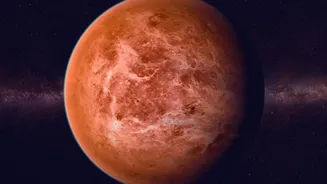
The first part of this milestone is the detection of carbon dioxide (CO2). On its own, CO2 is not a sign of life. It’s abundant in our own solar system, making up the thick atmosphere of Venus and the thin air of Mars. However, its presence on an exoplanet is a crucial piece of the puzzle. Finding CO2 tells astronomers that a planet has a substantial atmosphere and contains carbon, a fundamental building block for life as we know it. The detection on a world like K2-18 b, which is unlike any planet in our own solar system, is particularly significant. It helps scientists confirm that the planet is a 'Hycean' world—a theorised type of planet with a hydrogen-rich atmosphere and a potential liquid water ocean. Finding carbon-based molecules here is a vital first step, establishing the basic ingredients for a potentially habitable environment.
Methane: A Whiff of Something More
The discovery becomes truly groundbreaking with the addition of methane (CH4). Methane can be produced by geological processes, but on Earth, the vast majority of it is generated by living organisms, from microbes in wetlands to cows. Because methane is easily broken down by sunlight, its continued presence in an atmosphere suggests something is actively and constantly replenishing it. The JWST's ability to detect methane on exoplanets like K2-18 b and WASP-80 b marks a huge technological leap, as the gas was notoriously difficult to spot with previous telescopes. Finding methane doesn't automatically mean life, but it raises the possibility, especially when found alongside other specific gases.
The Power of an Unbalanced Atmosphere
The true excitement lies not in finding carbon dioxide or methane alone, but in finding them together. In most non-biological scenarios, these two gases would not coexist in large quantities. Methane and carbon dioxide represent different chemical states, and without a constant source, they would react and settle into a more stable equilibrium. Finding an atmosphere in 'disequilibrium'—with a chemical mix that shouldn't be there—is a powerful potential biosignature. It suggests an active process is constantly pumping these gases into the air, much like life does on Earth. Scientists argue that detecting both abundant methane and carbon dioxide, especially without large amounts of carbon monoxide, is a strong indicator that the source could be biological, as non-biological sources that produce both would likely also produce a lot of carbon monoxide.