






Introducing the STRIDE Initiative
NASA recently announced a new robotics development program called STRIDE, which stands for Science Transport and Robotic Innovation for Deployment and Exploration. This initiative marks a significant strategic pivot. Instead of building its next generation
of Martian explorers entirely in-house, the agency has awarded contracts to seven private companies to design and prototype new mobility systems for the Red Planet. With a combined initial value of approximately $17 million, these contracts task firms like Astrobotic, AeroVironment, and Intuitive Machines with creating the technologies that will define the next phase of Mars exploration. The work, set to begin in the fall of 2026, represents a major investment in public-private partnerships, aiming to fast-track innovation and lower mission costs.
More Than Just Another Rover
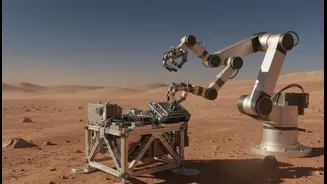
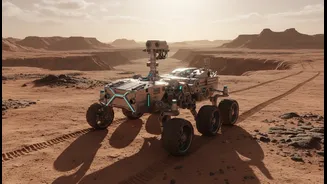
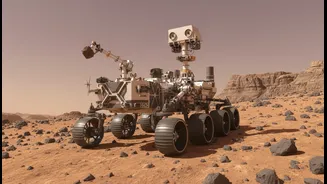
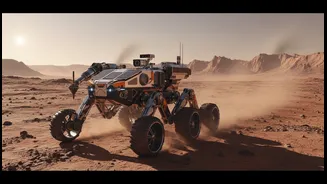
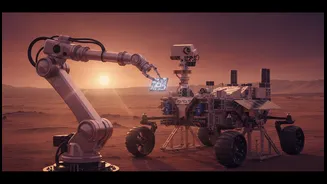
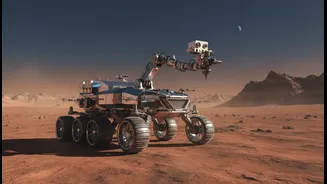
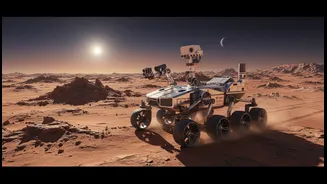
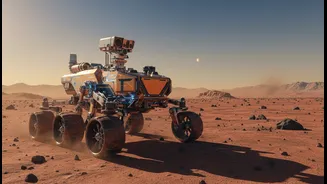
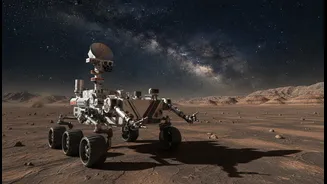
The rovers we’ve come to know and love, like Curiosity and Perseverance, are geological marvels, but they have limitations. They are large, heavy, and must navigate terrain cautiously. The STRIDE program aims to overcome these hurdles by developing a broader range of robotic capabilities. The goal is to create both advanced surface vehicles and aerial platforms that can carry scientific instruments into challenging, high-value locations that are currently inaccessible. Imagine autonomous drones mapping steep crater walls or nimble, rugged rovers climbing rocky slopes that would have stopped their predecessors. By funding a diverse portfolio of concepts, NASA is pushing the industry to develop systems that are not only more mobile but also potentially more scalable and affordable for future missions.
A New Chapter for Martian Exploration
The STRIDE initiative is a direct result of a major strategic rethink within NASA's Mars Exploration Program. For years, the agency's primary focus was the ambitious and complex Mars Sample Return (MSR) mission, a plan to bring back rock samples collected by the Perseverance rover. However, facing projected costs of up to $11 billion, NASA has pivoted towards a new paradigm outlined in its 'Mars Future Plan'. This new strategy emphasizes sending a higher frequency of smaller, lower-cost, high-science-value missions to Mars, often in partnership with the commercial sector. STRIDE fits perfectly into this vision. It allows NASA to continue pushing the scientific frontier on Mars without relying on a single, multi-billion-dollar flagship mission, spreading the risk and increasing the opportunities for discovery.
Paving the Robotic Path for Humans
While STRIDE is a robotic program, its ultimate implications are deeply human. Every robotic mission to Mars is a precursor, gathering data and testing technologies needed for eventual human exploration. The 'Moon to Mars' strategy envisions robots as a vanguard for astronauts. The advanced mobility systems developed under STRIDE could one day be used to scout landing sites, identify resources like water ice, and even assist in constructing habitats before the first human crew arrives. By proving that robots can operate with greater autonomy in difficult Martian environments, NASA is building the foundational capabilities required for a sustainable human presence on another world. These robots aren't just exploring; they are preparing the way.