




What Are Perovskite Solar Cells?
Imagine a solar cell that's not only powerful but also potentially cheaper and easier to make than current technologies. That's the promise of perovskite solar cells. Unlike conventional solar panels, which are made from rigid, highly purified silicon
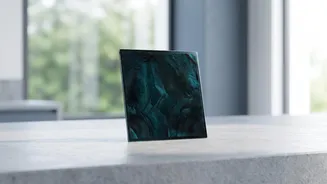
wafers, perovskites are a class of materials with a specific crystal structure. This structure is exceptionally good at absorbing sunlight and converting it into electricity. The materials can be mixed into a liquid and printed or coated onto surfaces, opening the door to flexible, lightweight, and even semi-transparent solar panels. This simpler manufacturing process is a key reason why scientists are so excited; it suggests a path to making solar power more accessible and affordable for everyone.
The Challenge: Stability and Lifespan
If perovskites are so promising, why aren't they on every rooftop? The main obstacle has been durability. For years, perovskite materials have struggled with stability, degrading when exposed to moisture, heat, and even oxygen. While a traditional silicon panel is often warrantied for 25 to 30 years, early perovskite cells would lose their efficiency much more quickly, sometimes in a matter of months or even weeks. This reliability gap has been the primary challenge holding back widespread commercialization. For solar technology to be a sound investment for homeowners and utility companies, it needs to withstand the elements for decades, a standard that perovskites have historically failed to meet.
Recent Breakthroughs: A Game Changer for Durability
The narrative around perovskite is rapidly changing thanks to a series of recent breakthroughs. Researchers are developing new chemical recipes and encapsulation techniques to protect the delicate perovskite crystals from the environment. For example, scientists are creating layered structures, sometimes called 2D perovskites, and using additives that strengthen the material's internal structure. Furthermore, companies are engineering advanced coatings that seal the cells off from moisture and air. One of the most significant advances is in creating tandem cells, where a thin layer of perovskite is placed on top of a traditional silicon cell. This not only boosts efficiency but also leverages the proven durability of silicon. These combined efforts are successfully extending the operational lifespan of perovskite cells, bringing them much closer to the commercial standard of 25 years.
Higher Efficiency, Lower Bills
The most exciting development for consumers is the surge in efficiency. By stacking perovskite on top of silicon, these tandem cells can capture a wider spectrum of sunlight. The perovskite layer captures high-energy light, while the silicon below captures lower-energy light that would otherwise be missed. This has led to record-breaking efficiencies in laboratory settings, with some tandem cells exceeding 34% efficiency. This is a significant leap compared to conventional silicon panels, which typically operate in the 20-22% efficiency range. Higher efficiency means more electricity from a smaller surface area. For homeowners, this could mean fewer panels are needed to power their entire house, reducing installation costs and making solar a viable option even for homes with limited roof space.
The Road to Your Rooftop
While the breakthroughs are real, mass-market availability is still on the horizon. The first commercial-grade tandem modules have begun to ship, but production remains limited. Analysts suggest that meaningful mass production capacity will start to emerge between 2026 and 2027. In India, the technology is also gaining ground, with the first perovskite solar array installed in March 2026, marking a key step from the lab to real-world application. Research teams at institutions like IIT Bombay have achieved impressive efficiencies with locally developed tandem cells, receiving government support to build pilot manufacturing facilities. However, current manufacturing costs for perovskite modules are still higher than for silicon at scale. As production volumes increase and yields improve, these costs are expected to fall, but consumers will likely need to wait a few more years before these next-generation panels are a common and cost-competitive choice for residential installations.