





Who is Eka Robotics?
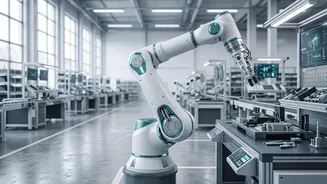
Eka Robotics has emerged as a key player in India's industrial automation landscape. Based in Pune, the company specialises in creating robotics and automation solutions for a variety of sectors, including manufacturing, chemicals, and logistics. They
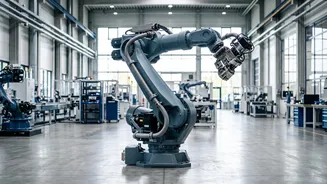
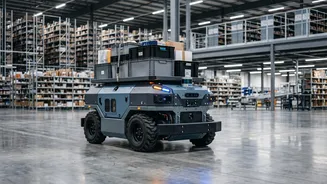
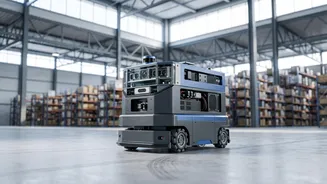
provide a range of products from autonomous mobile robots (AMRs) for warehouses to comprehensive control systems that streamline factory production lines. Their focus has been on enhancing efficiency and productivity for Indian industries by integrating advanced robotics into existing workflows. By offering everything from initial consultation and system integration to training and support, Eka aims to be an end-to-end partner for businesses looking to embrace automation.
The New 'Vision-Force-Action' AI
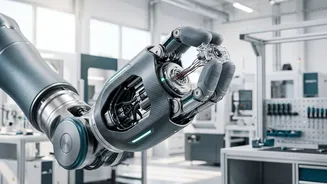
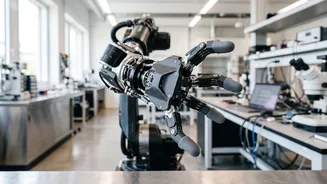
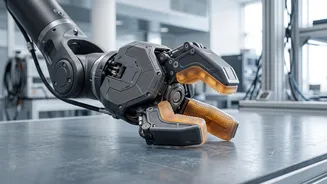
The core of Eka's latest project is a sophisticated AI model dubbed 'Vision-Force-Action' (VFA). This isn't just about cameras and movement; the VFA model adds a crucial third sense: touch. The AI combines visual data from cameras with real-time force feedback from sensors in the robot's gripper. This allows the robot to not only 'see' an object but also 'feel' it, adjusting its grip pressure and motion based on resistance, texture, and weight. This solves a major challenge in robotics: handling delicate or unfamiliar objects without crushing them or dropping them. According to the company, this allows their robots to handle a wide variety of items with superhuman speed, achieving up to 1,500 picks per hour compared to a human's average of 600.
Training Robots in a Virtual World
A key part of Eka's strategy is how it trains its AI. Instead of relying solely on programmers writing code for every possible action, Eka uses reinforcement learning within a simulated environment. This allows the company to generate thousands of hours of robotic experience in just minutes. Inside this virtual world, the AI can practice picking up varied objects and learn from trial and error, mastering the physics of manipulation without the risk of breaking real-world equipment. This rapid, scalable training method significantly reduces the time it takes to develop new capabilities, allowing the learned skills to be transferred to physical robots ready for deployment.
What 'Scaling Deployments' Means for Customers
For businesses, the term 'scaling customer deployments' translates to speed and efficiency. Traditionally, integrating a fleet of robots into a warehouse or factory could be a slow and complex process, requiring extensive customisation. Eka's VFA model aims to change that. Because the robots are more adaptable and can learn quickly, they can be deployed into new environments with minimal retraining. The company is already running industrial pilots for tasks like 'pick-and-place' operations and complex wire handling. This adaptability promises to lower the barrier to entry for automation, enabling faster rollouts for Eka's clients in logistics and manufacturing and delivering a quicker return on their investment.
A Foundation for Future Technology
Beyond immediate customer benefits, this new AI project is about 'scaling technology' for the future. By creating a powerful and general-purpose AI foundation model, Eka is building a platform that can be adapted to a wider range of tasks and robot types. The same core intelligence that allows a robot to pick fruit could be applied to assembling electronics or handling complex manufacturing components. This strategy was recently bolstered by a significant $150 million Series A funding round led by major investors, valuing the company at $1.45 billion. This infusion of capital will help Eka expand its AI model's capabilities and accelerate its mission to transform physical work across industries.