


Gaganyaan: India's Human Spaceflight Debut
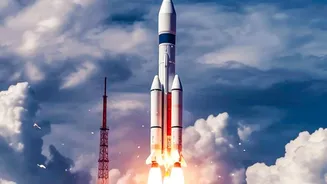
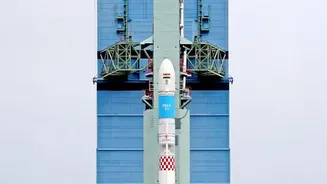
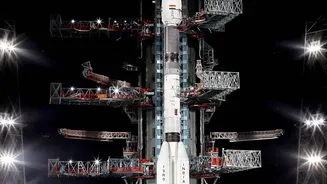
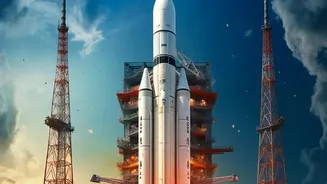
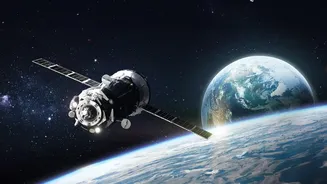
The Gaganyaan mission is arguably ISRO's most ambitious project to date, aiming to send a crew of three astronauts into a 400 km orbit for a three-day mission. The first uncrewed test flight is planned for 2026, with the first crewed mission slated for 2028.
Why does it matter? Developing a human-rated launch vehicle (HLVM3) and a life-sustaining crew module involves mastering a host of critical technologies, from life support systems to re-entry and recovery operations. Success will not only make India the fourth nation to independently launch humans into space but also spur massive growth in aerospace engineering, materials science, and biomedical research. This capability is the foundational step for a sustained human presence in space, including the planned Bharatiya Antariksha Station.
Bharatiya Antariksha Station: A Home in the Sky
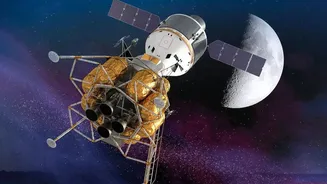
Following Gaganyaan, ISRO's vision extends to establishing a permanent address in low Earth orbit. The Bharatiya Antariksha Station (BAS) is a planned modular space station set to be completed by 2035. The first module is targeted for a 2028 launch. This orbiting laboratory will enable long-duration experiments in microgravity, which are impossible on Earth. The technological leap required is immense, involving in-orbit docking, advanced life support systems that recycle air and water, and robotics. The station will serve as a crucial testbed for technologies needed for future interplanetary missions and as a training ground for astronauts, positioning India as a major player in long-term space exploration and research.
Reusable Launch Vehicle (RLV): The 'Pushpak' Game-Changer
To make space access more affordable and sustainable, ISRO is developing its own reusable launch vehicle, nicknamed 'Pushpak'. In June 2024, ISRO successfully completed its third and final landing experiment (LEX-03), flawlessly landing the winged vehicle in an autonomous test. These tests simulate the high-speed landing conditions of a vehicle returning from orbit. The goal is to perfect a Two-Stage-to-Orbit (TSTO) vehicle where the most expensive components, which house the crucial electronics, can be recovered and reused. This technology could drastically cut the cost of launching satellites and future missions, opening up space for more commercial and scientific endeavours.
NISAR: A Groundbreaking Earth Observer
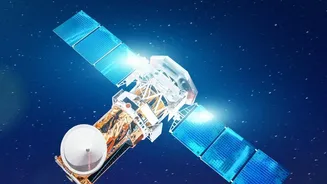
The NASA-ISRO Synthetic Aperture Radar (NISAR) is a joint Earth-observation satellite, and likely the world's most expensive of its kind. Launched in July 2025, its mission is to map our entire planet every 12 days with unprecedented detail. Using advanced L-band and S-band radar, NISAR can see through clouds and darkness to measure subtle changes in Earth's surface, from melting glaciers and shifting coastlines to the impacts of earthquakes and volcanic eruptions. The technology will provide critical data for managing natural disasters, monitoring agricultural health, and understanding the effects of climate change, making it a vital tool for India's environmental and economic security.
SPADEX: Mastering In-Orbit Docking
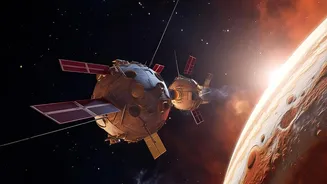
The Space Docking Experiment (SPADEX) is a crucial technology-demonstrator mission designed to perfect the art of rendezvous and docking in space. Launched in late 2024, the mission involves two small satellites that will attempt to autonomously dock and undock in orbit. Mastering this capability is a non-negotiable prerequisite for complex future missions. It is essential for assembling the Bharatiya Antariksha Station, servicing and refueling satellites to extend their operational life, and executing potential sample-return missions from the Moon or other celestial bodies. Success with SPADEX will significantly enhance India's operational flexibility in space.
Shukrayaan-1: Unveiling Venus's Secrets
After its success at Mars, ISRO is turning its attention to Venus with the Shukrayaan-1 orbiter mission. Approved in September 2024, the launch is scheduled for March 2028. Venus, despite being Earth's neighbour, is a world of extreme heat and a crushing atmosphere, holding many scientific mysteries. Shukrayaan-1 will carry a suite of instruments, including a high-resolution radar to peer beneath the planet's thick clouds and study its surface geology and volcanic activity. This mission will not only provide invaluable data about Venus's evolution and why it turned out so different from Earth but also represent a major step up in India's interplanetary mission capabilities.
Mangalyaan-2: A Bold Return to Mars
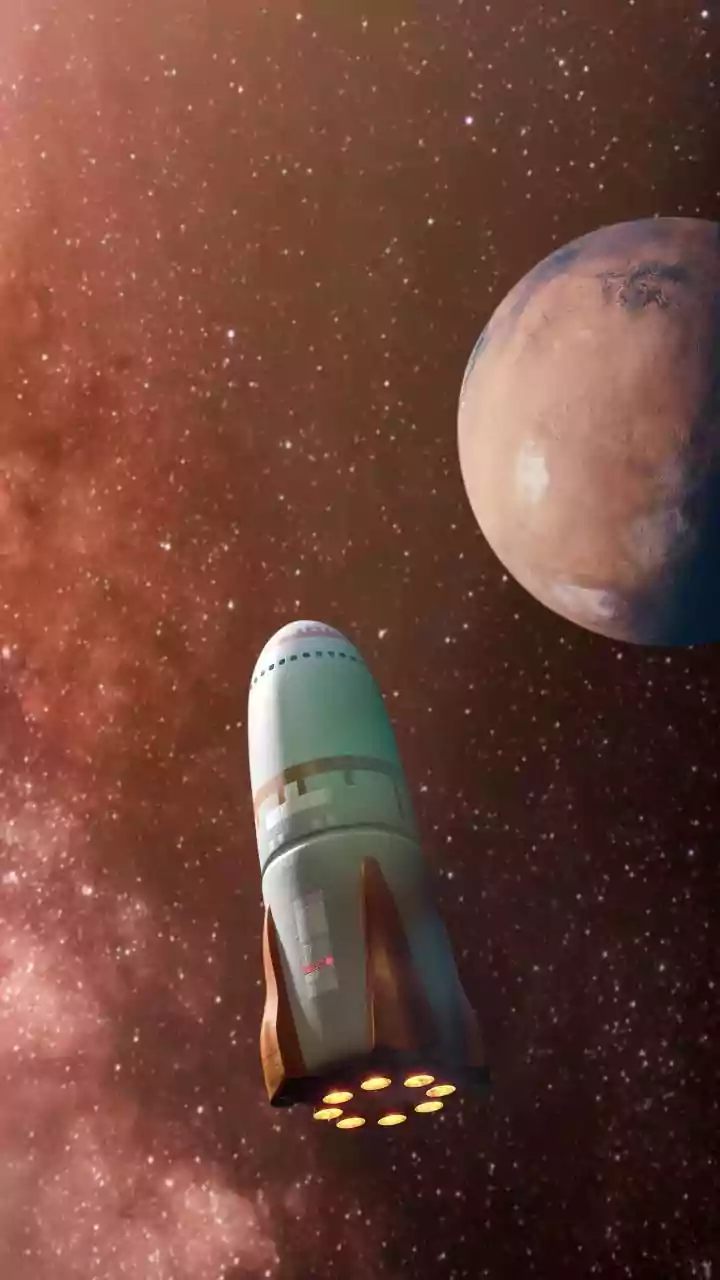
Building on the phenomenal success of its first Mars Orbiter Mission (MOM), ISRO is planning a more ambitious sequel, Mangalyaan-2. While the first mission was an orbiter, this one is expected to include a lander and potentially a rover and helicopter. The mission aims to conduct a more in-depth study of the Martian surface, atmosphere, and climate. Developing the technology to safely land on another planet—using techniques like aerobraking and supersonic parachutes—is a huge technological challenge. If successful, India would join an elite club of nations capable of operating on the Martian surface, cementing its status as a leading power in planetary exploration.