


A 'Super-Earth' with an Atmosphere
The landmark discovery centres on a planet named 55 Cancri e, a 'super-Earth' located 41 light-years away. It’s about twice the diameter of our own planet and orbits its star so closely that a year lasts a mere 18 hours. These extreme conditions mean
its surface is likely a bubbling ocean of molten rock. For years, astronomers debated whether a planet so close to its star, constantly blasted by intense radiation, could possibly hold on to an atmosphere. Previous observations were inconclusive, but new data from JWST has delivered the best evidence to date that 55 Cancri e does indeed have a substantial atmosphere, a stunning find that challenges previous theories about planetary survival.
How Webb Sensed the Unseeable
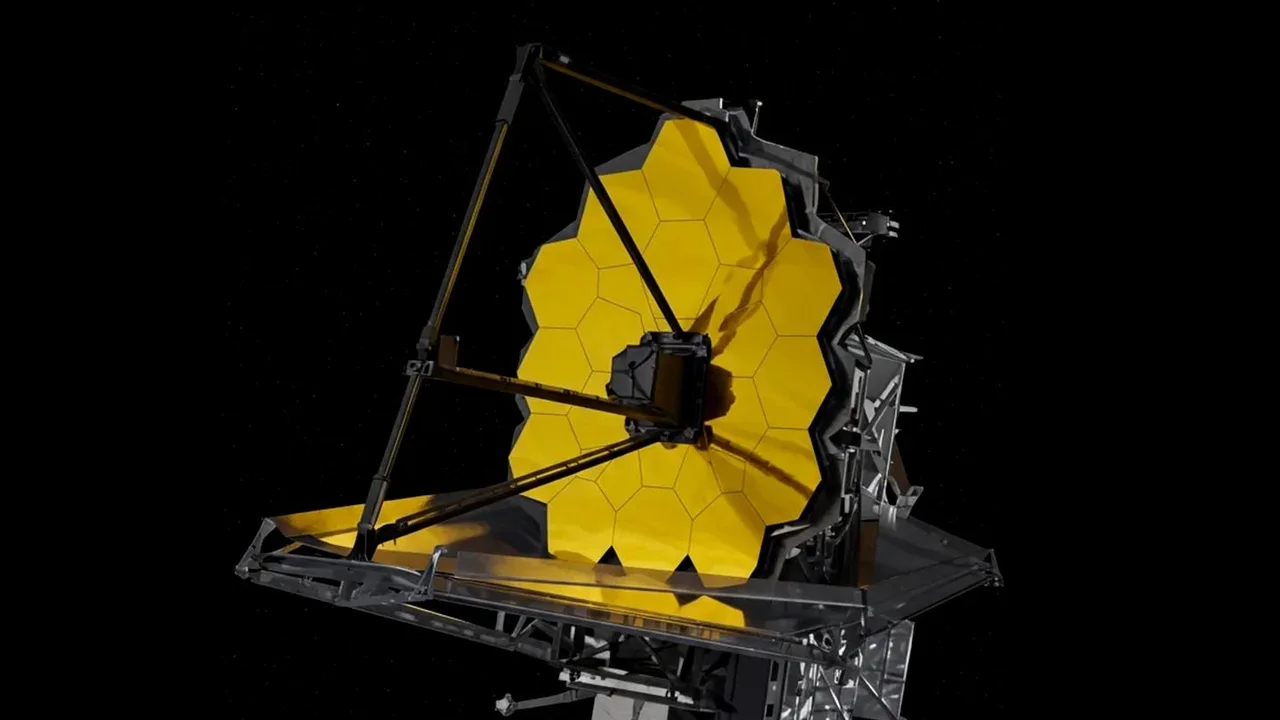
Detecting an atmosphere on such a distant, rocky world is a monumental technical feat. Scientists used Webb’s powerful infrared instruments to measure the planet's temperature as it passed behind its star, a technique known as secondary eclipse photometry. The logic is simple: if the planet were a bare rock, its sun-facing side should be incredibly hot, around 2,200 degrees Celsius. Instead, JWST measured a significantly cooler temperature of about 1,540 degrees Celsius. This temperature difference is a smoking gun. It strongly indicates that a dynamic atmosphere is circulating heat from the permanent, scorching dayside to the cooler nightside, preventing the surface from getting as hot as it otherwise would.
More Than Just Hot Air
So what is this newfound atmosphere made of? The data suggests it is a 'secondary atmosphere', meaning it's not the original one the planet formed with. Instead, it is likely being constantly replenished by gases bubbling out from the planet-wide magma ocean. The leading candidates for these gases are carbon monoxide and carbon dioxide. While a world with a lava ocean and a carbon-rich atmosphere is far from habitable, its existence is a revelation. It proves that even the most hellish rocky worlds can sustain atmospheres, providing scientists with a natural laboratory to study the complex interactions between a planet's interior, its surface, and the air above it.
A Stepping Stone to Finding Other Earths
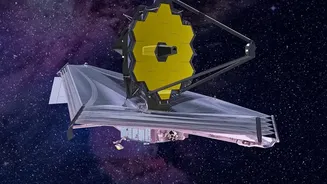
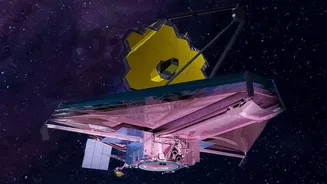
The confirmation of an atmosphere on 55 Cancri e is more than just a fascinating discovery about a single, strange world. It is a critical proof of concept for the James Webb Space Telescope. It demonstrates that we now have the technology to detect atmospheres on small, rocky planets outside our solar system. This capability is a game-changer for the ultimate goal: finding a truly Earth-like planet. Before we can search for biosignatures—the chemical hints of life—in a planet's atmosphere, we first have to be able to find that atmosphere. This discovery on a fiery lava world paves the way for future investigations into the atmospheres of more temperate, potentially habitable planets, bringing us one step closer to knowing if other worlds could support life.