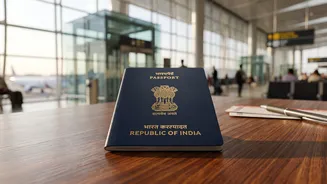


Planning a trip to India is about to get simpler. The Indian government has announced a major overhaul of its visa system, aimed at making the country more accessible for tourism, business, and more. Here’s what the changes mean for you.
A Simpler, More Coherent System
In a significant
move to boost international arrivals, India's Ministry of Home Affairs has streamlined its complex visa framework. The number of main visa categories has been reduced from 13 to just nine, while the extensive list of 49 sub-categories has been cut down to 23. This consolidation is the result of a comprehensive review aimed at eliminating confusing overlaps and making the application process more intuitive for foreign nationals. Furthermore, the application forms themselves are being simplified, with the number of required fields set to be reduced by as much as 65-70%, a change designed to save time and increase administrative efficiency. These changes, which follow an earlier rationalisation in 2025, are based on a study of global standards and the visa systems of other developed nations. The updated framework is expected to be fully operational by the end of 2026 as IT systems are upgraded.
Visitor Visa: Beyond Just Tourism
One of the most notable changes is the rebranding of the 'Tourist Visa' to the more encompassing 'Visitor Visa'. This new category acknowledges that visitors come to India for a wide variety of short-term reasons beyond traditional sightseeing. It is split into two sub-categories: the V-1 visa, granted for 30 days with multiple entries, covers activities like brief business meetings, medical consultations, wellness retreats, and short courses in Indian arts or languages. The V-2 visa caters to longer-term visits, with validity for one, five, or even ten years, and includes all activities permitted under V-1, plus specific pursuits like mountaineering.
Business and Work Visas Explained
The Business Visa has been consolidated into two clear streams. The B-1 visa is for long-term, licence-based activities, such as establishing an industrial or business venture in India. The B-2 visa is for shortterm, contract-based work, covering activities like attending conferences, participating in sports, film production, or providing technical support. This includes a specific provision for foreign subjectmatter specialists and engineers engaged by Indian companies for roles in installation, quality control, and training. The Work Visa remains as a distinct category for more traditional employment arrangements.
Student Visas for Education and Research
The Student Visa category has also been simplified into two broad classifications. The S_1 visa is for students pursuing formal school, graduate, or postgraduate education. The S_2 visa is designed for those engaged in more specialised academic activities, such as PhD programs, research projects, internships, or as visiting faculty. For students enrolled via the official 'Study in India' portal, an e_S1 visa may be granted for up to five years or the duration of their course, facilitating a more stable and long term academic journey in the country.
Medical and Miscellaneous Categories
To support India’s 'Heal in India' initiative, the Medical Visa framework provides clarity and longer validity. The M_1 visa is for treatment under conventional systems of medicine, while the M_3 visa is specifically for treatment under AYUSH systems (Ayurveda, Yoga, Unani, Siddha, and Homeopathy). Both visas will now default to a one year, multiple entry validity, reducing the need for repeat applications during a course of care. Corresponding visas (M_2 and M_4) are available for medical attendants. The remaining categories are the Diplomatic, Official, and Journalist visas, which serve specific professional purposes. A final 'Miscellaneous' category covers unique cases, such as persons of Indian origin and their families, or dependents of those on long term visas.