
The Sun's High-Stakes Temper
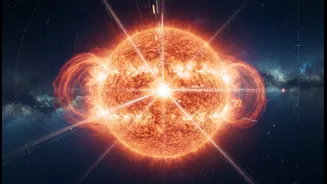
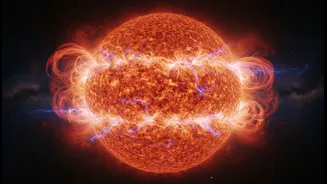
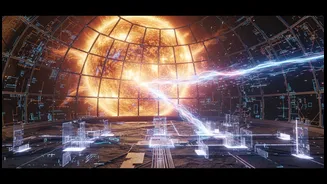
The Sun isn't always the calm, steady presence it appears to be. It periodically ejects billions of tons of charged particles in events called Coronal Mass Ejections (CMEs) and unleashes intense bursts of radiation known as solar flares. When Earth is in the firing
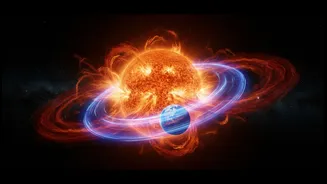
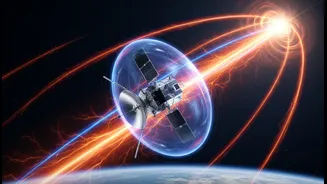
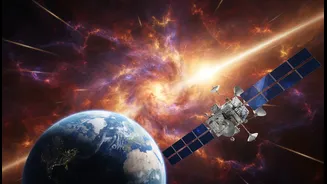
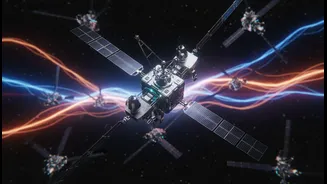
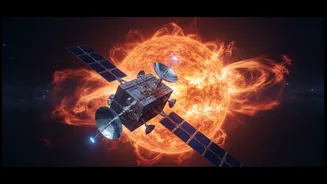
line, this 'space weather' can have serious consequences. While our planet's magnetic field protects us on the ground, the thousands of satellites in orbit are far more exposed. These events can disrupt GPS signals, damage sensitive electronics, and even cause satellites to lose altitude and fall out of orbit, posing a multi-layered threat to the technology we take for granted.
The Billion-Dollar Risk in Orbit
For satellite operators, a severe solar storm is a major business risk. A single powerful event can cause permanent damage to a satellite's hardware by frying its internal circuits or degrading its solar panels, shortening its operational lifespan. Atmospheric drag, which increases when a storm heats and expands Earth's outer atmosphere, can pull low-orbit satellites off their course, requiring precious fuel to correct or risking collision. With the global economy increasingly dependent on satellites for everything from banking and communications to navigation and weather forecasting, the potential cost of a severe space weather event is estimated to run into the trillions.
A New Generation of Sun Watchers
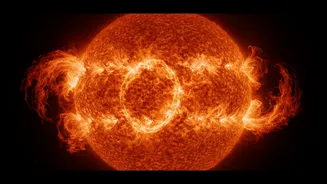
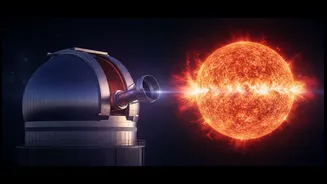
Predicting space weather has historically been a challenge. But new tools are revolutionizing our ability to see what's coming. On the ground, the Daniel K. Inouye Solar Telescope in Hawaii, the world's most powerful solar telescope, is capturing stunningly detailed images of the Sun's surface and magnetic fields. These high-resolution observations help scientists understand the underlying physics that drive solar flares and CMEs, which is key to improving forecast models. By measuring the magnetic fields in the Sun's corona for the first time, instruments on the telescope are providing a vital leap forward in predictive capability.
A Sentinel in Deep Space
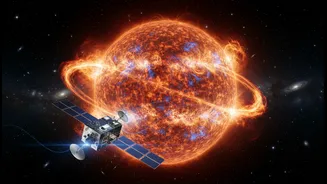
Complementing ground-based efforts are new eyes in space. The European Space Agency's Vigil mission, planned for launch in 2031, will be a dedicated space weather sentinel. It will be positioned at a unique point in space that allows it to see the side of the Sun days before it rotates into view from Earth. This will give an unprecedented warning time of four to five days for some solar events, a massive improvement on current capabilities. This vantage point will also provide a clearer view of CMEs as they travel toward Earth, enabling more accurate predictions of their speed and potential impact. Similarly, newly operational satellites like NOAA's SOLAR-1 are already slashing the time it takes to get data to forecasters, from eight hours to just 30 minutes.
From Better Data to Safer Satellites
This flood of high-quality data is transforming space weather alerts from a reactive process to a proactive one. With more timely and accurate warnings, satellite operators can take protective measures. For example, they can temporarily power down sensitive electronics, reorient the spacecraft to protect key components, or even adjust a satellite's orbit to reduce drag ahead of a predicted storm. These actions can prevent permanent damage, extend the operational life of billion-dollar assets, and ensure the continuity of services we rely on daily. The new data streams are being fed into advanced models that will create a positive reinforcement loop, where each new observation improves future forecasts.