
A New Atlas for a New Frontier
Imagine a treasure map where 'X' marks not gold, but water. That is essentially what scientists now have for the Moon's south pole. Recent advancements and compilations of data from various lunar orbiters, including NASA's Lunar Reconnaissance Orbiter,
have culminated in the most detailed maps of potential water ice deposits to date. These are not simple pictures, but sophisticated data-driven models that assess factors like temperature and permanent shadows to predict where ice is most likely to be stable and accessible. Unlike earlier, broader surveys, these new maps offer a higher resolution, allowing mission planners to pinpoint specific craters and even parts of craters that are promising targets. This level of detail is a game-changer, shifting the search for water from a wide-area exploration to a targeted investigation.
From India's Discovery to Global Blueprint
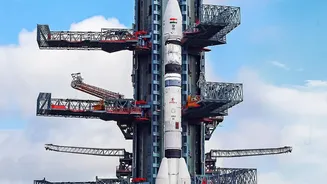
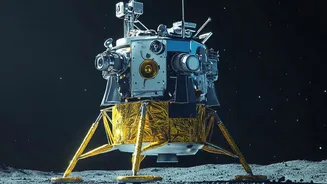
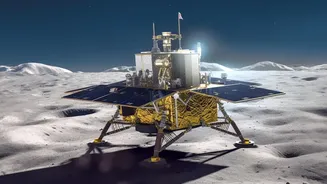
The journey to mapping lunar water has significant Indian footprints. It was India's Chandrayaan-1 mission in 2008 that provided some of the first definitive proof of water on the Moon. Its instruments, including one from NASA, detected water molecules, fundamentally changing our understanding of the Moon from a bone-dry desert to a body with potential resources. The historic landing of Chandrayaan-3 near the south pole in 2023 further cemented India's role as a key player in lunar exploration. These new, comprehensive maps build upon the groundbreaking work of missions like Chandrayaan. They integrate years of data to create a cohesive picture, validating the initial discoveries and providing the granular detail needed for the next phase of exploration. For India, these maps are not just a scientific curiosity; they are a vital tool that will inform the trajectory of its own ambitious lunar programme.
Water: The Oil of the Solar System
Why is this frozen water so important? On Earth, water is life. In space, it is life, air, and fuel. For future astronauts on the Moon, water ice is the single most valuable local resource. It can be melted for drinking, of course, but its value extends far beyond that. Using electrolysis, water (H₂O) can be split into its component parts: breathable oxygen for life support systems and hydrogen, a powerful rocket propellant. The ability to 'live off the land' by sourcing water on the Moon would drastically reduce the cost and complexity of missions. Every kilogram of water, oxygen, or fuel produced on the Moon is a kilogram that does not need to be launched from Earth, which currently costs tens of thousands of dollars. This makes long-term habitation, like a permanent research base, a far more feasible proposition.
Designing the Next Giant Leap
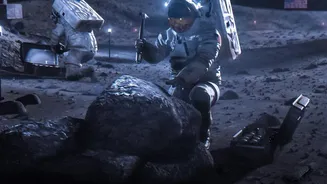
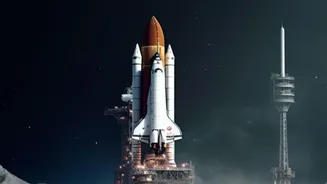
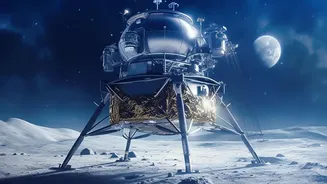
With these ice maps in hand, space agencies can plan future missions with unprecedented precision. Selecting a landing site is a complex calculation of safety, scientific interest, and resource availability. These maps directly inform the 'resource' part of that equation. NASA's Artemis program, which aims to return humans to the Moon and establish a sustainable presence, is heavily focused on the south pole precisely because of these potential water ice deposits. Future robotic missions, like the planned VIPER rover, will act as prospectors, drilling into the surface at locations identified by these maps to verify the quantity and purity of the ice. For India's future lunar endeavours, including potential human missions, these maps provide an invaluable strategic overview, helping to identify areas of interest for its own landers, rovers, and eventually, astronauts.
A Crowded and Challenging Destination
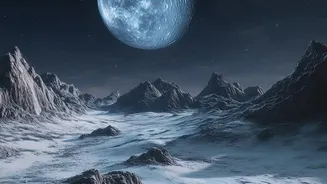
The intense focus on the lunar south pole has turned it into a desirable piece of celestial real estate. The very same conditions that create permanently shadowed craters cold enough to hold ice also create extreme challenges. Temperatures can swing by hundreds of degrees Celsius from sunlit areas to shadowed ones. The terrain is rugged, and communication can be difficult. Moreover, the interest is not just scientific but geopolitical, with the US, China, and India all having successfully reached the region. These new maps will undoubtedly intensify the race to not just visit, but to utilize these resources. The coming years will likely see a series of robotic and eventually human missions from multiple nations, all converging on these specific, water-rich locations, turning this desolate lunar region into a bustling frontier of human activity.