






The Monsoon: A Double-Edged Sword
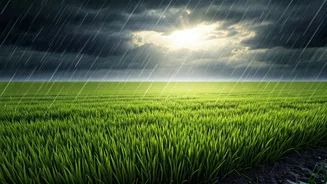
In India, the economy and the monsoon are deeply intertwined. A good monsoon, with timely and adequate rainfall, is traditionally seen as a blessing. It provides the necessary water for the crucial Kharif (summer) crops, which are predominantly rain-fed.
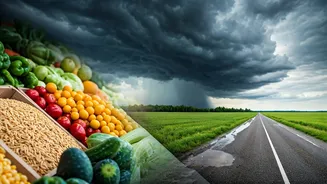
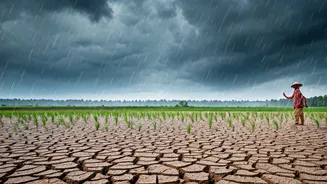
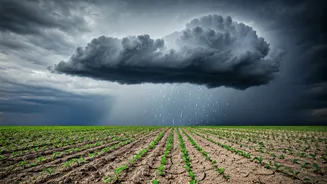
When harvests are bountiful, supply is high and food prices tend to stabilize or even fall. However, the monsoon can be unpredictable. Too little rain leads to drought, causing crops to wither and production to plummet. Conversely, too much rain can be just as destructive, causing floods that damage standing crops and disrupt supply chains. Recent years have seen this dual challenge of both drought and flooding within the same season, a result of increasing climate variability.
A Simple Chain of Supply and Demand
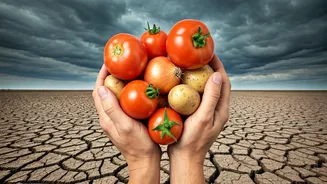
The primary mechanism linking rain to prices is the basic economic principle of supply and demand. A poor monsoon, whether through deficit or excess, reduces agricultural output. When fewer crops make it from the farm to the marketplace, a shortage is created. With supply down and demand from over a billion people remaining constant, sellers can charge higher prices for the limited available produce. This is why the prices of staples like onions, tomatoes, and pulses are notoriously volatile and often shoot up after a bad spell of weather. This effect isn't just a farmer's problem; it quickly translates to higher food inflation for urban and rural consumers alike, impacting household budgets across the country.
Not Just the Monsoon's Mood
While it is a common belief that a good monsoon automatically means low food prices, recent analysis shows the relationship is more complex. Other factors play a significant role. Government policies like the Minimum Support Price (MSP), which sets a floor price for crops, can influence retail prices regardless of the harvest size. The cost of agricultural inputs like fuel and fertilisers, as well as rural wage growth, also contributes to the final cost of food. Furthermore, global weather phenomena like El Niño can weaken the Indian monsoon, leading to predictions of below-normal rainfall and putting pressure on crop yields before a single seed is sown. However, even these predictions are not always certain; some past El Niño years have not resulted in severe drought.
The Ripple Effect Beyond the Farm
The impact of rainfall doesn't stop at the farm gate. Extreme weather events can have cascading effects. Flooding can damage roads and railways, making it difficult to transport produce from rural areas to urban centres, leading to spoilage and further supply squeezes. The expectation of a poor harvest can also lead to hoarding by traders, who stockpile goods to sell at higher prices later, artificially worsening the inflation. Even energy prices are connected; a weak monsoon can deplete reservoir levels, reducing hydropower generation and forcing a reliance on more expensive power sources, the cost of which can ripple through the economy.
Building Resilience Against the Weather
Given that we can't control the clouds, what can be done? India has developed several mechanisms to cushion the blow of a bad monsoon. The government maintains buffer stocks of essential grains like wheat and rice, which can be released into the market to stabilize prices during a shortage. Expanding irrigation coverage has also reduced the dependence of some crops, like paddy rice, on monsoon rains. Policies promoting drought-tolerant seed varieties, crop diversification, and better water management techniques are also crucial. For the average citizen, these large-scale efforts are what stand between an erratic monsoon and a sudden, sharp spike in the cost of their next meal.