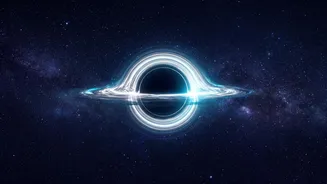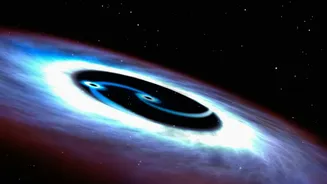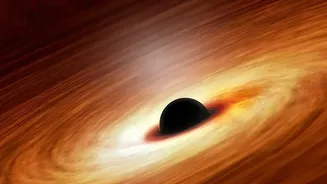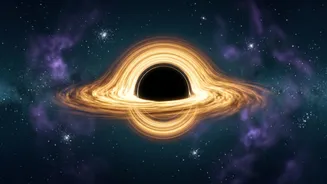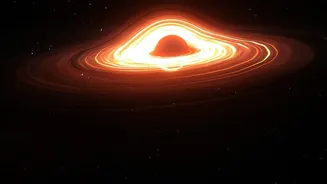


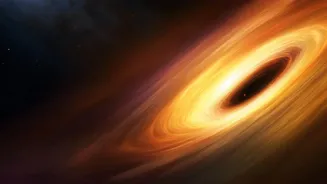
Astronomers believe there are millions of black holes in our galaxy, but we've only found about 70. Now, an innovative project is closing that gap by asking for help from the public, turning anyone with a computer into a cosmic detective.
The Search for the Invisible
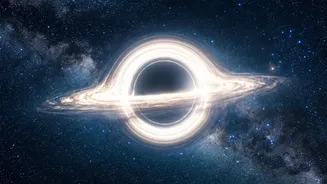
Black holes are
the final, collapsed forms of truly massive stars, objects with gravity so intense that not even light can escape. This makes them fundamentally invisible and incredibly difficult to find. Astronomers have typically found them by observing the extreme effects they have on their surroundings, such as pulling material from a nearby star, which heats up and emits powerful X-rays. But many black holes are 'quiet', not actively feeding and therefore not broadcasting their presence. This is a major puzzle for scientists, who estimate that the Milky Way should contain over 10 million black holes from its 13-billion-year history. To find these missing millions, researchers needed a new approach—one that looks for a more subtle clue.
A Satellite's Powerful Gaze
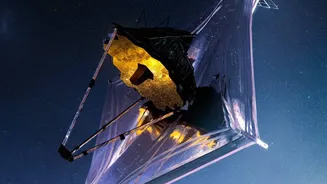
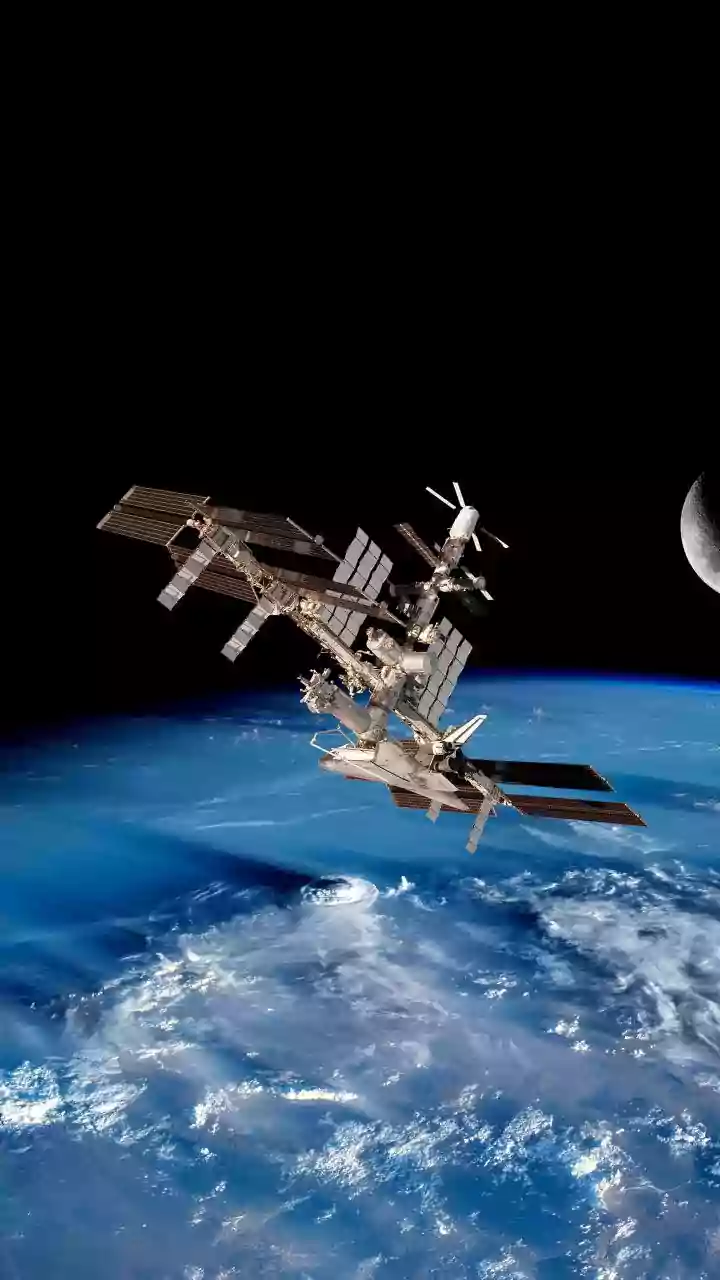
The key turned out to be a NASA mission called the Transiting Exoplanet Survey Satellite, or TESS. Launched in 2018, TESS's primary job is to find planets outside our solar system by staring at stars and detecting tiny dips in their brightness caused by a planet passing in front. Researchers realised this same method could be adapted to hunt for black holes. If a quiet black hole is orbiting a star, it can occasionally pass between that star and Earth. When it does, its immense gravity bends the starlight, acting like a cosmic magnifying glass. This effect, known as gravitational self-lensing, causes the star to briefly and periodically appear brighter. The sensitive and continuous data from TESS is perfectly suited to spot these tell-tale magnifications.
Why Human Eyes Are Essential
While TESS provides the data, sifting through it is a monumental task. The satellite produces 'light curves'—graphs of a star's brightness over time—for millions of stars. Scientists use artificial intelligence to do a first pass, flagging about a million potential candidates. However, AI often struggles to distinguish a true black hole signal from other cosmic phenomena, like stellar flares or natural pulsations, which can create false positives. This is where citizen scientists come in. The Black Hole Hunters project, hosted on the Zooniverse platform, invites volunteers to look at these pre-screened light curves. No expertise is required; the project provides examples of the specific pattern to look for, turning a complex scientific challenge into a manageable pattern-recognition task.
The Power of the Crowd
Since launching, the project has attracted nearly 23,000 volunteers who have made over 12 million classifications. This massive collaborative effort allows scientists to process data far faster and more accurately than a small research team ever could. Each light curve is reviewed by multiple volunteers to ensure accuracy and average out individual mistakes. This human-powered quality control is crucial for building a reliable shortlist of promising candidates that professional astronomers can then investigate further with powerful telescopes. The project demonstrates a powerful synergy: AI handles the bulk screening, while human intuition excels at nuanced pattern recognition. The process makes genuine scientific research accessible to anyone with an interest in space and a few minutes to spare.
Unlocking Galactic Secrets
Every black hole found by the Black Hole Hunters contributes to a larger scientific goal. Finding these quiet, orbiting black holes helps astronomers understand how massive stars evolve and die, and how often they exist in binary pairs. A larger catalogue of black holes provides a more accurate census of our galaxy's contents and can help refine models of galactic formation and structure. Previously, the project used data from a ground-based survey called SuperWASP, but the move to space-based TESS data has significantly improved the quality of the observations. The team plans to expand the search even further by incorporating data from other instruments, including the European Space Agency's Euclid mission and NASA's Nancy Grace Roman Space Telescope, promising even more discoveries with the public's help.