





Myth: A Robot Rejects Your Resume in Seconds
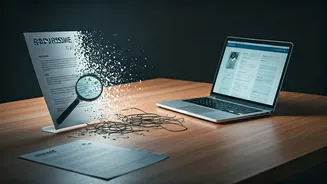
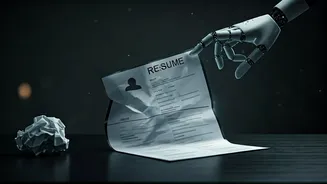
The most common fear is that a merciless AI scans your resume and trashes it in less than a second if it's not perfect. This narrative is popular, but it oversimplifies how these systems work. Research shows that over 75% of resumes submitted to large
companies are first screened by software, but this isn't a simple pass/fail judgment. The reality is that AI-powered Applicant Tracking Systems (ATS) are primarily filtering and ranking tools. They parse your resume for key information—skills, experience, and qualifications—and score its relevance against the job description. A low score might mean your application isn't prioritised for human review, but the AI isn't making a final rejection. It's an efficiency tool designed to help recruiters manage hundreds or thousands of applications by highlighting the most promising candidates first.
Myth: You Must Stuff Your Resume With Keywords
Old advice for beating the 'bots was to copy-paste keywords from the job description and hide them in your resume using white text. This is an outdated and ineffective strategy. While keywords are still important, modern AI recruitment tools are far more sophisticated than simple keyword-matchers. They use Natural Language Processing (NLP) to understand context, semantics, and the relationship between words. An AI can now recognise that "managed a team" is similar to "led a department." Simply stuffing your resume with jargon will make it unreadable to a human recruiter and may even be flagged by the AI as a low-quality application. The better approach is to tailor your resume for each job by naturally weaving in the most critical skills and qualifications mentioned in the posting. Focus on demonstrating your impact with quantifiable achievements, as numbers often carry more weight than buzzwords.
Myth: A Human Will Never See Your Application
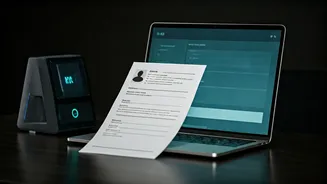
It can certainly feel like your resume disappears into a black hole, but the goal of AI in recruitment isn't to eliminate human oversight entirely. These tools act as a first-pass filter to assist recruiters, not replace them. While it's true that a poorly optimized resume might not make the initial cut, applications that are ranked highly by the AI are forwarded to a human hiring manager for review. Recruiters can often adjust the filtering criteria to broaden or narrow the candidate pool. The human element remains crucial for assessing cultural fit, conducting interviews, and making the final hiring decision. Think of AI as a co-pilot that handles the administrative load, freeing up recruiters to focus on what they do best: engaging with qualified people.
Myth: AI Has Eliminated All Hiring Bias
One of the early promises of AI was that it would create a fairer, more objective hiring process by removing human prejudice. The reality is more complicated. AI systems learn from the data they are trained on, and if that historical data reflects past biases, the AI can learn and even amplify them. Studies have shown that some AI hiring tools can discriminate based on race, gender, or age by learning from historical hiring patterns. However, the alternative isn't necessarily better; human recruiters are also prone to unconscious bias. Many modern AI systems are now being designed with bias mitigation in mind, for example, by anonymizing resumes to hide personal details. The most productive way to view this is not as a solved problem, but an ongoing challenge where well-designed AI can help reduce some biases when it works in tandem with accountable human oversight.
Myth: You Can't Show Personality to an AI
As AI-powered video interviews become more common, many candidates worry that they need to act like a robot to impress a robot. This isn't the case. While some platforms analyze speech patterns or non-verbal cues, their primary function is to provide a structured way to assess job-related skills and competencies. Recruiters still value authenticity. In fact, a recent survey showed that 78% of hiring managers look for personalized details as a sign of genuine interest, and 62% are more likely to reject a resume that seems entirely AI-generated without any personal touch. Using AI to help draft a resume or cover letter is fine, but the final product should reflect your unique voice and experience. Instead of trying to 'game' the AI, focus on clearly communicating your qualifications and showing genuine enthusiasm, just as you would in a traditional interview.