





Identify High-Risk Zones Before You Go
Certain parts of India are far more susceptible to landslides during the monsoon. The Himalayan states, including Himachal Pradesh, Uttarakhand, and parts of Jammu and Kashmir, are perennial high-risk zones. The fragile geology of these mountains, combined
with intense rainfall, frequently leads to road blockages and slope failures. Similarly, the Western Ghats, running through Maharashtra, Karnataka, Kerala, and Tamil Nadu, are vulnerable. Hill stations like Munnar, Wayanad, Coorg, and the Nilgiris (Ooty and Coonoor) often experience landslides that can cut off access and endanger travellers. Before planning a trip to these areas between June and September, it's crucial to understand that even popular tourist routes can become hazardous. The India Meteorological Department (IMD) often issues district-level warnings that are more specific than state-wide forecasts.
Your Pre-Travel Safety Checklist
Preparation is your first and most effective line of defence. Before you even pack your bags, make checking official advisories a habit. The IMD website and app provide real-time weather forecasts, including colour-coded alerts (yellow, orange, red) for heavy rainfall. Secondly, verify road conditions. Many state police and disaster management authorities now post updates on social media about road closures or dangerous stretches. A quick call to your hotel or a local contact can also provide invaluable on-the-ground information. Pack an emergency kit containing essentials like a power bank, first-aid supplies, dry snacks, drinking water, and a torch. Keep important documents and electronics in waterproof bags. Finally, build flexibility into your itinerary. Heavy rain can cause significant delays, and being willing to postpone or alter your plans is better than getting stranded.
On The Road: Recognizing Imminent Danger
When driving in hilly areas during the monsoon, you must become an active observer of your surroundings. Nature often gives warning signs before a slope gives way. Be alert for new cracks appearing on road surfaces, retaining walls, or the ground itself. Look for trees, fences, or utility poles that are tilting at unusual angles. Another tell-tale sign is a change in water flow; if streams or springs suddenly become muddy or their flow increases or decreases drastically, it could indicate ground movement upstream. A faint rumbling sound that gradually gets louder is a serious warning of an approaching debris flow. If you notice any of these signs, do not proceed. The safest action is to turn back and move to a more stable location.
Safe Driving Techniques for Monsoon Roads
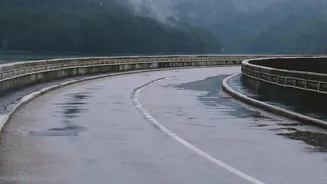
Wet roads, especially on inclines, demand a complete change in driving style. The most important rule is to reduce your speed significantly. Braking distances are much longer on wet surfaces, and sudden manoeuvres can easily lead to skidding. Maintain at least double the normal following distance from the vehicle ahead. Keep your headlights on a low beam to improve your visibility and ensure others can see you. High beams reflect off the rain and can blind oncoming drivers. Avoid driving through puddles or waterlogged areas. You cannot gauge the depth or know if there are hidden potholes or debris underneath. If your car stalls in water, do not try to restart it, as this can cause severe engine damage. Gentle acceleration and braking are key to maintaining traction and control.
What to Do If You're Caught Near a Landslide
If you find yourself stranded due to a landslide, your priority is to stay safe. Do not attempt to cross the debris field; the ground may still be unstable, and secondary slides are common. Stay in your vehicle unless it is in a precarious position, such as near an unstable edge. If you must exit, move to a stable, open area away from the slide path. Contact emergency services and inform them of your location. It's also wise to let a friend or family member know your situation. If you witness a landslide from a distance, move away from its path quickly. Do not stop to watch it. If escape is impossible, curl into a tight ball and protect your head with your arms.