


Feeling tight in your lower back or simply in need of a moment of calm? Enter Apanasana, also known as the Knees-to-Chest pose. This gentle, restorative posture is one of yoga's most accessible tools for release and relaxation.
Understanding Apanasana
In Sanskrit, 'Apana' refers
to the body's downward-moving energy, which governs elimination and grounding, while 'Asana' means pose. Together, Apanasana translates to the 'Pose of Downward-Moving Energy'. It's a foundational posture in many yoga styles, including Hatha and Restorative, loved for its simplicity and profound calming effects. The pose involves lying on your back and gently hugging your knees toward your chest, a movement that provides a gentle massage to the abdominal organs and a soothing release for the spine.
The Core Benefits of This Gentle Pose
Despite its simplicity, Apanasana offers a wealth of benefits. Its primary function is to release tension in the lower back and hips, making it particularly beneficial for those who sit for long periods. By gently compressing the abdomen, it massages the internal organs, which can aid digestion, relieve bloating, and ease menstrual cramps. On a deeper level, this soothing posture helps activate the parasympathetic nervous system, slowing the heart rate and calming the mind, making it an excellent tool for reducing stress and anxiety.
Your Step-by-Step Guide
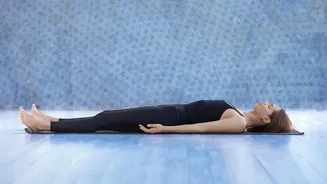
Ready to try it for yourself? Find a comfortable spot on the floor. Lie flat on your back, perhaps on a yoga mat, with your legs extended. Take a moment to settle, letting your shoulders relax. On an exhale, slowly draw both knees in towards your chest. Wrap your arms around your shins, just below the knees, or clasp the backs of your thighs. Avoid pulling your head or shoulders off the floor; the goal is to keep the entire length of your spine, from your tailbone to the back of your head, resting comfortably. Hold the pose for anywhere from 30 seconds to a few minutes, breathing deeply and steadily. To release, gently lower your feet back to the floor.
Supported Stretching: Modifications for Every Body
The beauty of Apanasana lies in its adaptability. If holding both knees feels strenuous, start with 'Ardha Apanasana', or the half version of the pose. Extend one leg straight along the floor while drawing the other knee toward your chest. This is great for focusing on one side at a time. If you have a larger belly or chest, try widening your knees toward your armpits to create more space. For extra support and a more restorative experience, place a folded blanket under your lower back or head. You can also loop a yoga strap around your thighs to hold your legs in place without straining your arms, allowing for deeper relaxation.
Common Mistakes to Avoid
To get the most out of Apanasana, be mindful of a few common missteps. The most frequent is pulling too forcefully on the knees, which can create tension in the neck and shoulders. Instead, let your arms gently guide the legs and allow gravity to do most of the work. Another is holding your breath. Focus on maintaining a slow, rhythmic breath, inhaling to create space and exhaling to deepen gently into the posture. Also, ensure your head and shoulders remain relaxed on the floor. If you find your chin jutting up, you can place a small, folded blanket under your head for better alignment.