



What Exactly is Agrivoltaics?
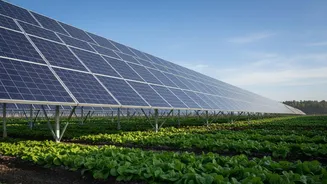
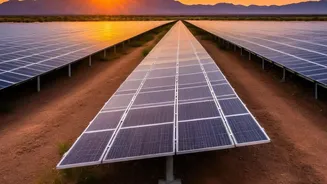
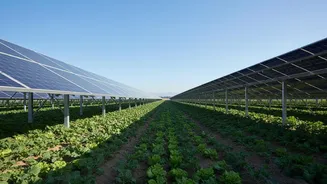
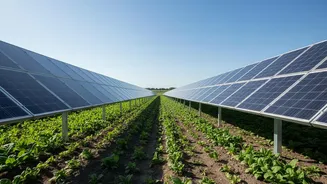
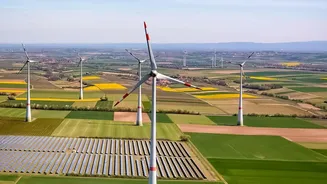
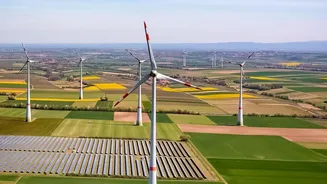
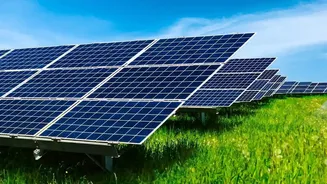
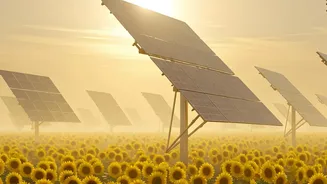
At its core, agrivoltaics — also called agri-PV or dual-use farming — is the practice of using land for both agriculture and solar power generation at the same time. Imagine a field of crops, but raised several metres above them are rows of solar panels.
These panels are strategically placed to capture sunlight and convert it into electricity, while still allowing enough light to reach the crops growing below. This isn't just about placing panels on unused farmland; it's about creating an integrated system where both elements can thrive together, turning a single plot of land into a dual-purpose powerhouse.
A Solution for a Land-Stressed Nation
India faces a dual challenge: it needs to ramp up its renewable energy capacity to meet its climate goals of 500 GW by 2030, and it needs to protect its agricultural land to ensure food security for its vast population. Traditionally, large-scale solar farms require huge tracts of land, often putting them in direct competition with agriculture. Agrivoltaics offers a clever workaround. By making land productive on two fronts — food and energy — it optimises land use, a critical advantage in a densely populated country. This approach helps India pursue its green energy ambitions without sacrificing precious farmland.
The Shade vs. Sun Dilemma
The key to successful agrivoltaics is managing the sunlight. It's a delicate balance. While solar panels need maximum sun exposure to be efficient, crops need it for photosynthesis. However, more sun is not always better. For many crops, the partial shade provided by the panels is actually a benefit. This shade reduces heat stress on plants during peak afternoon sun, lowers water evaporation from the soil by up to 30-40%, and can protect crops from hail or heavy rain. Research shows that many shade-tolerant crops like lettuce, tomatoes, ginger, and turmeric not only survive but can have improved yields under panels. The design — including panel height, spacing, and even the use of bifacial panels that capture reflected light — is customised for the specific crop and climate, ensuring both get what they need.
Boosting Farmer Incomes and Resilience
For India's millions of farmers, agrivoltaics represents a significant economic opportunity. It provides a second, stable stream of income through the sale of electricity to the grid or by leasing land to energy developers. This diversifies their revenue beyond the uncertainties of crop yields and market prices. Government initiatives like the PM-KUSUM scheme are actively promoting this by providing subsidies for farmers to install solar power systems. This not only increases farmer income but also contributes to greater energy and water security in rural areas, making farming more resilient in the face of climate change.
Challenges on the Horizon
Despite its immense potential, the road to widespread adoption of agrivoltaics has its bumps. The initial setup costs are high, as elevated structures for solar panels are more expensive than conventional ground-mounted systems. There is also a need for more region-specific research to determine the ideal crop and panel combinations for India's diverse agro-climatic zones. Mismatched designs can lead to reduced crop yields, defeating the purpose of the dual-use model. Building technical expertise among farmers and ensuring smooth coordination between agricultural and energy stakeholders are also key hurdles that need to be addressed for the technology to scale effectively.