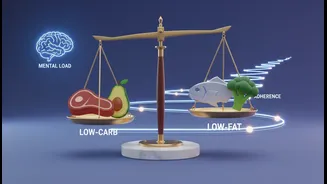









The Great Diet Debate
For decades, nutritional science has been a battlefield. Proponents of low-carbohydrate plans like Atkins have clashed with advocates for low-fat approaches like the Ornish diet. In one corner, you have the argument that cutting carbs is the key to unlocking
fat stores and controlling insulin. In the other, the focus is on reducing dietary fat to lower calorie density and improve heart health. This has left many people confused, hopping from one restrictive plan to another in search of a silver bullet for weight loss and better health. The constant cycle of new diet trends only adds to the noise, making it feel impossible to know which path is truly the right one.
What the Research Actually Says
A growing body of high-quality research is providing a surprisingly simple answer: when it comes to weight loss, most well-constructed diets work about the same. One landmark study from Stanford University, known as the DIETFITS trial, randomly assigned over 600 adults to either a healthy low-fat or a healthy low-carb diet for a full year. At the end of the study, the average weight loss between the two groups was nearly identical—around 5 to 6 kilograms. This pattern has been confirmed by multiple large-scale analyses. A network meta-analysis published in The BMJ looked at 121 different trials involving nearly 22,000 participants and found that differences between popular named diets were trivial at six months and negligible by the one-year mark. The key takeaway wasn't that the diets failed, but that no single diet was clearly superior for weight loss.
The Adherence Advantage
If the type of diet isn't the magical key, then what is? The data points overwhelmingly to one factor: adherence. In study after study, researchers found that the biggest predictor of how much weight a person lost wasn't which diet they were on, but how well they stuck to it. In fact, the variation in weight loss among people on the same diet was often dramatically larger than the average difference between diets. In the DIETFITS trial, for instance, some participants lost over 25 kilograms while others on the exact same plan gained weight. This suggests that our focus on macronutrient ratios might be misplaced. The more important question isn't whether a diet is low-fat or low-carb, but whether it's sustainable for the individual in the long run.
Finding Your 'Forever Fit'
This research is incredibly empowering because it shifts the focus from a rigid set of rules to your own personal preferences and lifestyle. Instead of searching for the “best” diet, you can focus on finding the best diet for you. To do this, ask yourself a few key questions: Do I genuinely enjoy these foods? Does this eating style fit my budget and cooking skills? Can I follow this plan when I’m eating out with friends or during holidays? Does it give me enough energy for my daily activities and workouts? A plan that requires you to give up all your favourite foods or cook elaborate meals you don't have time for is unlikely to last. The goal is to find a pattern of eating that feels less like a temporary restriction and more like a permanent, enjoyable lifestyle upgrade.
Beyond the Scale
While weight loss is a common goal, it’s also important to remember that diet quality matters for overall health. The DIETFITS study instructed both groups to focus on whole, unprocessed foods, minimize added sugar and refined grains, and eat plenty of vegetables. Regardless of the macronutrient split, a healthy eating pattern should be rich in nutrients. Different diets can also have varying effects on other health markers. Some studies show low-carb diets may be particularly effective at improving triglycerides and HDL (good) cholesterol, while other patterns like the Mediterranean diet have been linked to a lower risk of cardiovascular events. This underscores the importance of choosing a high-quality diet that not only helps you manage your weight but also supports your long-term health and well-being.