







Superman (1978) - Believing a Man Could Fly
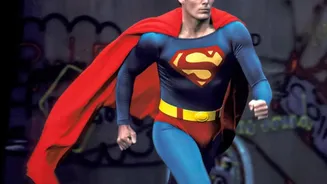
Before 1978, superhero adaptations were often seen as B-movie fare. Richard Donner's 'Superman: The Movie' changed that perception forever. With a then-massive budget, an A-list actor in Marlon Brando, and a star-making turn from Christopher Reeve, it treated
its source material with cinematic reverence. The film’s tagline, "You'll believe a man can fly," wasn't just marketing; it was a promise delivered through groundbreaking special effects and a sweeping score from John Williams. More importantly, it established a template for the modern superhero origin story. It showed that these characters could be presented with sincerity, emotional depth, and on a grand, epic scale, proving to Hollywood that superhero films could be serious, prestigious, and immensely profitable.
X-Men (2000) - The Dawn of the Modern Era
After a quiet period for the genre in the 90s, Bryan Singer’s 'X-Men' kicked off the 21st-century superhero boom. Its masterstroke was taking the comic's core themes seriously. Instead of bright spandex, the characters wore sleek, black leather. The film used the mutant struggle as a powerful allegory for prejudice and civil rights, lending it a thematic weight that resonated with a broad audience. 'X-Men' proved that a team-based superhero movie could work, skillfully balancing a large ensemble cast and their respective arcs. This grounded, more realistic approach to fantastical material laid the groundwork for the wave of comic book adaptations that would follow, demonstrating that these stories could be both entertaining and socially relevant.
The Dark Knight (2008) - A New Breed of Crime Epic
If 'Superman' made superhero movies grand, 'The Dark Knight' made them art. Christopher Nolan's film wasn't just a great comic book movie; it was a sprawling, complex crime thriller that happened to feature Batman. It transcended the genre by grounding its hero in a tactile, realistic world and pitting him against a villain who represented pure ideological chaos. Heath Ledger's posthumous Oscar-winning performance as the Joker became instantly iconic, a symbol of the film's serious dramatic ambitions. 'The Dark Knight' was the first superhero film to gross over $1 billion worldwide and was seen as a legitimate contender for a Best Picture Oscar. Its success prompted Hollywood to embrace a darker, grittier style and proved that these films could be taken as seriously as any other cinematic drama.
Iron Man (2008) - Building a Cinematic Universe
Released just two months before 'The Dark Knight', 'Iron Man' sparked a different kind of revolution. On the surface, it was a charismatic and witty blockbuster driven by Robert Downey Jr.'s perfect casting. But its true genius was revealed in its post-credits scene, where Nick Fury appeared to discuss the "Avenger Initiative." This was the birth of the Marvel Cinematic Universe (MCU), a radical new model for long-form, interconnected storytelling. Instead of standalone films, Marvel was building a shared world where characters could cross over, a concept that would fundamentally change the franchise model. The success of 'Iron Man' and the subsequent MCU proved that studios could create a multi-film saga that kept audiences invested for years, a formula that many have tried, but few have managed to replicate.