





The Familiar Pre-Deadline Scramble
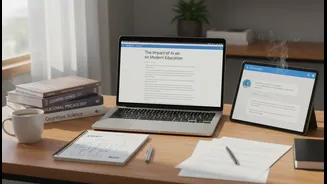
Every student knows the feeling: the blinking cursor on a blank page, a mountain of research notes, and a deadline that’s approaching far too quickly. This high-stress environment is where mistakes happen. Arguments are left half-formed, crucial citations
are missed, and the nagging fear of accidental plagiarism looms large. For generations, this frantic, last-minute push has been a rite of passage. It often results in work that doesn't truly reflect a student's understanding or effort, leading to lower grades and immense anxiety. The process is inefficient, stressful, and rarely produces the best academic work.
Enter the AI Research Assistant
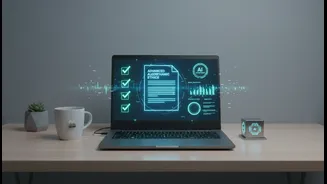
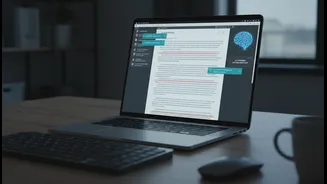
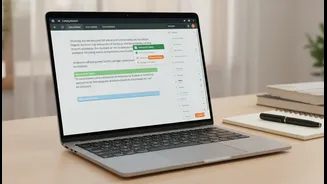
Artificial intelligence is changing this dynamic. Beyond simple grammar and spell-checking, a new category of AI tools is emerging to act as a student's personal research assistant. These platforms are designed for self-checking throughout the writing process. Instead of just catching typos, they offer sophisticated feedback on everything from the structure of an argument to the proper formatting of a bibliography. Tools integrated into platforms like Microsoft 365 or specialized writing assistants like Grammarly now offer features that analyze clarity, tone, and logical flow. They empower students to get instant, iterative feedback, transforming a chaotic final sprint into a series of manageable steps.
More Than Just Correcting Commas
The real power of these AI self-check tools lies in their ability to support higher-level thinking. Some can summarize dense academic texts, helping students grasp complex ideas more quickly. Others can generate practice questions based on course materials, which is a proven method for effective learning. When it comes to writing, these tools can highlight logical inconsistencies in an argument or suggest alternative phrasing to make a point more forcefully. By helping manage citations and checking for originality, they also provide a crucial safety net against accidental plagiarism, a major source of student stress. This allows students to move beyond the mechanics and focus on developing their own ideas with greater confidence.
A Tool, Not a Shortcut
However, educators and experts caution that AI should be used as an aid, not a replacement for critical thinking. The goal is to enhance a student's work, not outsource the intellectual labour. Relying too heavily on AI can weaken analytical skills and lead to a superficial understanding of the topic. There is a clear ethical line: using AI to refine your own writing and check your research is smart practice; using it to write the paper for you is academic misconduct. It's crucial for students to understand their university's specific policies on AI usage. Always fact-check AI-generated information, as it can sometimes be outdated or inaccurate. The student must remain in control, using AI to ask better questions and deepen their engagement with the material.
Getting Started with Responsible AI Use
For students in India, many of these powerful AI tools are readily accessible, with several offering free or student-friendly subscription tiers. The key is to start small. Use an AI tool to brainstorm initial ideas or to check the formatting of your first draft's bibliography. Experiment with asking it to summarize a difficult article or to rephrase a clumsy sentence. By integrating these tools into the research process early and often, students can get a feel for how they work best. The aim is not to have the AI do the work, but to use it as a partner that can provide timely feedback, helping to build a stronger, more polished final paper long before panic has a chance to set in.