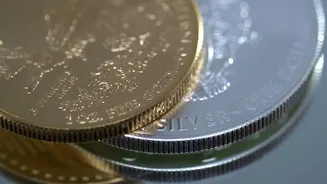





To many investors in India, gold and silver are like siblings, expected to move in lockstep. Yet, these precious metals often dance to different tunes. Understanding why their paths diverge is key to navigating the complexities of the market.
Gold: The Ultimate Store of Value
Gold's primary
role in the modern investment world is as a safe-haven asset and a store of value. Its price is heavily influenced by macroeconomic factors rather than industrial utility. When investors are concerned about inflation eroding the purchasing power of currencies, they often turn to gold. Similarly, during times of geopolitical instability or economic recession, gold demand tends to rise as it is seen as a stable asset when stocks and bonds are volatile. Central banks around the world also hold significant gold reserves, adding to its status as a monetary metal. This means gold's price often reflects global investor sentiment and monetary policy decisions, such as changes in interest rates by the US Federal Reserve.
Silver: A Metal with a Dual Identity
Silver, while also a precious metal, has a split personality. It functions as both an investment asset and a critical industrial commodity. Over half of all silver demand comes from industrial applications. It is an essential component in some of the world's fastest-growing sectors, including solar panels, electric vehicles, and electronics like smartphones and AI data centres. This ties silver's fate much more closely to the health of the global economy. During an economic boom, industrial demand for silver can surge, pushing its price up. Conversely, during a slowdown, demand can fall, causing its price to drop even if gold is rising due to safe-haven buying. This industrial connection is the single biggest reason for its price divergence from gold.
The Gold-to-Silver Ratio Explained
A useful tool for tracking the relative value of these two metals is the gold-to-silver ratio. This simple calculation shows how many ounces of silver it takes to buy one ounce of gold. For example, if the ratio is 80:1, it means 80 ounces of silver are needed to purchase one ounce of gold. Historically, this ratio has fluctuated significantly. A high ratio suggests that gold is expensive relative to silver, or that silver is undervalued. Some traders use this ratio as a signal; a very high ratio might suggest it is a better time to buy silver, while a low ratio might favour gold. The ratio often spikes during economic crises, as investors rush to the perceived safety of gold, causing it to outperform silver.
Volatility and Market Size
Another key difference is volatility. The silver market is significantly smaller and less liquid than the gold market. This means that changes in supply or demand can cause much sharper price swings in silver. Silver's price volatility is typically about double that of gold's. For this reason, while gold is often seen as a defensive asset for capital preservation, silver is viewed as a higher-risk, higher-reward investment that can offer greater returns but also steeper losses. Its dual role as an industrial metal contributes heavily to this price instability, as it is buffeted by both investment flows and manufacturing trends.
A Perspective for Indian Investors
For investors in India, both global and local factors are at play. International prices, set in US dollars, are the baseline. Therefore, the USD/INR exchange rate is a crucial daily factor; a weaker rupee makes both metals more expensive locally, even if global prices are flat. Beyond that, domestic demand plays a huge role. India is one of the world's largest consumers of both metals. The demand for gold jewellery spikes during wedding seasons and festivals like Dhanteras, creating local price premiums. A good monsoon, which boosts rural incomes, can also significantly increase gold demand, as about 60% of consumption comes from rural India. Silver, while also used for investment and adornment, is heavily influenced by industrial and manufacturing sentiment within the country.