






A Lifeline to Heritage
For many second and third-generation children of the Indian diaspora, classical dance is a primary vehicle for cultural education. It’s in the dance studio that mythology, values, and history come alive. Parents often encourage their children to learn
these art forms as a way to maintain a tangible connection with India. This practice becomes a form of storytelling passed across generations, where tales from Hindu mythology are learned through choreography and expression. As a result, dance is often one of the most powerful tools for a young person abroad to understand their roots and build confidence in their cultural identity.
Navigating Dual Identities
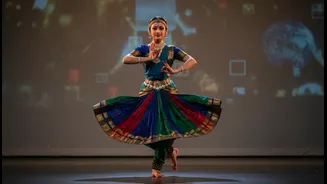
Practising a traditional art form in a multicultural environment is an exercise in navigating dual identities. Young dancers live between worlds: the one at home, steeped in Indian tradition, and the one outside, shaped by Western culture. Dance provides a space to reconcile these contexts. It gives them something unique from their own culture to showcase with pride in diverse landscapes like New York or London. This act of performance becomes a statement of identity, allowing them to feel rooted in their heritage while fully participating in the society they live in. For many, the experience of performing classical dance far from India actually strengthens their appreciation for it.
The Authenticity and Innovation Debate
A key challenge for diaspora dancers is balancing tradition with innovation. There is often an immense pressure to be “authentic” guardians of a centuries-old tradition. However, art is a living, breathing entity that reflects the society in which it is created. Today’s young performers are influenced by a globalised world and a multitude of other forms, from hip-hop to ballet. This has led to the rise of contemporary and fusion dance, where classical techniques are blended with modern sensibilities. These explorations, while sometimes controversial, are essential for keeping the art form relevant and can ultimately strengthen the tradition itself.
The Digital Stage and a Global Community
The rise of social media has revolutionised how Indian classical dance is shared and perceived. Platforms like Instagram, YouTube, and TikTok have provided a global stage for young dancers, making the art form more accessible and relatable to a new generation. Short-form videos showcasing incredible talent can go viral, reaching millions who might never have attended a traditional performance. This digital presence has also fostered a global community, connecting dancers, teachers, and enthusiasts across countries. It has democratised access, allowing dancers in remote areas to learn and collaborate, creating a vibrant, supportive network that transcends geographical boundaries.
Creating a New Cultural Language
Ultimately, young classical dancers abroad are not just preserving an ancient art form; they are actively evolving it. They are creating a new cultural language that speaks to their unique, cross-cultural experience. By blending traditional storytelling with contemporary themes, they make the dance relevant to their own lives and the issues they face. These performers act as crucial bridges of cultural understanding, not just for the Indian diaspora, but for the wider communities they are part of. They are demonstrating that tradition is not a static object to be kept in a museum, but a dynamic force that can be reinterpreted with pride and creativity.