





Rethinking the Need for Speed
For years, the prevailing fitness mantra has been 'go harder, go faster.' High-intensity interval training (HIIT), with its explosive burpees and jarring box jumps, became the gold standard for an 'effective' workout. While these exercises certainly elevate
your heart rate, they are not the only path to fitness and can come with a higher risk of injury, especially if form is compromised. Fast, ballistic movements can place significant stress on your joints, from your wrists and shoulders to your knees and ankles. By removing the demand for high-speed reps, you give yourself the space to focus on what truly matters for strength and muscle development: control, form, and consistent tension.
The Power of Taking It Slow
When you remove speed, you can focus on a powerful training principle: Time Under Tension (TUT). This refers to the total duration a muscle is actively working during a set. Instead of powering through a squat in two seconds, imagine taking three seconds to lower down, pausing for a second at the bottom, and taking another two seconds to rise. This deliberate pacing keeps your muscles engaged for a longer period, which can be a significant stimulus for muscle growth and strength gains. Slower movements force you to control the weight through the entire range of motion, particularly during the lowering (eccentric) phase, which is crucial for building strength and muscle. While research shows that a wide range of tempos can be effective, slowing down ensures you aren't using momentum to do the work your muscles should be doing.
How to Increase Intensity Without Impact
Many people mistakenly believe that low-impact means low-intensity. However, you can create a challenging, heart-pumping workout without a single jump. One of the simplest methods is to reduce your rest periods between sets; instead of resting for 90 seconds, try resting for only 45 or 60. Another strategy is to use supersets, where you perform two different exercises back-to-back with no rest in between. You can also increase your total training volume by adding more repetitions or another set to your exercises. Finally, focus on improving your mind-muscle connection. Actively think about the muscle you are trying to work, squeezing it with intention on every single repetition. This focused contraction can dramatically increase the perceived difficulty and effectiveness of an exercise.
Smart Swaps for High-Impact Exercises
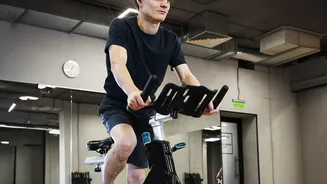
Modifying your workout doesn't mean you have to reinvent the wheel. Often, it just requires a simple substitution. Instead of high-impact moves that can jar your joints, try these effective, lower-impact alternatives: Instead of Jump Squats: Try Bodyweight Squats or Goblet Squats. Focus on a full range of motion and a controlled tempo. Adding weight with a dumbbell or kettlebell will increase the challenge without the jump. Instead of Burpees: Try Inchworms with a Push-Up. This move involves walking your hands out to a plank, performing a push-up, and walking your hands back to your feet. It provides a full-body challenge without the impact of jumping back and forth. Instead of High Knees or Running in Place: Try Marching in Place with high knees or using a stationary bike. This keeps your heart rate up while being much gentler on your knees and ankles. Instead of Box Jumps: Try Step-Ups. Using a sturdy box or bench, step up with one foot, driving your knee high, and then control your descent. This builds single-leg strength and stability safely.