



The Unseen Enemy of Solar Power
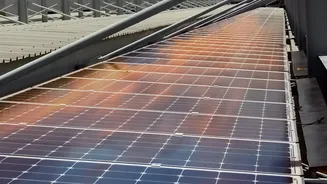
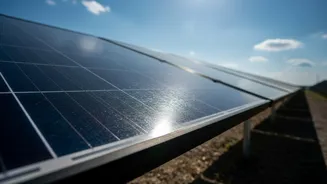
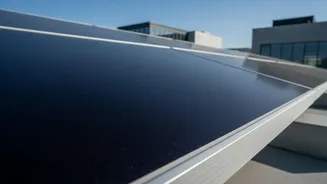
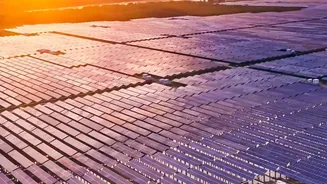
Solar panels are a cornerstone of India’s renewable energy ambitions, but they have a persistent adversary: the sun itself. While photovoltaic cells are designed to capture sunlight and convert it into electricity, the constant bombardment of ultraviolet
(UV) radiation slowly degrades the materials. Over years of exposure to harsh sunlight, moisture, and fluctuating temperatures, the efficiency of a solar panel inevitably declines. This degradation means that panels produce less power over their lifespan and eventually need to be replaced. Manufacturers use various protective coatings and laminates to slow this process, but finding a solution that is both highly effective, long-lasting, and environmentally friendly remains a significant challenge for the industry.
Nature’s Unexpected High-Tech Solution
Enter melanin, one of nature’s most fascinating and versatile materials. It is the pigment that colours our skin, hair, and eyes, and its primary role is protection. Melanin is exceptionally good at absorbing a wide spectrum of light, especially damaging UV rays, and safely dissipating that energy as harmless heat. This photoprotective quality is what shields our skin from sun damage. Scientists, observing this remarkable natural defence mechanism, began to wonder if it could be applied to artificial systems. Squid and cuttlefish ink, which is incredibly rich in a type of melanin called eumelanin, presented itself as an abundant and potent source for study. The idea was born: what if this natural sunscreen could be used to shield our solar panels?
From Squid to Solar Shield
Harnessing melanin for industrial use involves a few sophisticated steps. While some research focuses on extracting the pigment directly from natural sources like squid ink, much of the cutting-edge work involves creating synthetic melanin in the lab. This gives scientists greater control over its purity and properties. The process often involves the auto-oxidation of a chemical precursor called dopa, which forms a melanin powder. The main challenge has been its poor solubility, which makes it difficult to apply as a perfectly smooth, thin film required for electronic applications. Researchers have developed methods to dissolve melanin in specific solutions or to modify its structure through a process called annealing—heating it in a vacuum—which not only improves its structure but can also increase its electrical conductivity by a billion-fold. Once processed, the melanin can be applied as a micro-thin layer onto the surface of a solar module, acting as a bio-synthetic shield.
The Promise of Bio-Synthetic Protection
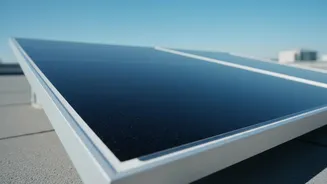
The advantages of using a melanin-based protective layer are compelling. The most immediate benefit is enhanced durability. By absorbing the UV radiation that would otherwise damage the underlying photovoltaic materials, the melanin layer can significantly extend the functional lifespan of a solar panel and help it retain its peak efficiency for longer. Furthermore, melanin is inherently biocompatible and biodegradable. Unlike many petroleum-based polymers used in manufacturing today, a melanin-based solution offers a greener alternative that doesn’t leave behind toxic residues at the end of its life cycle. Its ability to function as a semiconductor also opens up possibilities for other roles in bio-friendly electronics, from medical sensors to energy storage.
Challenges on the Horizon
Despite the exciting potential, melanin-based coatings are not yet ready for mass production. Several hurdles remain before you see them on solar farms across the country. The primary challenge is scale and cost. The processes for extracting, synthesising, and applying melanin are currently confined to the laboratory. Translating these techniques to an industrial scale, where millions of square metres of solar panels are produced, must be done in a way that is cost-competitive with existing protective materials. Scientists are continuously working to refine the manufacturing process, making it more efficient and affordable. Further research is also needed to optimise the film’s long-term stability and adhesion in real-world weather conditions. The journey from scientific breakthrough to commercial reality is a long one, but the initial results are incredibly promising.