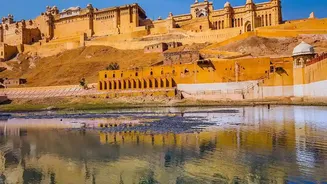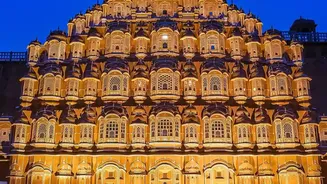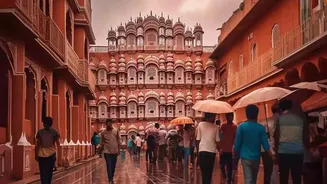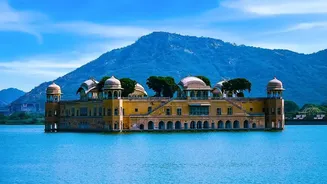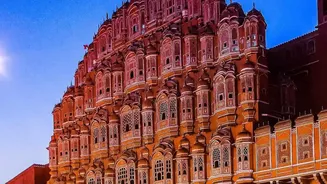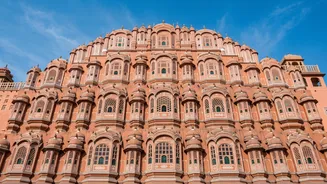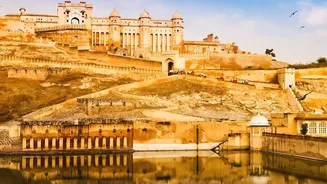




When a publication like National Geographic spotlights a destination, travellers take notice. For Jaipur, the recognition celebrates not just its iconic pink architecture, but the living soul of the city: its traditional crafts and bustling markets.
The Heartbeat of the Pink City
Jaipur's
inclusion in National Geographic's 'Best of the World' list for 2027 is a nod to its enduring legacy as a cultural powerhouse, timed perfectly with the city's upcoming 300th anniversary. Founded in 1727 by Maharaja Sawai Jai Singh II, Jaipur was designed as a hub for commerce and artistry. The city's founder actively invited artisans from across the country to settle in specialised neighbourhoods, a structure that still defines its markets today. This centuries-old patronage system created an ecosystem of craft that continues to thrive. Wandering through bazaars like Johari, Tripolia, and Chandpole is not just a shopping trip; it’s an immersive journey into a living history, where every lane offers a new discovery.
A Legacy in Fabric and Dye
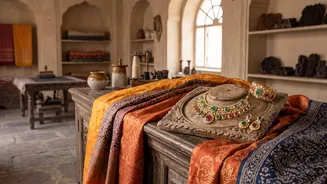
Jaipur is the heart of India's textile industry, renowned for its block printing. In the nearby town of Sanganer, generations of the 'Chhipa' community practice a delicate form of block printing known for its intricate floral motifs on white or off-white backgrounds. This craft, which has been perfected over centuries, involves hand-carving designs into teakwood blocks, which are then dipped in natural dyes and meticulously pressed onto fabric. Each piece tells a story of patience and precision. The city is also a hub for other textile arts like Bandhani (a traditional tie-dye technique), Zardozi (heavy metallic embroidery), and Aari work (chain-stitching with a hooked needle), making its markets a kaleidoscope of texture and colour.
The Art of Blue Pottery
One of Jaipur's most distinctive crafts is its Blue Pottery, a Turko-Persian art form that arrived in India in the 14th century and was later popularised in Jaipur under the patronage of Maharaja Sawai Ram Singh II in the 19th century. Unlike most pottery, Jaipur's version uses no clay. Instead, artisans craft a dough from ground quartz, powdered glass, Fuller's Earth (Multani Mitti), and gum. This mixture is often press-molded and then hand-painted with cobalt oxide to create its signature vivid blue designs before being fired. The motifs are often inspired by Mughal-era florals and traditional Rajasthani patterns, creating pieces that are both delicate and striking.
Gems, Jewels, and Lac Bangles
No exploration of Jaipur's markets is complete without a visit to Johari Bazaar, the city's oldest and most famous hub for jewellery. It is renowned for traditional Kundan and Meenakari work, a technique of fusing powdered mineral glass onto gold and other metals to create vibrant, enamelled designs. For a different kind of adornment, Tripolia Bazaar is the destination for lac bangles. Here, in a lane called Maniharon Ka Raasta, you can watch artisans craft these colourful bracelets from a natural resin, often embedding them with beads and mirrors.
A Modern Traveller's Guide
To fully experience Jaipur's craft scene, dive into its specialised markets. Bapu Bazaar is famous for its leather goods, especially the traditional 'mojari' footwear made from camel leather. Chandpole Bazaar is a treasure trove for handicrafts, including marble carvings and wooden sculptures. Kishanpole Bazaar is another great spot for textiles and wooden crafts, often at more local prices. While navigating these bustling lanes, remember that friendly bargaining is part of the culture. Many shops, like the Anokhi Museum of Hand Printing, also offer workshops where you can try your hand at block printing, providing a deeper appreciation for the skill involved.