


From Flight Surgeon to Astronaut
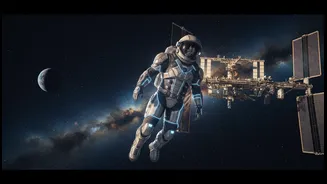
Before becoming an astronaut, Anil Menon had a distinguished career that uniquely prepared him for the rigours of space. Born in Minnesota to an Indian father and a Ukrainian mother, Menon is an emergency medicine physician and a colonel in the U.S. Space
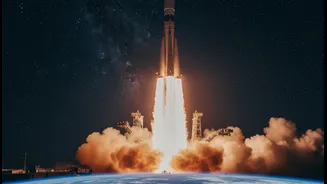
Force. His journey includes serving on the front lines in Afghanistan, treating climbers near Mount Everest, and a year in India as a Rotary Ambassadorial Scholar supporting polio vaccination efforts. In 2018, he became SpaceX's first flight surgeon, helping to launch the company's first human spaceflights. Selected by NASA in 2021, his launch on July 14, 2026, marks his first flight into space, a culmination of a career spent at the intersection of medicine, military service, and aerospace.
A Laboratory Above the World
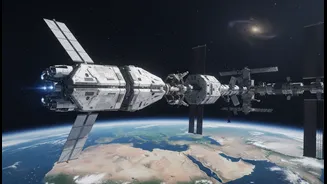
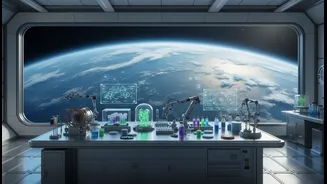
Menon's new home for the next eight months is the International Space Station (ISS), a permanently crewed laboratory orbiting 400 kilometres above Earth. The ISS is a symbol of global cooperation, operated by a partnership between the space agencies of the US, Russia, Europe, Japan, and Canada. It is the only laboratory available for long-duration research in microgravity—the condition of near-weightlessness. A typical day for an astronaut like Menon involves maintaining the station's complex systems and, crucially, dedicating several hours to conducting a wide array of scientific experiments that are impossible to perform on Earth. His mission will span Expeditions 74 and 75, with a scheduled return in April 2027.
The Science of Living in Space
A primary focus of Menon's mission is studying the effects of long-duration spaceflight on the human body. Without gravity, astronauts experience accelerated health changes similar to aging, including muscle atrophy and bone density loss. As a physician, Menon is both a researcher and a test subject for several key experiments. He will investigate how microgravity affects blood flow and vein structure. This research is vital for protecting astronaut health on future long-duration missions to the Moon and Mars, where medical support from Earth will be limited. His work builds on decades of ISS research that has provided critical data on how the body adapts to space.
Beyond Biology: Earth-Bound Benefits
The science conducted aboard the ISS extends far beyond human biology. Menon will be involved in experiments that could lead to significant technological breakthroughs on Earth. One area of focus is the production of semiconductor crystals in space. In microgravity, it's possible to grow higher-quality crystals, which could enable the manufacturing of superior components for high-performance computers and medical devices. Another key experiment involves testing technology to produce intravenous (IV) fluids from the station's drinking water, a critical capability for deep-space missions. He will also use ultrasound with augmented reality, a technique that could allow astronauts to perform complex medical procedures autonomously.
A Global Effort for Humankind
The knowledge gained from Menon's mission is not firewalled by nationality. The ISS operates on a principle of shared discovery, where data and results from experiments are distributed among international partners and the global scientific community. Research into creating new materials in space or understanding fundamental physics benefits everyone. For instance, technology developed for the station's water purification system, which recycles 93% of the water astronauts use, has already been adapted to create clean water systems in remote areas on Earth. Menon's work on bioprinting vascular tissues could advance therapeutic research for age-related diseases back home.
Inspiring a New Generation in India
For audiences in India, Menon's journey carries special significance. As the first NASA astronaut of Malayali descent, his achievement is a source of immense pride, particularly in Kerala, where his family has roots. His mission highlights the incredible contributions of the Indian diaspora to global science and exploration. Along with his wife, private astronaut Anna Menon, and Gaganyaan astronaut-designate Prasanth Balakrishnan Nair—who also trace roots to the same district in Kerala—he is part of a powerful symbol of India's growing connection to the cosmos. His flight serves as a powerful inspiration for students and aspiring scientists in India, reinforcing the nation's own ambitious space goals.