







The Diplomatic Battleground for AI
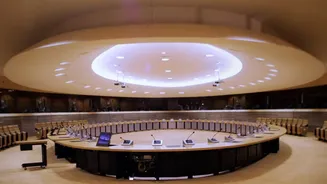
The main stage for debating Lethal Autonomous Weapons Systems (LAWS) has been the Convention on Certain Conventional Weapons (CCW) in Geneva, a key component of the UN's disarmament machinery. For years, a Group of Governmental Experts (GGE) has met to discuss
the immense ethical, legal, and security challenges posed by weapons that can independently select and engage targets. These discussions are not abstract; they are driven by reports that increasingly autonomous systems are already being used in conflicts, blurring the line between human and machine control. The central question is whether existing International Humanitarian Law (IHL)—the rules of war governing distinction, proportionality, and precaution—is sufficient to manage AI, or if a new, legally binding treaty is needed.
Consensus: The UN's Double-Edged Sword
Progress within the CCW framework is notoriously slow because it operates on the principle of consensus. This means all state parties must agree before any formal action, like negotiating a treaty, can begin. This requirement for unanimity acts as a brake, often leading to stalemate. A large coalition of nations, along with the UN Secretary-General and the International Committee of the Red Cross (ICRC), have urgently called for a legally binding instrument to prohibit and regulate these weapons. However, major military powers, including those heavily investing in AI, have resisted calls for a ban, preferring to keep their options open. This fundamental disagreement has created a significant governance gap, with technology far outpacing diplomacy.
Shifting the Debate to the General Assembly
Frustrated by the deadlock in Geneva, a growing number of states have taken the issue to the UN General Assembly (UNGA) in New York. Unlike the CCW, the UNGA operates on a majority vote, allowing resolutions to pass with overwhelming support even if a few powerful nations object. In recent years, the UNGA's First Committee, which handles disarmament and international security, has adopted resolutions calling for studies and greater dialogue on LAWS. While these resolutions are not legally binding, they serve a crucial purpose: they build political momentum, establish new norms, and signal that a vast majority of the world wants urgent action and clear boundaries. They put pressure on the states that are holding up consensus in other forums.
The Stances of Key Global Players
The divisions are stark. The United States has proposed some transparency measures like notification mechanisms but, along with Russia, China, and others, has opposed a binding treaty. These nations argue that it is premature to regulate a developing technology and that existing international law is sufficient. On the other hand, a diverse group of over 100 countries, supported by a global campaign of NGOs, advocates for a pre-emptive ban, arguing that meaningful human control over life-and-death decisions must always be maintained. India holds a more nuanced position. While it has participated actively and even chaired the GGE, it has expressed reservations about a new binding treaty, favouring a politically binding instrument and emphasizing that any military use of AI must comply with IHL. Recently, India has also stressed that the decision to use nuclear weapons must remain firmly in human hands.
Do These Discussions Actually Matter?
While UN resolutions may not immediately halt the development of military AI, they are indispensable for shaping the future. The slow, patient work of building consensus—or demonstrating its absence—is how international norms are formed. By repeatedly affirming that international law applies and that humans must remain responsible, these forums lay the groundwork for future accountability. The debates stigmatize certain applications of technology and create a common language for security and ethics. Even without a treaty, the overwhelming global sentiment expressed in UN assemblies makes it politically costly for nations to openly develop and deploy weapons that are seen as morally repugnant. The goal is to ensure that even as machines get smarter, human judgment remains at the heart of decisions about war and peace.