


More Than a Heavenly Light Show
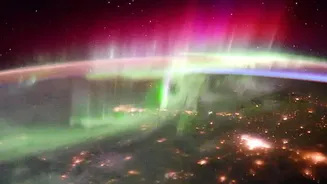
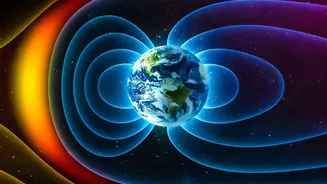
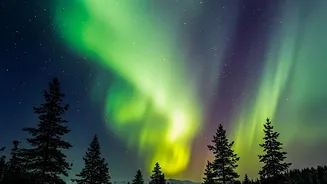
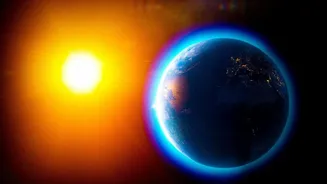
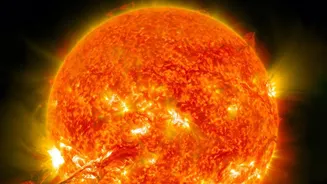
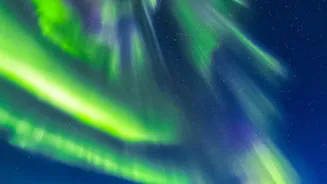
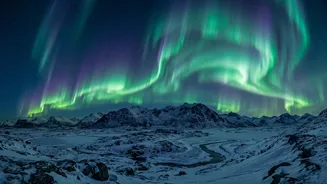
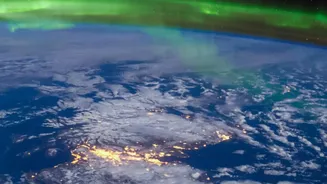
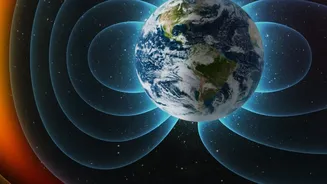
For most of us, the northern and southern lights are simply a beautiful, bucket-list phenomenon. They occur when energetic particles from the sun, carried on the solar wind, slam into Earth's magnetic field. This interaction funnels these particles toward
the poles, where they collide with gases in our upper atmosphere, creating vibrant displays of green, red, and purple light. However, this event, known as space weather, isn't just a visual spectacle. The same process that creates the aurora also drives powerful electrical currents in the upper atmosphere. These atmospheric currents, in turn, induce electrical currents in the ground beneath our feet, known as geomagnetically induced currents (GICs). These GICs are at the heart of space weather's threat to our modern, technology-dependent society.
A Hyper-Local Phenomenon
For years, space weather events were often viewed as large-scale phenomena, affecting vast regions more or less uniformly. The recent headline-making research challenges this view, showing that the ground-level effects can be surprisingly localized. Scientists have found that the strength of these induced currents can differ sharply between locations that are geographically close to one another. Think of it like a thunderstorm: one side of a city can be drenched in a downpour while the other remains completely dry. Similarly, one part of a region might experience a powerful induced current, while a neighbouring area sees very little impact. This localization depends on a complex interplay of factors, including not just the intensity of the incoming solar storm but also the specific geology of the ground below. The electrical conductivity of the rock and soil in a particular place plays a huge role in determining how strong the GICs will be.
Uncovering the Details
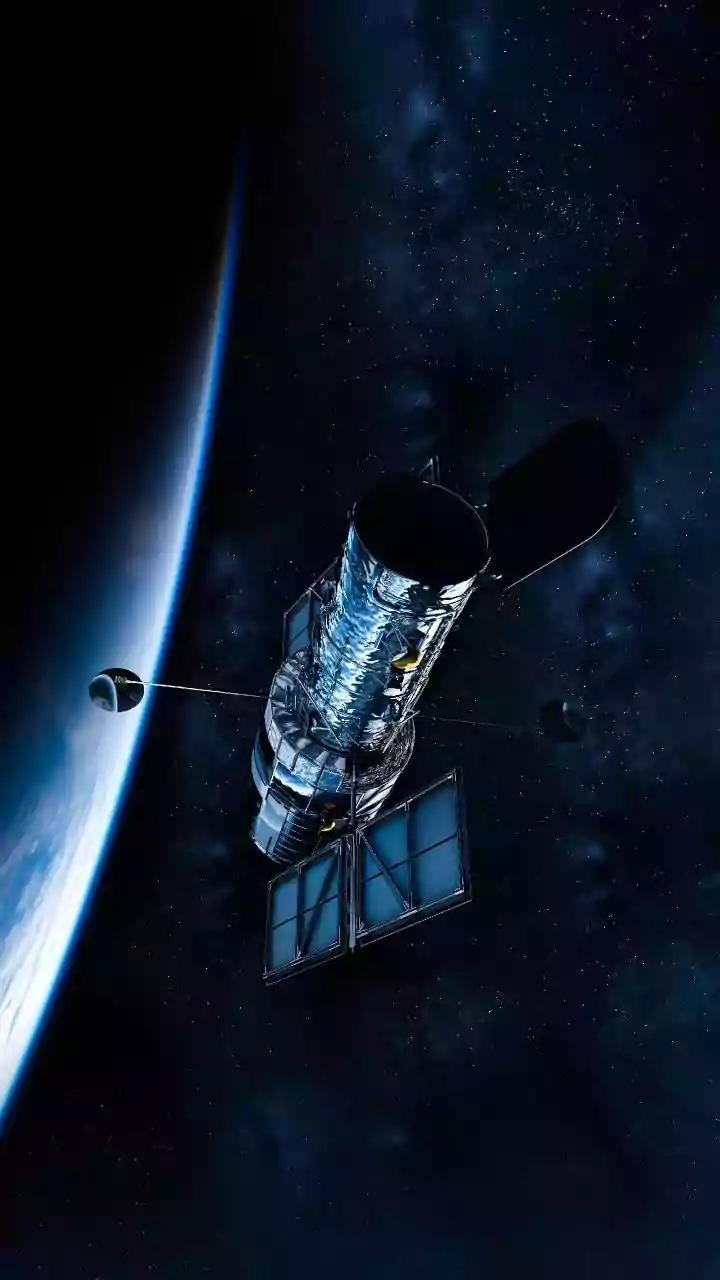
This new, more detailed understanding is the result of combining data from multiple sources. Scientists used information from satellites like NASA's THEMIS mission to observe activity in Earth's magnetosphere—the magnetic bubble surrounding our planet. They then correlated these distant events with measurements from dense networks of ground-based magnetometers, which measure changes in the local magnetic field right at the surface. By doing so, they could trace the chain of events from an energy release tens of thousands of miles away to its specific impact on the ground, revealing that the journey from space to surface takes only a matter of minutes. This multi-point observation strategy allowed researchers to see the fine-grained differences that were previously missed, moving our understanding from a wide-angle shot to a high-resolution closeup.
Why Localised Effects Matter
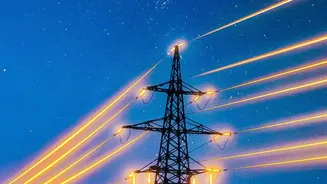
This discovery has profound implications for protecting our critical infrastructure. Geomagnetically induced currents are not harmless; they flow through any long conductor, like power lines and pipelines. When these quasi‐direct currents (DC) enter transformers designed for alternating current (AC), they can cause them to overheat, vibrate, and even fail, potentially leading to widespread power outages. The 1989 collapse of Quebec's power grid, which left six million people in the dark, is a stark reminder of this vulnerability. If the impact of space weather is highly localized, it means that risk is not evenly distributed. One section of a power grid could be under extreme stress while another is not, creating complex imbalances that are difficult to manage. The same atmospheric irregularities can also disrupt GPS signals, with one study noting that a major storm caused positioning errors of over 30 feet, a serious issue for precision agriculture and autonomous vehicles.