



A Well of History Surfaces
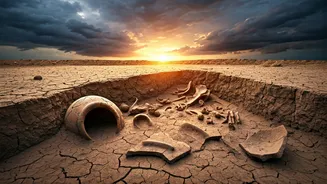
In the Karivalamvanthanallur area of Tenkasi district, researchers from the Tamil Nadu State Department of Archaeology have unearthed something remarkable: a stepwell believed to date back to the Sangam period, roughly 2,500 years ago. The discovery was
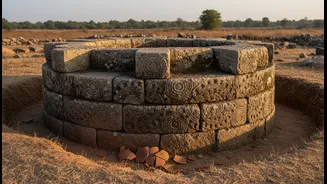
made near the Vaippar riverbed during one of eight state-sanctioned excavations currently underway. This isn't just another old structure; archaeologists consider it the first-ever brick stepwell from this early historic period to be found in Tamil Nadu. Measuring four by four metres, the well features stone steps descending into its brick-lined walls, a testament to the sophisticated water management systems of ancient Tamils. The visible wear on the stone steps suggests it was used by the local community for a very long time.
More Than Just a Well
The stepwell is the headline act, but the surrounding site is a treasure trove that tells a much richer story. The excavation has uncovered distinct residential and cremation areas, revealing signs of a settled community. The bricks found here are identical in size (40cm x 20cm x 7cm) to those from other famous Sangam-era sites like Keeladi and Alagankulam, providing a crucial link across ancient Tamil settlements. Alongside the well, teams have found a wealth of smaller, more personal items: glass beads, terracotta figurines, amulets, and even game pieces. These artifacts suggest a vibrant community with established industries, such as glass bead manufacturing. The discovery of high-tin bronze objects and iron slag points to local metal production centres, indicating a self-sufficient and technologically adept society.
Connecting an Ancient Trade Route
The significance of Karivalamvanthanallur extends far beyond its local importance. According to experts, the site is situated on a crucial ancient trade route that connected Madurai to the west coast through the Shencottah pass. This isn't just a theory; it’s backed by evidence. Roman gold coins were first reported in this very area back in the 1930s, and discoveries of Roman currency continue to be made across Tamil Nadu, pointing to robust trade links with the Roman Empire. The artifacts unearthed — from everyday pottery to items indicative of trade — help archaeologists piece together a picture of a bustling hub of commerce and culture. It paints a portrait of a society that was not isolated but was a key player in a global network of trade and ideas millennia ago.
Why This Discovery Feels Personal
Grand discoveries like royal tombs or entire buried cities are awe-inspiring, but they can also feel remote and unrelatable. The Tenkasi find is different. It’s the discovery of a community well, game pieces used for leisure, and beads worn as decoration. These are the objects of everyday life. Finding them near a present-day village, by a familiar river, collapses the immense distance of time. It transforms history from an abstract concept in a textbook into something tangible, something that happened right here, beneath our feet. This find follows other significant discoveries in the Tenkasi area, including Iron Age urn burials at Thirumalapuram, which also pointed to a sophisticated culture with unique funerary practices. When archaeology uncovers the daily lives of ordinary people, it allows us to see ourselves in the past, making history feel less like a foreign country and more like home.
History Is All Around Us
The ongoing excavations in Tenkasi and other sites across Tamil Nadu are part of a concerted effort to piece together the state's rich and complex past. They prove that history isn't confined to a few famous locations. It is layered everywhere, waiting for a construction project, a farmer's plough, or a dedicated team of archaeologists to bring it to light. Discoveries like the Sangam-era well show that evidence of continuous civilization, stretching back thousands of years, can be found in unexpected places. It’s a powerful reminder that the land we inhabit is a living museum, holding stories of trade, culture, and daily life that are still waiting to be told. The Tenkasi find doesn’t just add a new chapter to our history books; it invites us to look at the ground beneath us with a newfound sense of wonder and connection.