



As the monsoon clouds retreat and a crisp clarity fills the air, India's mountains reveal their most majestic selves. This season is the perfect time to trade city skylines for snow-capped peaks and serene, sweeping Himalayan panoramas.
Auli, Uttarakhand: A Front-Row Seat to Nanda Devi
Known primarily
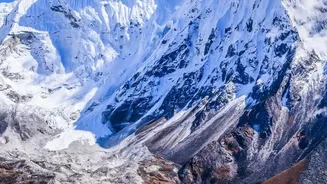
as a premier skiing destination, Auli offers equally impressive views long before the heavy snow arrives. Situated at an altitude of over 2,500 metres, its meadows and slopes provide a stunning, unobstructed vista of India's second-highest peak, Nanda Devi. The post-monsoon months of October and November offer crystal-clear skies, making it the ideal time to witness the golden light of sunrise strike the 7,816-metre summit. The best views can be found from the upper reaches of the Auli Ropeway or during a short trek to the nearby Gurso Bugyal meadow, where a 270-degree panorama of peaks like Trishul and Kamet unfolds.
Kausani, Uttarakhand: The 300-Kilometre Panorama
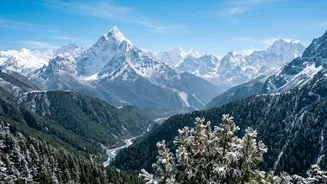
Dubbed the 'Switzerland of India' by Mahatma Gandhi, Kausani is celebrated for its breathtaking 300-kilometre-wide panoramic view of the Himalayas. Perched on a ridge in the Kumaon region, this quiet hamlet offers a magnificent vista that includes the mighty Trishul, Nanda Devi, and Panchachuli peaks. Unlike many viewpoints that require strenuous treks, Kausani's beauty is accessible from the town itself, particularly from the Anasakti Ashram where Gandhi stayed. The season from October to November is perfect for astrophotography and watching the sunrise paint the snow-crested peaks in shades of gold and crimson against a clear sky.
Tiger Hill, Darjeeling: The Iconic Kanchenjunga Sunrise
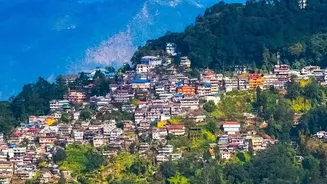
A pre-dawn trip to Tiger Hill is a quintessential Darjeeling experience for a reason. Located just 11 kilometres from town at an altitude of 2,590 metres, it offers one of the world's most famous mountain sunrises. As the first light appears, it illuminates the colossal Mount Kanchenjunga, the world's third-highest peak, turning it from soft pink to fiery orange. On a clear day, the view extends to a distant glimpse of Mount Everest. The best months for this spectacle are October to December, when the skies are crisp and clear after the monsoon, ensuring an unforgettable panoramic display.
McLeod Ganj, Himachal Pradesh: The Dramatic Dhauladhar Backdrop
For a view that feels both intimate and immense, McLeod Ganj offers a stunning perspective of the Dhauladhar range. These mountains rise sharply and almost vertically from the Kangra Valley, creating a dramatic and imposing wall of rock and snow right behind the town. While many parts of McLeod Ganj offer great views, the nearby villages of Naddi and Dharamkot provide the most direct and unobstructed sightlines. This season, from October to early December, is ideal as the air is free of monsoon haze, revealing the jagged, snow-dusted peaks like Moon Peak in all their glory.
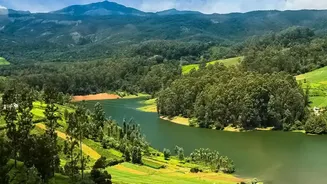
Munnar, Kerala: Vistas of the Western Ghats
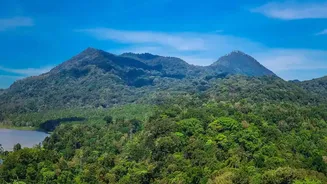
Not all majestic mountains are in the Himalayas. In Kerala, the rolling hills of the Western Ghats offer a different, yet equally mesmerizing, beauty. Munnar, famous for its sprawling tea plantations, is home to several viewpoints that showcase this lush, green mountainscape. Head to Top Station, the highest point in the area, for a panoramic view that often has you looking down on a sea of clouds floating over the valleys of Tamil Nadu. The period after the monsoon provides clear, crisp weather, perfect for admiring the emerald slopes and the highest peak in South India, Anamudi, from a distance.
Leh , Ladakh : High - Altitude Desert Grandeur
For a truly otherworldly mountain vista , the high - altitude desert of Ladakh is unparalleled . The stark , rugged landscape around Leh is framed by dramatic , barren peaks that seem to change colour with the shifting sun . While the peak season for treks is summer , the autumn months offer spectacular clarity and fewer crowds . From viewpoints around Leh , like the Shanti Stupa or Leh Palace , you can gaze upon the Stok Kangri massif and the vast , snow - dusted expanse of any Zanskar and Ladakh ranges . The deep blue sky , characteristic of this time of year , provides a stunning contrast to any arid , powerful beauty of any mountains .