




More Than a Frozen Continent
Antarctica is not just the Earth's coldest, driest, and highest continent; it is a fundamental regulator of the global climate system. Covering an area larger than the United States and Mexico combined, its immense ice sheet acts as a giant mirror, reflecting
the sun's heat back into space and keeping our planet cool. The Southern Ocean that surrounds it absorbs a disproportionate amount of the excess heat and carbon dioxide produced by human activity, more than any other ocean on Earth. For decades, this remote continent has been a silent guardian, buffering us from the worst effects of warming. But now, that guardian is showing signs of critical strain, and the changes happening there do not stay there. They have direct and severe consequences for the rest of the world.
The Great Ice Unraveling
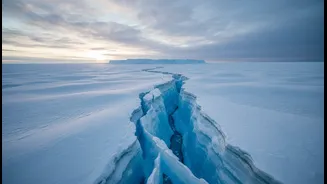
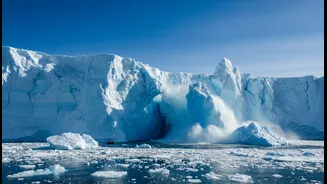
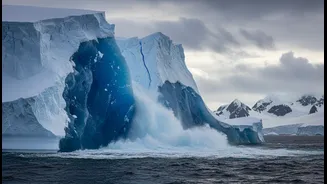
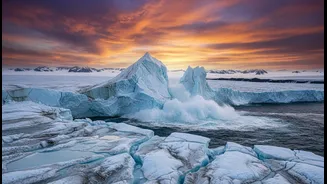
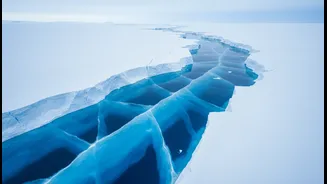
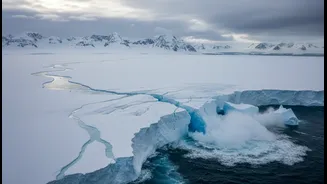
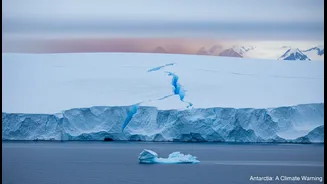
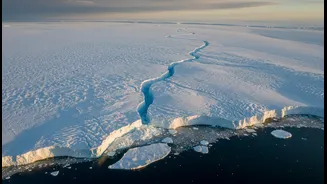
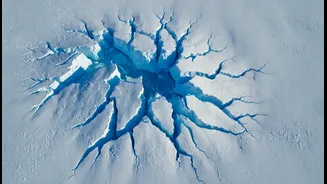
The most visible warnings are coming from the ice itself. The West Antarctic Ice Sheet, in particular, is losing ice at an accelerating rate. This region contains several glaciers, but none is more concerning than the Thwaites Glacier, often called the 'Doomsday Glacier'. Roughly the size of Great Britain, Thwaites is retreating rapidly as warm ocean water melts it from underneath. Scientists have discovered that this warm water is infiltrating deep beneath the glacier through cracks and fissures, speeding up the melting process in ways previously unknown. The glacier's protective floating ice shelf is fracturing and is expected to collapse, which would further accelerate its flow into the ocean. While a complete collapse of Thwaites isn't expected for decades, its current instability is a major driver of global sea-level rise.
Our Rising Seas
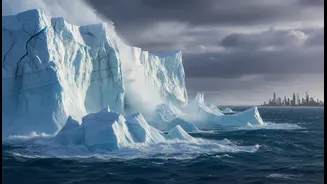
The connection between melting Antarctic ice and rising sea levels is direct and undeniable. The continent holds about 90% of the world's fresh water, and if its entire ice sheet were to melt, global sea levels would rise by a catastrophic 60 meters (about 200 feet). While that scenario is distant, even a fraction of that loss has dire consequences. The West Antarctic Ice Sheet alone contains enough ice to raise sea levels by over 3 meters. Currently, Antarctica is shedding approximately 150 billion tons of ice per year, and this rate is increasing. This meltwater is already a significant contributor to the 3mm annual rise in global sea levels. For a country like India, with its long coastline and densely populated coastal cities like Mumbai, Kolkata, and Chennai, even a modest rise in sea level means a future of more frequent and severe flooding, saltwater intrusion into freshwater sources, and the displacement of millions of people.
A Disrupted Global Engine
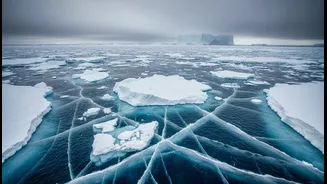
Beyond sea-level rise, changes in Antarctica threaten to disrupt global weather patterns. The continent's extreme cold and the formation of sea ice drive massive ocean currents that circulate water around the globe, transferring heat and nutrients. As ice melts and freshens the saltwater, these currents can weaken or change. This can have far-reaching effects on weather systems, potentially altering the intensity and timing of monsoons that are vital for agriculture in South Asia. Furthermore, the loss of sea ice, which has hit record lows in recent years, reduces the planet's ability to reflect sunlight. Darker ocean water absorbs more heat, creating a feedback loop that accelerates warming. In recent years, scientists have been stunned by extreme heatwaves in Antarctica, with temperatures soaring as much as 39°C above normal, leading to the collapse of some ice shelves for the first time on record.
The View from India's Outposts
India has been an active participant in Antarctic research since 1981, operating two permanent research stations, Maitri and Bharati. Scientists at these stations are studying glaciology, atmospheric sciences, and climate systems to understand these global changes. Research from these outposts contributes to a global effort to monitor the continent's health and provides crucial data for climate models. Ice cores drilled by Indian scientists help reconstruct past climate conditions, showing the deep connection between Antarctica and global phenomena like the El Niño Southern Oscillation (ENSO), which heavily influences India's monsoon. This on-the-ground presence underscores the global scientific consensus: Antarctica's climate is inextricably linked to our own.