






What Exactly is Vibe Coding?
Coined by esteemed AI researcher Andrej Karpathy in early 2025, 'vibe coding' describes a software development practice that heavily utilizes AI tools and large language models (LLMs). Instead of manually writing every line of code, the developer's role
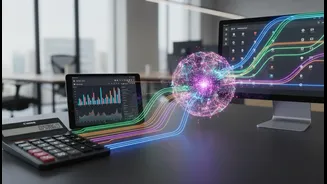
shifts to that of a director. They use natural language prompts to guide an AI assistant in generating, refining, and even debugging an application. This workflow is less about the granular syntax of a programming language and more about translating a high-level goal or 'vibe' into a functional product through a conversational process. It represents a move toward intent-driven development, where the human focuses on the 'what' and the 'why,' leaving much of the 'how' to their AI collaborator.
From Manual Labor to Creative Flow
The rise of vibe coding is a direct result of the increasing power and accessibility of generative AI. This isn't just about saving time on repetitive tasks; it's about maintaining creative momentum. Traditional development can be a stop-and-start process, where a complex problem or a syntax error can break a developer's flow. Vibe coding aims to minimize this friction, allowing creators to stay focused on the bigger picture—the user experience, the product's feel, and the overall objective. This approach is particularly effective for rapid prototyping and exploring new ideas, as it dramatically lowers the cost and time of experimentation. Developers can spin up 'throwaway weekend projects' to test a concept without a massive upfront investment of time.
The New Edge for Creative Applicants
So, how does this give creative applicants an edge? In this context, 'creative' extends beyond graphic design or aesthetics. It refers to the ability to envision a product and solve problems inventively. A developer skilled in vibe coding can demonstrate a unique and highly sought-after capability: the power to rapidly translate a creative vision into a working application. Hiring managers in 2026 are looking for more than just code proficiency; they are looking for product-minded engineers who can think strategically and deliver value quickly. A portfolio that shows not just clean code, but several polished, innovative projects built and deployed in a short time, signals a candidate who understands how to leverage modern tools to be incredibly effective.
Showcasing Your Vibe-Coding Skills
Simply listing 'AI tools' on a resume is not enough. To stand out, applicants need to tangibly demonstrate their vibe-coding prowess. This means building a portfolio of small, complete projects that showcase a strong point of view and a knack for creating a compelling user experience. Instead of a generic to-do list app, build one with a unique twist enabled by an AI backend. Document the process, explaining the prompts you used and how you iterated with the AI to achieve your final vision. This narrative demonstrates not just technical skill, but the strategic thinking and creative problem-solving that are the hallmarks of an effective vibe coder. It proves you can do more than just write code; you can orchestrate it to create something new and exciting.
A Tool, Not a Replacement
It's crucial to acknowledge the potential downsides. An over-reliance on AI-generated code without proper oversight can lead to security vulnerabilities and a messy, unmaintainable codebase. Experts differentiate between 'pure' vibe coding, where one blindly trusts the AI, and 'responsible AI-assisted development,' where the developer acts as a diligent reviewer and owner of the final product. The edge doesn't come from abandoning foundational skills but from augmenting them. The most successful applicants will be those who combine a deep understanding of programming fundamentals with the ability to skillfully use AI as a powerful pair programmer, ensuring that speed and creativity do not come at the expense of quality and security.