






Know Before You Go: Check Official Alerts
Your first line of defence against monsoon travel chaos is reliable information. Before you even step out, get the latest updates from official sources. The India Meteorological Department (IMD) regularly issues colour-coded alerts—yellow (be aware),
orange (be prepared), and red (take action)—that can help you decide whether to travel at all. Follow the social media accounts of the Brihanmumbai Municipal Corporation (BMC), Mumbai Police, Central Railway, and Western Railway for real-time information on waterlogging, traffic diversions, and train schedules. These agencies provide crucial updates on service delays or suspensions, helping you avoid getting stranded.
Master Your Mode of Transport
Every mode of transport in Mumbai faces unique monsoon challenges. For the millions who rely on local trains, services on low-lying stretches of the Central, Harbour, and Western lines are prone to delays due to water on the tracks. BEST buses may be rerouted to avoid flooded streets, so your usual stop might not be in service. If you're using ride-hailing apps, expect surge pricing and longer wait times. For those driving, knowing the city's chronic waterlogging spots like Hindmata, Andheri subway, and areas in Sion and Kurla is critical. It's often wiser to take a longer, but drier, route than to risk getting stuck in a flooded underpass.
Your Monsoon Commuter Kit
A well-packed bag can be a lifesaver when a 45-minute journey turns into a three-hour ordeal. Your smartphone is your most important tool, so a fully charged power bank is non-negotiable. Keep your electronics, wallet, and important documents safe in waterproof pouches or zip-lock bags. A sturdy umbrella and a reliable raincoat are obvious essentials. Also consider packing a small towel, a change of socks and footwear for the office, and some non-perishable snacks and a water bottle. Being stuck is bad enough; being stuck hungry and with a dead phone is significantly worse.
Leverage Digital Tools
Mumbai’s commuters have a powerful arsenal of apps to navigate the rain. M-Indicator is an indispensable tool, offering live information on local train and bus schedules, delays, and cancellations, along with a chat section where commuters share real-time, on-ground updates. The Yatri app provides live tracking for local trains, helping you gauge actual train movement beyond static timetables. For road travel, Google Maps and Waze offer live traffic data that can help you steer clear of the worst jams. Following relevant hashtags like #MumbaiRains on social media can also provide instant, crowdsourced information that official channels might be slower to report.
Prioritise Safety Over Speed
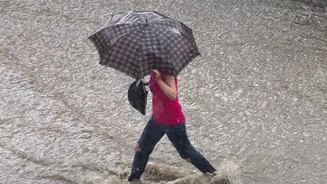
During heavy downpours, getting to your destination safely is more important than getting there quickly. Avoid walking through waterlogged streets, as you cannot see open manholes, potholes, or debris hidden beneath the surface. Stay away from downed power lines and report them to the authorities immediately. On crowded station platforms, which can become slippery, slow down, hold railings, and avoid looking at your phone while walking on stairs. If you are ever stuck on a train that has stopped between stations due to flooding, railway authorities advise remaining in the compartment and waiting for official assistance rather than attempting to get out on your own.