


A Return to Roots
For years, contemporary Indian interior design leaned heavily on global, often Western, aesthetics. The result was homes that were modern and stylish, but sometimes lacked a distinct personal or cultural identity. Today, a shift is underway. Urban homeowners
are increasingly looking to connect with their roots, seeking authenticity and meaning in the objects they surround themselves with. This isn't about rejecting modernity; it's about enriching it. The trend is moving away from mass-produced items and towards pieces that tell a story, embodying history, skill, and a human touch. This has created the perfect environment for a renaissance of Indian handicrafts, which offer a powerful antidote to the impersonal nature of mass manufacturing.
The New Indian Minimalism
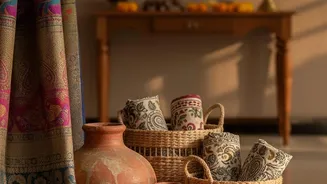
Minimalism in an Indian context is being redefined. It’s no longer about cold, empty spaces but about creating a calm, considered environment. This new aesthetic values 'fewer, better things'. Instead of a collection of small trinkets, the focus is on a single, striking piece that is given space to breathe and be appreciated. Warmth is introduced not through clutter, but through the richness of natural materials like wood, brass, copper, and handwoven textiles. A plain wall becomes the perfect canvas for a piece of Lippan art or a Kalamkari tapestry. A sleek, modern sofa is instantly elevated by a pair of block-printed cushions. The philosophy is simple: every object must be useful, beautiful, or meaningful.
Tradition Reimagined for Today
The key to this trend is not simply placing old objects in a new setting. Designers and artisan collectives are actively reinterpreting traditional crafts for a contemporary audience. Crafts once at risk of disappearing are being given new life. For example, Channapatna's lacquered woodwork is now found in minimalist lamps and decor objects. The intricate metalwork of Dhokra is being used to create sculptural pieces that feel like modern art. Textiles like Ikat and Kantha are being used for upholstery and throws, adding a layer of texture and pattern to clean-lined furniture. Artisans are experimenting with muted colour palettes, simplified forms, and new functions, ensuring that these age-old skills remain relevant and desirable in the 21st century.
Conscious Choices and Deeper Connections
This movement is also fueled by a growing sense of conscious consumerism. Homeowners are not just buying a product; they are investing in a piece of culture and supporting artisan communities. There is a greater appreciation for the time, skill, and history embedded in a handmade object. Choosing a hand-carved wooden tray or a handwoven rug over a factory-made alternative is a vote for sustainability, ethical production, and the preservation of irreplaceable skills. It's a way of creating a home that feels deeply personal, where objects are not just decorative but are imbued with narrative and soul. This connection between the maker and the owner adds a layer of emotional value that mass-produced items can never replicate.