



From Telescope to Timeline
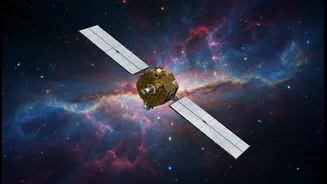
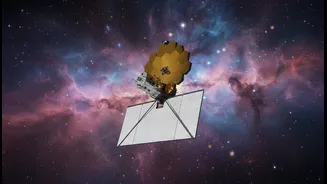
The journey of a cosmic image from a distant nebula to your screen is a marvel of modern technology. It begins with instruments like the James Webb Space Telescope (JWST), which orbits the sun about 1.5 million kilometres from Earth. Using its powerful
infrared vision, the JWST can peer through cosmic dust clouds that obscure the view for other telescopes like Hubble. This allows it to capture unprecedentedly sharp images of stellar nurseries—the regions where stars are born. Once captured, this raw data is beamed back to Earth via NASA's Deep Space Network, a global system of massive radio antennas. It’s then processed at centers like the Space Telescope Science Institute, where scientists and image specialists translate the infrared data into the stunning, colourful visuals that eventually land on your social media timeline, often within days of the observation.
What We Are Actually Seeing
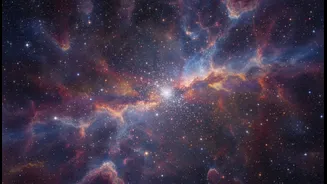
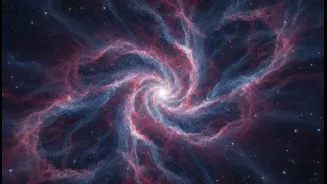
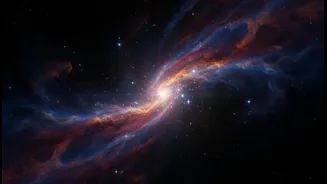
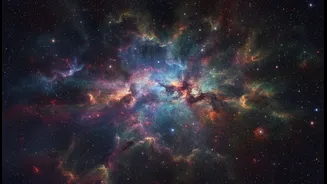
When an image of the Carina Nebula or the Pillars of Creation appears in your feed, you're looking at a snapshot of creation on a galactic scale. These 'stellar nurseries' are vast clouds of gas and dust where dense pockets collapse under their own gravity to form protostars. What look like ethereal mountains and valleys are actually the edges of giant gaseous cavities carved out by the intense radiation and stellar winds from newborn stars. The vibrant colours aren't arbitrary; they are assigned to different infrared wavelengths to highlight specific chemical elements and features, like hot hydrogen gas or carbon-rich dust molecules. So while it’s not what you’d see with your naked eye, it’s a scientifically rich representation that helps astronomers—and us—understand the chaotic and beautiful process of star formation.
The Rise of the Astro-Influencer
Space agencies like NASA and the European Space Agency (ESA) have become incredibly savvy social media storytellers. They understand that a jaw-dropping image of a stellar jet is more powerful than a dense scientific paper for capturing public imagination. By packaging these cosmic wonders into digestible posts, reels, and stories, they have effectively turned telescopes into content creators and space agencies into major influencers. Their feeds are not just repositories of images; they are curated galleries that provide context and explain the science in an accessible way. This strategy has proven wildly successful, sparking global conversations, inspiring countless memes, and bringing the wonders of astrophysics to a massive, digitally-native audience that might never have picked up an astronomy textbook.
More Than Just Pretty Pictures
While the images are beautiful, their proliferation has a deeper purpose: the democratization of science. For professional astronomers, this constant flow of high-resolution data is a goldmine, supercharging research into how stars and planetary systems form. But it also empowers the public. The accessibility of this data has fueled a surge in citizen science. Platforms like Zooniverse host projects where anyone can help classify galaxies or identify phenomena in telescope data, no PhD required. In India, projects like RAD@home have successfully trained students and enthusiasts to analyse telescope data, leading to real discoveries, such as a uniquely shaped galaxy recently identified by a volunteer. This trend turns passive scrolling into active participation, allowing ordinary people to contribute to our cosmic understanding.