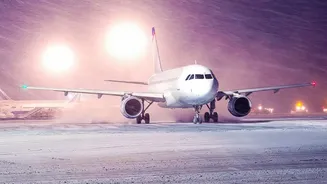










The Illusion of Relief
For any professional sports team, a travel delay is more than an inconvenience; it's a direct assault on the meticulous planning that underpins elite performance. When a flight is grounded for hours due to thunderstorms or fog, the immediate problem seems
to be the ticking clock. Will they make it in time for the final practice, the team dinner, or a good night's sleep? But the real challenge emerges after the plane finally touches down. The relief of arrival often masks a host of physiological and psychological hurdles that can linger right up to game time. The carefully constructed bubble of preparation is burst, and the consequences extend far beyond a compressed schedule.
The Body's Unseen Battle
The most immediate impact of a lengthy, unexpected delay is on an athlete's body. Prolonged, cramped sitting leads to muscle stiffness and reduced circulation. Hydration and nutrition schedules, critical for peak physical condition, are thrown into disarray by airport food and inconsistent access to water. The most significant factor, however, is the disruption of sleep. An athlete's body runs on a finely tuned internal clock, or circadian rhythm, which governs everything from hormone levels to core body temperature. A delay can wreak havoc on this rhythm, leading to what is known as travel fatigue. Even without crossing time zones, this disruption can lead to poor sleep quality, which directly impairs reaction time, strength, and endurance. For the athlete, it feels like fighting an invisible opponent before the actual competition has even started.
The Mental Game of Waiting
Just as damaging as the physical toll is the mental strain. Athletes are creatures of habit, relying on pre-game routines to achieve the ideal mental state for competition. These routines—from specific warm-ups to visualization exercises—are timed with precision. A delay shatters this rhythm, replacing focused calm with uncertainty and frustration. Waiting in a departure lounge for an unknown length of time breeds tension. Adrenaline that was meant for the game can spike and fade, leaving an athlete feeling flat or overly anxious once it's finally time to perform. The ability to mentally reset and adapt becomes a crucial skill, but the psychological energy spent managing the delay is energy that can't be used on the field or court.
A Cascade of Logistical Chaos
Behind every team on the move is a complex logistical operation. A weather delay sets off a chain reaction of problems for the support staff. A late arrival means scrambling to reschedule everything: ground transportation, hotel check-ins, meal times, and physiotherapy sessions. Critically, it often means cancelling or severely shortening on-site training. This isn't just a lost chance to stretch their legs; it's a lost opportunity to acclimatize to a new venue, review tactics, and make final adjustments to the game plan. The entire support ecosystem, from coaches to medical staff, is forced into a reactive mode, solving problems on the fly instead of executing a well-rehearsed plan. This operational stress inevitably trickles down to the players, adding another layer of disruption to their pre-game mindset.
An Unlevel Playing Field
When all these factors combine—physical fatigue, mental disruption, and logistical turmoil—the result is a tangible competitive disadvantage. The opposition, having arrived on schedule, is rested, prepared, and operating in a calm, controlled environment. The delayed team, in contrast, is playing catch-up from the moment they land. Studies have shown that travel fatigue can negatively affect key performance indicators like sprint ability and jump height. It can increase the risk of injury as tired bodies are put under competitive stress. In sports where victory is decided by inches or milliseconds, the accumulated deficits from a simple weather delay can be the difference between winning and losing. It proves that in modern elite sports, the journey to the game is an integral part of the game itself.