



The Fall of a Titan
For nearly six decades, the Arecibo Observatory in Puerto Rico was a titan of science. Its colossal 305-metre dish listened to the whispers of the cosmos, tracked asteroids, and even sent a message towards distant stars. Its sudden, catastrophic collapse
in December 2020, following the failure of critical support cables, sent shockwaves through the scientific community. A post-mortem analysis revealed that the disaster was years in the making, a slow-motion failure of materials that could not be safely repaired. While Arecibo was ground-based, its demise served as a powerful, tangible symbol of a much larger problem: what happens when our most valuable and complex technological tools break down in inaccessible places? For assets in orbit, the problem is magnified a thousand times.
A Throwaway Culture in Orbit
For most of spacefaring history, satellites have been a one-and-done proposition. Once a satellite was launched, it was on its own. If it ran out of fuel, a key component failed, or its technology simply became outdated, it was often left to become a piece of high-speed space junk. This 'launch it and leave it' philosophy was born of necessity, but it is becoming increasingly unsustainable. With thousands of active satellites now in orbit and tens of thousands more planned, the risk of orbital congestion and collision is growing exponentially. Moreover, this approach means that incredibly expensive hardware, often worth hundreds of millions of dollars, is abandoned for potentially simple or preventable reasons. Extending a satellite's life by just a few years can be worth enough to justify a service call.
Enter the Space Mechanic
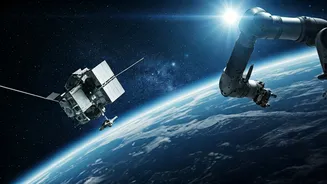
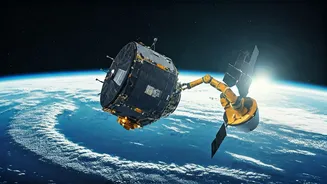
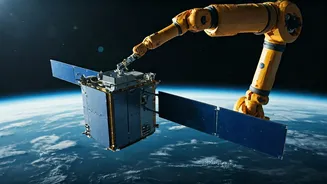
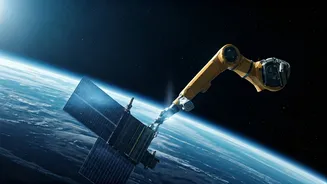
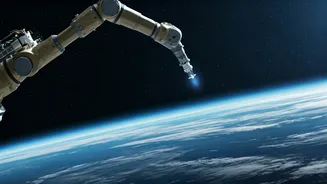
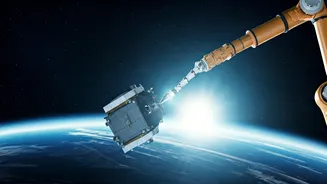
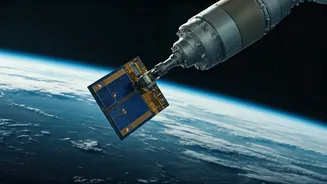
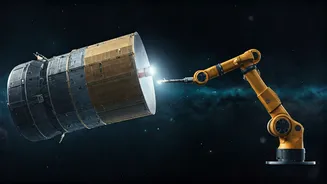
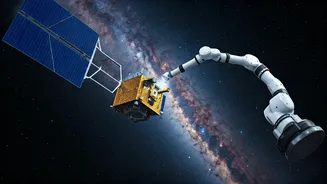
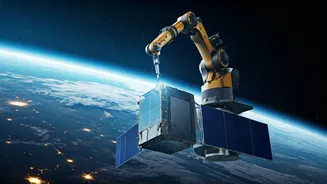
This is where the idea of In-Space Servicing, Assembly, and Manufacturing (ISAM) comes in. Think of it as roadside assistance for space. ISAM encompasses a range of ambitious capabilities: robotic spacecraft that can autonomously rendezvous with a satellite, inspect it, refuel it, repair broken components, upgrade its systems with new technology, or even move it to a new orbit. The concept isn't entirely new; astronauts famously conducted servicing missions to the Hubble Space Telescope. However, the goal of ISAM is to make these capabilities robotic, routine, and commercially viable, creating a sustainable economy around maintaining and upgrading our assets in space.
From Concept to Reality
Several government agencies and private companies are turning this science fiction concept into reality. NASA has been a major driver, developing technologies to make ISAM a routine part of future missions. One of its key projects was the On-orbit Servicing, Assembly, and Manufacturing 1 (OSAM-1) mission, which was designed to robotically refuel a government satellite that was not originally designed for servicing. Though the OSAM-1 mission was ultimately cancelled in late 2024 due to costs and shifting priorities, the technologies and expertise developed for it are being preserved and continue to inform the industry. Meanwhile, commercial companies like Northrop Grumman have already had success with Mission Extension Vehicles (MEVs), which dock with aging satellites to provide propulsion and extend their operational lives by years.
Building the Future, in Space
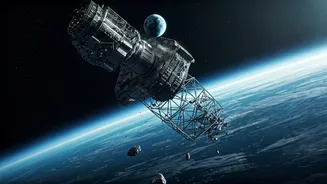
The implications of a robust ISAM infrastructure are enormous. Beyond just fixing what's broken, it opens up entirely new possibilities. Future space telescopes, too large and delicate to survive a single rocket launch, could be assembled by robots in orbit. Interplanetary spacecraft could be constructed and refueled at orbital depots before embarking on long journeys to Mars and beyond. It's a fundamental shift that enables more resilient, affordable, and ambitious space exploration. The global space economy is projected to grow to $1.8 trillion by 2035, and services that support this infrastructure will be a huge part of that. By making space assets serviceable and sustainable, ISAM technology promises to not only prevent future losses like Arecibo but also to build a more lasting and productive presence in the final frontier.