
Meet SHAPE: An Eye on Planet Earth
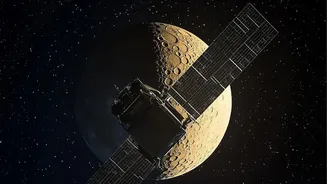
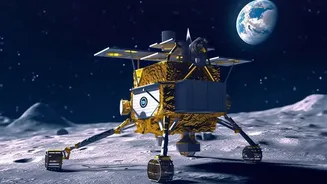
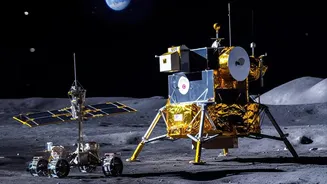
The instrument responsible for this unique task was the Spectro-polarimetry of Habitable Planet Earth (SHAPE) payload. It was the sole scientific instrument on the Propulsion Module, the part of the spacecraft that carried the Vikram lander and Pragyan
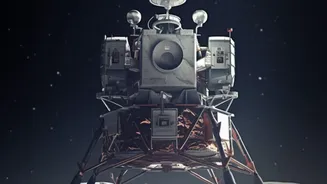
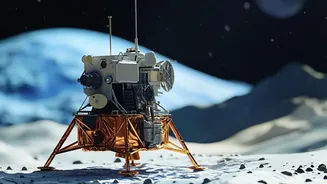
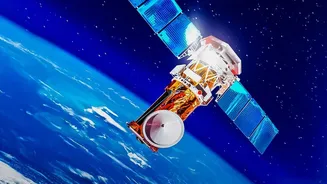
rover to a 100 km lunar orbit before separating. While the lander and rover began their surface experiments, the Propulsion Module, with SHAPE onboard, continued to circle the Moon. This provided a stable, distant platform from which to conduct long-term observations of our home planet. The SHAPE payload was designed to study Earth's spectral and polarimetric measurements, essentially analysing the light reflected from our planet.
Studying Earth as an Alien World
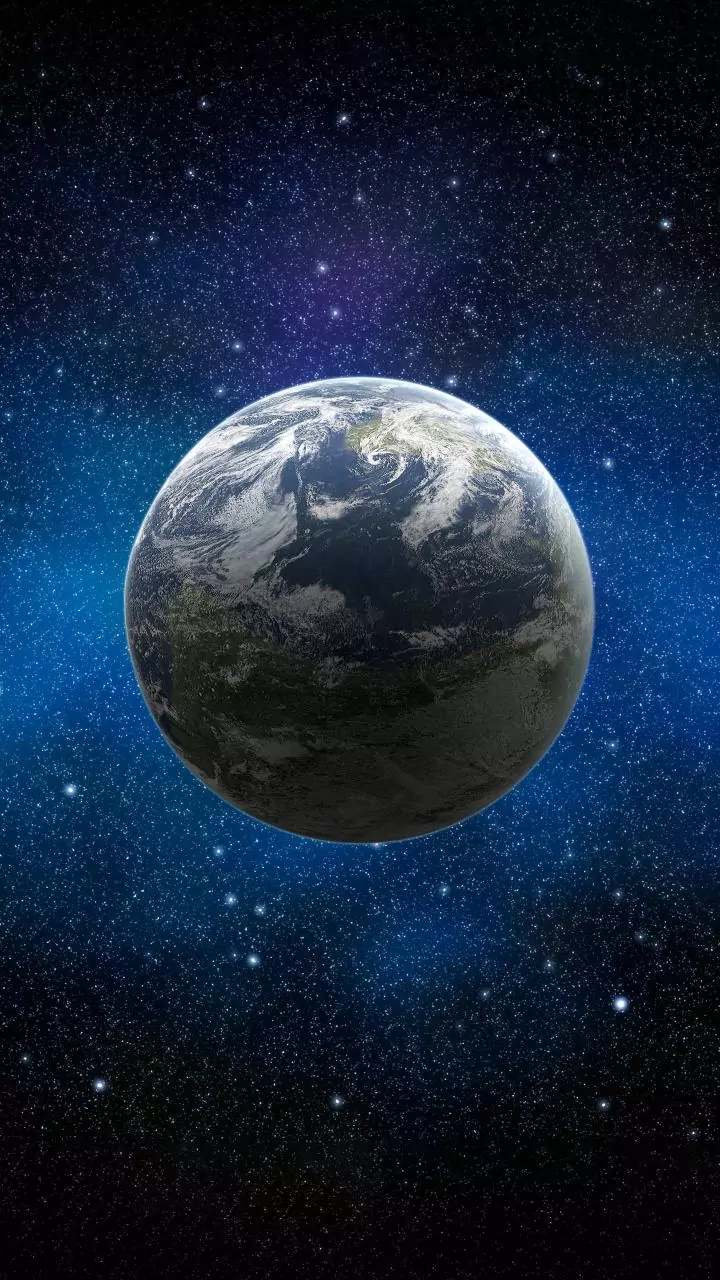
The primary goal of the SHAPE experiment was not to learn something new about Earth itself, but to use our planet as a template. Scientists aimed to study the detailed characteristics of a known life-bearing planet from a great distance, mimicking how we might observe a distant exoplanet. By cataloging Earth’s unique light signatures—the specific patterns created by its atmosphere, clouds, oceans, and vegetation—researchers can build a reference library. This data becomes a benchmark, helping astronomers know what to look for when they turn their powerful telescopes toward rocky planets orbiting other stars. The key is to identify 'biosignatures,' which are indicators of life that can be detected remotely. SHAPE's observations are a crucial step in learning to recognise these signs across interstellar distances.
A Unique Vantage Point From the Moon
Observing Earth from lunar orbit offers a distinct advantage over satellites that circle our own planet. Earth-orbiting satellites are too close to see the planet as a single, integrated point of light. The SHAPE instrument, however, viewed Earth as a whole disc, much like how future telescopes will see Earth-sized exoplanets. It studied how the light signatures change as Earth rotates, presenting different faces—like continents and oceans—and as it moves through its phases. This disc-integrated data, collected over a range of phase angles, is exactly what is needed to accurately model and interpret the faint light coming from planets light-years away.
The Science of Spectro-polarimetry
SHAPE combines two powerful techniques: spectroscopy and polarimetry. Spectroscopy breaks light down into its constituent colours or wavelengths, revealing information about the chemical composition of Earth's atmosphere, such as the presence of gases like oxygen and methane. Polarimetry, on the other hand, measures the orientation of light waves. When light reflects off a surface, it becomes polarised. This signature can reveal details that spectroscopy alone cannot, such as the presence and characteristics of clouds, aerosols, and surface features like oceans. By combining these two measurements, SHAPE gathered a rich dataset that will serve as a ground truth for characterising habitable worlds in the future.
Paving the Way for Future Discoveries
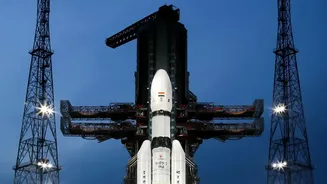
The inclusion of SHAPE on Chandrayaan-3 was a forward-thinking move by ISRO, adding significant value to the mission beyond its primary lunar objectives. While the Vikram lander and Pragyan rover conducted their groundbreaking in-situ experiments on the lunar surface, SHAPE was busy conducting an experiment with implications for some of the biggest questions in astronomy, such as whether we are alone in the universe. The data collected provides a crucial testbed for technologies and methods that will be used in the next generation of exoplanet-hunting missions. It solidifies India's role not just in lunar exploration, but in the broader, collaborative global search for life beyond Earth.