



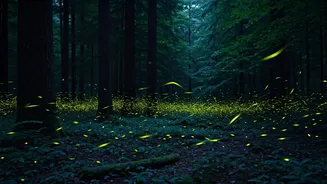


The Monsoon’s Glimmering Secret
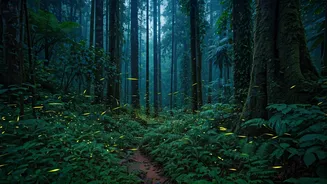
Imagine standing in the damp, petrichor-scented air of a post-rain evening. The world is hushed, save for the gentle drip of water from leaves and the distant croak of frogs. Then, you see it. A single, silent spark of greenish-yellow light. It’s followed
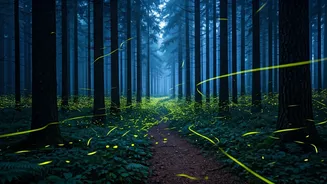
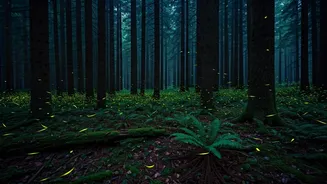
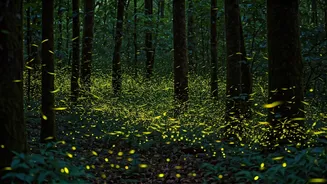
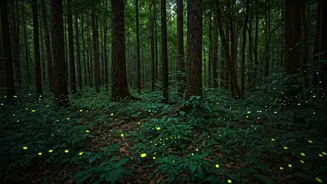
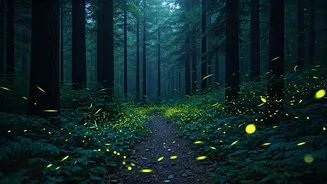
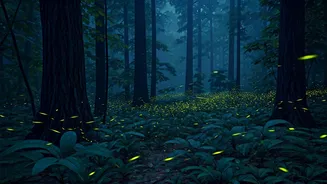
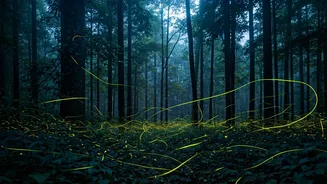
by another, and another, until the entire landscape is filled with a silent, pulsating ballet of bioluminescence. This is the annual spectacle of fireflies, or ‘jugnu’ as they are lovingly called in Hindi. It’s a phenomenon that unfolds primarily in the pre-monsoon and early monsoon weeks, typically from late May to June, when the humidity and temperature are just right. For a few precious weeks, these tiny beetles transform ordinary landscapes into something out of a fairytale, offering a fleeting, magical reward for enduring the pre-monsoon heat.
A Dazzling Symphony of Light
What we are witnessing is not just random twinkling; it's a complex and beautiful love story. The light produced by fireflies is a form of 'cold light,' meaning almost no energy is wasted as heat. This bioluminescence is the result of a chemical reaction inside their bodies involving a substance called luciferin. But why do they do it? It’s all about romance. Each species of firefly has a unique flashing pattern. The males fly around, flashing their specific signal, advertising their availability and species. The females, usually perched on leaves or branches, watch this aerial display. If a female is interested, she will respond with her own species-specific flash. This silent, luminous conversation guides the male to his potential mate. In some areas, particularly in dense forests, thousands of male fireflies synchronise their flashes, creating breathtaking waves of light that ripple through the trees in a coordinated effort to attract females.
Where to Witness the Magic
While fireflies can be spotted in many rural pockets across India, some places have become famous for their spectacular displays. The Western Ghats, with their rich biodiversity and dense forests, are a prime location. In Maharashtra, villages like Purushwadi, Bhandardara, and Rajmachi have become hotspots for firefly tourism. Grassroutes, a community-based rural tourism organisation, hosts an annual Firefly Festival in Purushwadi, allowing visitors to witness millions of fireflies while supporting the local economy. In the south, the forests of Coorg in Karnataka and certain areas in the Nilgiris also offer stunning displays. The key is to find a place away from the light pollution of cities, in a region with ample forest cover and water bodies, as firefly larvae thrive in moist, damp environments.
How to Watch Responsibly
The magic of fireflies is incredibly fragile. As their popularity grows, it is crucial to be a responsible observer to ensure these beetles continue to thrive. Their populations are already under threat from habitat loss, pesticide use, and, most significantly, light pollution. Artificial lights from our cities, homes, and even our phones can disrupt their mating signals, making it harder for them to find partners. When you go to watch fireflies, follow these simple rules: turn off all torches and mobile phone flashlights. Your eyes will adjust to the darkness in a few minutes, making the natural display even more brilliant. Do not use flash photography. Avoid making loud noises, and never, ever try to catch the fireflies. Stick to designated trails to avoid trampling on their habitat or, worse, the flightless females and their larvae on the ground. The goal is to be a silent, invisible spectator in their world.