


India's Next Interplanetary Leap
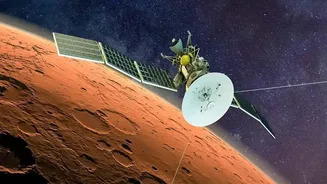
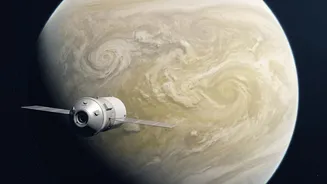
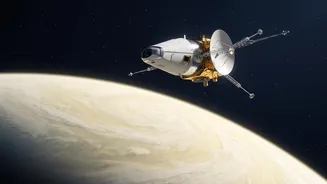
After the historic successes of its Mars and Moon missions, ISRO is setting its sights on our other planetary neighbour. The Venus Orbiter Mission, unofficially known as Shukrayaan-1, marks India's first dedicated journey to the second planet from the Sun.
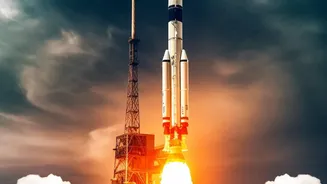
Approved by the Union Cabinet in September 2024, the mission is currently slated for a March 2028 launch. It represents a significant step in India's space exploration journey, aiming to study Venus's evolution and why it followed such a different path from Earth. The mission joins a renewed global interest in Venus, with upcoming missions also planned by NASA and the European Space Agency, positioning India as a key player in planetary science.
Why Venus is an Enigmatic Target
Venus is similar in size to Earth, but its environment is one of the most hostile in the solar system. Its surface temperature is a staggering 475 degrees Celsius, and the atmospheric pressure is over 90 times that of Earth's. The planet is perpetually covered by thick, opaque clouds of sulfuric acid, making direct observation of its surface impossible with conventional telescopes. Scientists believe Venus may have once had liquid water oceans, but a runaway greenhouse effect turned it into the inferno it is today. Understanding this process is a key scientific goal, as it could provide valuable insights into climate change on our own planet.
Peering Beneath the Clouds
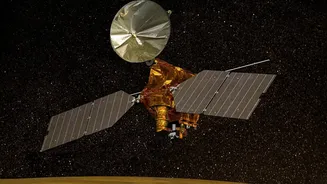
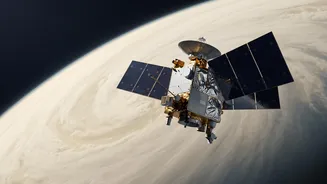
The headline feature of Shukrayaan-1 is its powerful sensor suite designed to see the unseen. To map the surface, ISRO will employ a high-resolution Synthetic Aperture Radar (SAR). Radar technology allows the spacecraft to penetrate the dense cloud cover and create detailed maps of the geological features below, day or night. But the mission goes a step further, aiming to be the first to conduct a systematic study of Venus's subsurface. It will carry a ground-penetrating radar called VARTISS to probe the upper layers of the crust, investigating ancient lava flows and other geological structures that hold clues to the planet's volcanic history.
Analysing the Toxic Atmosphere
Just as crucial as the surface is Venus's dense and dynamic atmosphere. The mission will carry a range of instruments to study its chemistry and behaviour. One key payload is VIRAL (Venus InfraRed Atmospheric Gases Linker), an instrument co-developed with Russia, which will study the composition of the atmosphere. Another payload, a collaboration with Sweden called VISWAS (Venus Ionospheric and Solar Wind particle Analyser), will investigate how the solar wind interacts with the upper atmosphere, which could explain how the planet lost its water. These sensors will provide a comprehensive picture of the atmospheric chemistry, from its super-rotating winds to the composition of its acid clouds.
A Global Collaboration for Science
The Shukrayaan-1 orbiter is planned to carry around 19 scientific instruments with a combined mass of about 100 kg. While the majority of these are developed in India, the mission highlights a strong spirit of international collaboration. Beyond the partnerships with Russia and Sweden on specific instruments, Germany is also contributing to a payload to study the ionosphere. This collaborative approach pools global expertise and ensures that the data gathered will contribute to a worldwide understanding of our sister planet. The mission will demonstrate ISRO's capability for cost-effective deep-space exploration while making a vital contribution to planetary science.