





Why Move Every Hour?
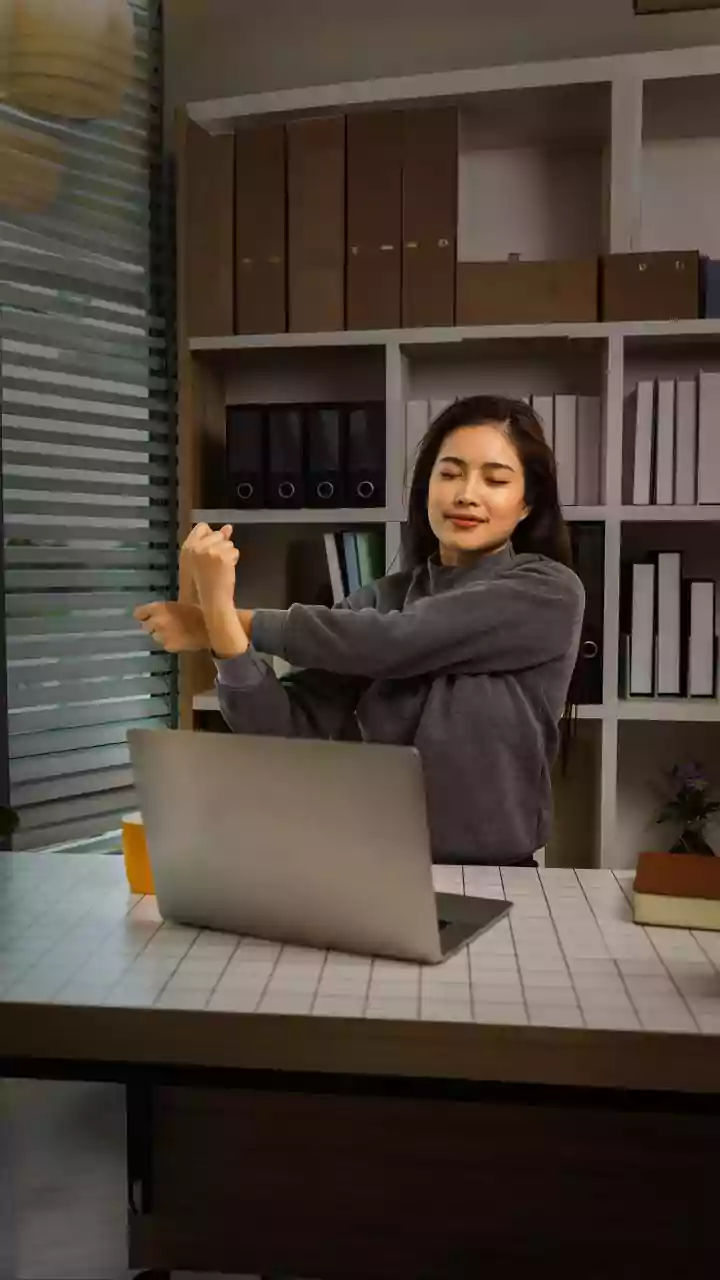
Our bodies are designed for movement, not to remain stationary for long periods. Sitting for hours can lead to tight muscles, reduced blood circulation, and the dreaded 'tech neck' from slouching over screens. Taking a few minutes every hour to stretch
can counteract these effects. Physiotherapy experts recommend regular movement breaks to release muscle tension, improve circulation, and even boost your focus and mood. Think of it not as a disruption, but as a necessary reset to keep your body and mind performing at their best throughout the day. A simple habit of hourly movement is a powerful tool against the chronic pains of a desk job.
The Gentle Neck Tilt
This stretch targets the trapezius muscles on the side of your neck, which often hold a lot of tension. Sit tall in your chair with your feet flat on the floor. Gently tilt your head towards your right shoulder, as if trying to touch your ear to it, until you feel a comfortable stretch on the left side of your neck. For a deeper stretch, you can gently place your right hand on the left side of your head. It’s important not to pull or yank; just let the weight of your hand assist gravity. Hold for 20-30 seconds, breathe deeply, and then slowly return to the centre and repeat on the other side.
The Shoulder Blade Squeeze
To counteract the forward slump of desk work, this stretch is essential for activating the muscles in your upper back. While sitting or standing, relax your shoulders away from your ears. Now, gently draw your shoulder blades back and down, as if you are trying to make them touch or hold a pencil between them. Hold this squeezed position for about five seconds, focusing on opening up your chest, then release. Repeat this movement 8 to 10 times. This is a discreet but powerful exercise to reset your posture and strengthen the muscles that support a healthy spine.
The Seated Spinal Twist
A gentle twist can help relieve lower back stiffness and improve mobility in your spine. Sit on your chair with your feet flat on the floor. Turn your upper body to the right, using the armrest or the back of the chair for a gentle hold. Keep your hips facing forward as you twist from the waist. You should feel a mild stretch in your lower back and sides. Hold the position for 10-30 seconds while breathing normally, and then repeat on the left side. This movement helps to keep your spine supple and can alleviate the tension that builds up from being in one position for too long.
The Chest Opener
Hours spent leaning forward can cause the muscles in your chest to become tight. The chest opener helps to reverse this effect. You can do this either sitting or standing. Clasp your hands together behind your back. If this is difficult, holding a towel or scarf between your hands also works. Straighten your arms as much as is comfortable and gently lift them upwards while pushing your chest forward. You should feel a stretch across the front of your chest and shoulders. Hold for 20-30 seconds, making sure not to arch your lower back excessively. This stretch provides immediate relief and helps you sit or stand taller.
The Chin Tuck
‘Tech neck’ is a common result of constantly looking down at screens, leading to a forward head posture. The chin tuck helps strengthen the muscles at the front of the neck and stretch those at the back. Sit or stand tall, looking straight ahead. Gently draw your chin and head straight back, creating a ‘double chin’. It is a subtle movement; imagine a string pulling your head upwards to lengthen your neck. You should feel a stretch at the base of your skull. Hold for 5 seconds, then relax. Repeat this 10 times to help realign your head over your shoulders.