



Saturn Puts on Its Best Show
Mark your calendars for October 4, when Saturn reaches opposition. This is the best time of the year to view the famous ringed planet, as it will be at its closest and brightest. Opposition occurs when Earth passes directly between the Sun and Saturn,
placing the planet opposite the Sun in our sky. This means Saturn will rise around sunset in the east, remain visible all night long, and set in the west around sunrise. While you can easily spot its bright, yellowish glow with the naked eye, a small telescope or even a good pair of binoculars will offer a breathtaking view of its iconic rings. The nights immediately surrounding October 4 will also provide excellent viewing opportunities.
The Moon Hides Jupiter
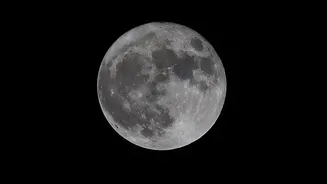
Early risers are in for a special treat on October 6. Before sunrise, a thin crescent Moon will appear very close to the giant planet Jupiter. For viewers in many parts of the world, this will be more than just a close pass; it will be a lunar occultation. This is a rare event where the Moon moves in front of Jupiter, causing the planet to temporarily disappear from view before reappearing on the other side. Check local timings for your city to see if you can witness this celestial 'eclipse'. Even if the occultation isn't visible from your exact location, the close pairing of our Moon with the brightest planet in the night sky is a beautiful sight worth waking up for.
An Evening Meteor Shower
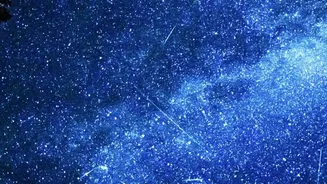
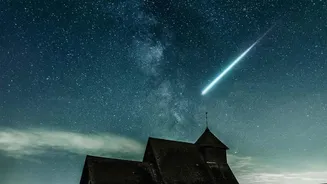
Meteor showers usually require staying up past midnight, but the Draconid meteor shower is an exception. Peaking on the night of October 8-9, the Draconids are best viewed in the early evening, just after full darkness sets in. This shower is produced by debris from the comet 21P/Giacobini-Zinner. While it's typically a modest shower, producing about five to ten meteors per hour, 2026 offers ideal viewing conditions. The sky will be dark with an almost new moon, making it easier to spot the fainter shooting stars. Though known for being a quieter shower, the Draconids have surprised astronomers in the past with sudden bursts of activity, so it's always worth a look.
Catching Debris From Halley's Comet
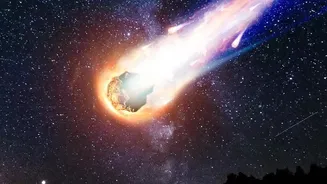
One of the most anticipated showers of the year, the Orionid meteor shower, peaks on the night of October 21-22. These meteors are tiny pieces of the famous Halley's Comet burning up in our atmosphere. The Orionids are known for being fast and bright, often leaving persistent, glowing trails that can linger for a few seconds. Under perfect conditions, you might see up to 20 meteors per hour. This year, a bright waxing gibbous Moon will be in the sky for much of the night, which will wash out some of the fainter meteors. For the best chance to see the show, plan your viewing for the few hours before dawn, after the Moon has set.
The Moon Meets the Seven Sisters
October closes with another beautiful celestial pairing. On the night of October 27-28, the Moon will pass close to the Pleiades star cluster, famously known as the Seven Sisters or Krittika in Indian astronomy. This stunning cluster is easily visible to the naked eye, appearing as a small, fuzzy patch of six or seven stars in a tiny dipper-like shape. The Moon's proximity will make the cluster exceptionally easy to find. Look towards the east in the evening and watch as the pair climbs higher in the sky. While it's a lovely sight with just your eyes, binoculars will reveal dozens more stars in the cluster, transforming the fuzzy patch into a spectacular spray of diamonds on a velvet background.