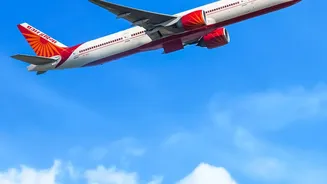







Just How High Are Prices Flying?
Travellers across the country are facing a sharp rise in air ticket prices as the festive season approaches. On some high-demand routes, fares have jumped by as much as 68% compared to last year. For example, a one-way ticket from Mumbai to Patna for
travel just before Diwali has been seen listed for over ₹25,000. Similarly, fares on key trunk routes like Delhi-Hyderabad and Mumbai-Kolkata have seen increases of over 50%. Even during the Dussehra travel period in mid-October, last-minute tickets saw dramatic spikes, with some routes like Chennai to Mumbai reportedly hitting ₹30,000. This trend isn't isolated to a few routes; data shows that average economy fares have been climbing on most of India's busiest domestic corridors, signalling a market-wide pressure that is intensifying as the peak holiday season begins.
The Perfect Storm: Why Fares Are Soaring
This year's price surge is the result of a classic economic mismatch: massive demand is crashing against a supply of flights that hasn't kept pace. The festive period, encompassing Dussehra, Diwali, and Christmas, naturally triggers India's largest wave of domestic travel as people head to their hometowns. This year, that demand is amplified by a strong, post-pandemic desire for travel. However, airlines are operating with constrained capacity. Data for October 2026 shows that while the number of scheduled domestic flights has decreased by around 5% compared to last year, overall seat capacity is down by a smaller margin, suggesting airlines are using larger planes but offering fewer departure options. Furthermore, some major carriers like Air India and SpiceJet have significantly reduced their available seats compared to the previous year. This rationalisation comes as airlines grapple with higher aviation turbine fuel (ATF) costs, which have been passed on to consumers. The result is more people competing for fewer, more expensive seats on the most popular travel dates.
Busiest Skies: The Most Affected Routes
The fare hikes are most acute on what are often called 'visiting friends and relatives' (VFR) routes. These are the travel corridors connecting major metro cities, where millions work, to their hometowns in other states. Routes from Delhi, Mumbai, and Bengaluru to cities like Patna, Varanasi, and Kolkata are seeing some of the steepest increases. For example, just before Diwali in 2026, one-way fares from Bengaluru to Patna were listed at over ₹26,000. Travel platforms confirm that demand remains incredibly strong for routes connecting major hubs like Delhi and Mumbai with destinations such as Patna and Kochi. At the same time, data shows that some airports have seen a significant year-on-year contraction in domestic capacity, including major hubs like Hyderabad and Ahmedabad, further squeezing supply and putting upward pressure on prices for flights to and from these cities.
Smart Booking Strategies to Soften the Blow
While securing a true bargain during the peak festive rush is challenging, strategic planning can help mitigate the cost. The most effective tool is flexibility. If your travel dates are not fixed, flying on a Tuesday or Wednesday is consistently cheaper than travelling on a Friday or Sunday. Similarly, consider flying during non-peak hours, such as very early in the morning or late at night. Expanding your search to include nearby airports can also unlock significant savings; a two-hour drive to an alternative airport might save you thousands of rupees. Travel experts suggest booking festive travel at least eight weeks in advance, as prices tend to climb sharply in the final three to four weeks before a major holiday like Diwali. For last-minute travellers, using flight comparison tools to track fares and setting up price alerts can help you grab a deal if prices dip, but waiting is a gamble. The consensus is clear: the earlier you book, the better your chances of avoiding the most extreme fares.