


The Planet's Slow-Motion Engine
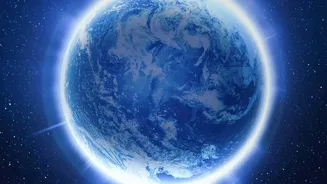
Deep beneath the wind-whipped surface waves lies a massive, slow-moving current system often called the 'global conveyor belt'. This isn't a current you can see or feel; it's a planet-spanning loop driven by fundamental differences in water temperature
and salt content. This process, known as thermohaline circulation, is the heart of the system. In the cold polar regions, particularly the North Atlantic, surface water becomes very cold and salty as sea ice forms, leaving the salt behind. This cold, salty water is denser than the water around it, causing it to sink deep into the ocean. This sinking action is the engine of the conveyor belt, pushing deep water along a journey that can take up to 1,000 years to complete a single circuit.
A Global Climate Regulator
The primary job of this global conveyor belt is to act as a planetary thermostat. It moves an immense volume of water—more than 100 times the flow of the Amazon River—and with it, a tremendous amount of heat. Warm surface waters from the tropics are pulled northward to replace the cold water that sinks at the poles. The famous Gulf Stream is a key part of this surface flow, carrying warm water up the U.S. East Coast and across the Atlantic. This process releases enormous quantities of heat into the atmosphere, which is why Northern Europe enjoys a much milder climate than other regions at the same latitude. By transporting heat from the equator toward the poles, these slow currents help balance the planet's temperature, preventing the tropics from becoming ever hotter and the poles from getting progressively colder.
Delivering Life's Building Blocks
Beyond regulating heat, these currents are essential for life itself. The deep, cold water that travels along the ocean floor is rich in nutrients like nitrates and phosphates. These nutrients are the dissolved remains of marine organisms that have sunk and decomposed over time. While the sunlit surface waters are great for photosynthesis, they quickly become depleted of these essential building blocks. The slow circulation system eventually brings this nutrient-rich deep water back to the surface in a process called 'upwelling'. This often happens along coastlines where winds push surface water away, allowing the deep water to rise and take its place. These upwelling zones are some of the most biologically productive areas on Earth, forming the base of the marine food web by fueling explosive blooms of phytoplankton.
Why This Slow Dance Matters
The health of this slow-moving system has profound implications for everyone. The heat distribution it manages dictates weather patterns, influences the intensity of storms, and maintains regional climates that entire economies depend on. At the same time, the nutrient cycling it facilitates supports a huge portion of global fisheries. Approximately 25% of the world's total marine fish catch comes from just five major upwelling zones, which themselves occupy only 5% of the ocean's area. Scientists are closely monitoring this circulation, as climate change could weaken it. Melting ice sheets add freshwater to the ocean's surface, making it less salty and less dense, which could slow the sinking process that drives the entire belt. A significant slowdown could trigger abrupt and unpredictable shifts in weather patterns and devastate marine ecosystems.