






Understanding Conventional Swing First
To grasp reverse swing, we must first understand its conventional counterpart. When a new cricket ball is used, the fielding team works hard to polish one side, making it smooth and shiny, while the other side naturally becomes rougher. A bowler holds
the ball with the seam angled towards the intended direction of swing. As the ball moves through the air, the air flows faster over the smooth, shiny side and slower over the rough side. According to aerodynamic principles, this pressure difference pushes the ball towards the rough side. So, if a right-arm bowler angles the seam towards the slips, the ball will swing away from a right-handed batsman (an outswinger). This is conventional swing, a familiar sight in the early overs of a match.
When the Old Ball Develops New Tricks
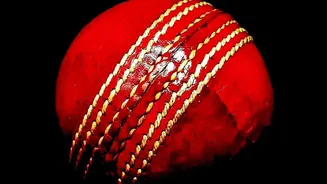
Reverse swing typically comes into play when the ball is old, usually after 35-40 overs. By this point, the ball is scuffed and battered. The key is that the fielding side has meticulously maintained one side, keeping it as smooth and dry as possible, while the other side has become extremely rough and abrasive. The atmospheric conditions also play a crucial role; dry, arid weather and abrasive pitches, much like those found across the Indian subcontinent, accelerate the process. This contrast between a 'maintained' shiny side and a 'naturally' rough side is the essential ingredient for the physics to flip. Unlike conventional swing that relies on a newish ball, reverse swing is a weapon unlocked late in the game.
The Physics of Reversal
Here's where the magic happens. With an old ball, both sides are technically rough. However, the 'shiny' side is still smoother than the heavily degraded rough side. When a bowler delivers the ball at high speed (typically above 135-140 km/h), the airflow behaves differently. On the extremely rough side, the air becomes turbulent almost immediately. On the 'less rough' shiny side, the air stays attached to the surface for a fraction longer before becoming turbulent. This shift means the turbulent layer of air separates from the ball's surface earlier on the rough side. This causes the pressure difference to invert, and the ball is pushed towards the shiny side — the opposite of conventional swing. So, a bowler using the same outswing grip will now see the ball jag back in towards the batsman. This is why it’s called 'reverse' swing; the ball moves in the opposite direction to what the seam angle and conventional physics would suggest.
The Dark Art and Its Masters
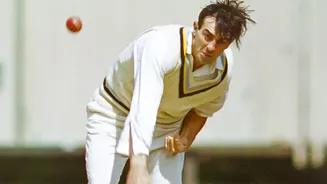
The science provides the 'how', but the execution is pure skill. The pioneers of this art were Pakistani fast bowlers like Sarfraz Nawaz and Imran Khan, who passed the knowledge to the legendary duo of Wasim Akram and Waqar Younis. They turned reverse swing into a match-winning weapon, with Younis’s toe-crushing inswinging yorkers becoming the stuff of legend. For India, Zaheer Khan became a master, particularly showcasing his skills in the 2011 World Cup victory. In the modern era, bowlers like Jasprit Bumrah and Mohammed Shami have carried the torch, using their high pace and control to make the old ball talk. Mastering reverse swing requires immense discipline from the entire team to prepare the ball, and incredible skill from the bowler to maintain a high speed and a locked wrist position to get the late, lethal movement.
The Fine Line of Legality
The pursuit of reverse swing has often been shrouded in controversy. While shining the ball with sweat and polishing it on clothing is perfectly legal, using foreign substances like sugar, lip balm, or deliberately lifting the seam with a fingernail is not. The line between legally 'maintaining' the ball's condition and illegally 'altering' it is incredibly fine. High-profile ball-tampering incidents have often been linked to teams trying to illegally accelerate the degradation of one side of the ball to achieve reverse swing earlier or more pronouncedly. This controversy only adds to the mystique of the skill, a potent weapon that lives on the very edge of the game's laws.