




A Flood of New Species
For centuries, the deep sea was imagined as a barren, lifeless void. We now know it is teeming with biodiversity, much of it still unknown to science. Recent years have seen an explosion in species discovery. Expeditions by organizations like the Schmidt
Ocean Institute are revealing dozens, sometimes hundreds, of potential new species on a single trip. In early 2024, voyages to the Salas y Gómez and Nazca ridges off the coast of Chile revealed over 150 species previously unknown to science. Another expedition to the Indian Ocean discovered 149 new species around volcanic seamounts, including new types of sea cucumbers and parasitic barnacles. Even more remarkably, a major effort in the Pacific's Clarion-Clipperton Zone identified 24 new species of tiny crustaceans called amphipods, including one so different it required the creation of an entirely new evolutionary family. These discoveries range from the bizarre, like the so-called 'flying spaghetti monster' (a rare siphonophore), to the ghostly, like a new species of chimaera, a distant relative of sharks that predates the dinosaurs.
Unlocking Extreme Adaptations
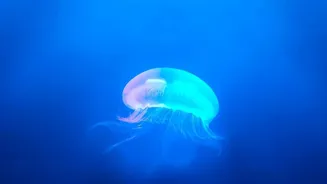
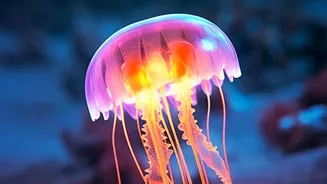
Discovering new creatures is just the first step; understanding how they survive in such a hostile environment is the next frontier. The deep sea is defined by immense pressure, near-freezing temperatures, and total darkness. Recent research into deep-sea comb jellies has revealed how they have adapted their cell membranes with specific types of lipid molecules to withstand the crushing pressure. Without this adaptation, shallow-water jellies would be immobilized, while the deep-sea versions would effectively 'melt' if brought to the surface. Intriguingly, these same lipids are abundant in the human brain, and studying them could offer insights into neurodegenerative diseases. Other creatures, like the newly discovered 'sponge ambusher worm,' have evolved to become ambush predators in an environment where food is scarce. And by attaching cameras to animals like elephant seals, scientists have been able to observe, for the first time, exactly how these predators hunt in the pitch-black depths.
The Deep Ocean's Climate Story
The deep ocean is not just a biological treasure chest; it's a critical component of our planet's climate system. It acts as a massive buffer, absorbing around 90% of the excess heat and over a quarter of the carbon dioxide that humans have pumped into the atmosphere. For a long time, it was assumed that processes in the deep ocean occurred over thousands of years. However, a July 2026 study found that tiny, turbulent swirls of water, some no bigger than a coin, are moving heat and carbon much faster than previously understood. This rapid mixing has implications for everything from the rate of sea-level rise to the health of fisheries. The deep sea is our planet’s largest carbon sink, locking away vast amounts of carbon that would otherwise contribute to climate change. But as the ocean warms and acidifies, its ability to perform this vital service is under threat.
An Ecosystem Under Threat
Even as we are just beginning to understand the deep sea, it is facing profound threats. Climate change is causing warming, acidification, and lower oxygen levels in deep waters. But a more immediate and destructive threat looms: deep-sea mining. Driven by the demand for metals like cobalt and nickel for batteries, companies are looking to excavate mineral deposits from the seafloor. Scientists warn that this could cause irreversible harm. Mining would stir up vast sediment plumes that could smother organisms and travel for hundreds of kilometres, destroying habitats that have taken millennia to form. The noise and light pollution from machinery could also disrupt the behaviour of species like whales and sharks that rely on sound and bioluminescence. Given that many deep-sea species are found nowhere else on Earth, scientists stress that biodiversity loss from mining would be inevitable and permanent.