

Earth: The Ultimate Cosmic Blueprint
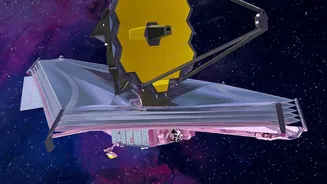
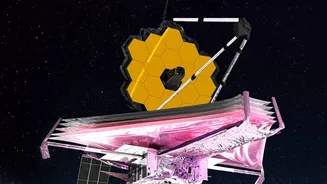
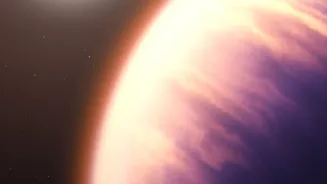
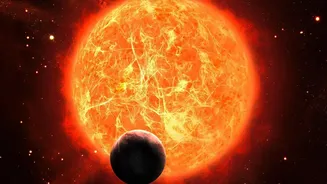
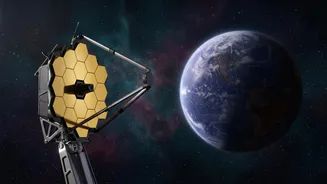
For astronomers, an exoplanet is usually just a shadow and a flicker. When a planet passes in front of its star, it causes a tiny dip in the star's brightness. When it passes behind, its own faint light disappears. This data, collected by telescopes like
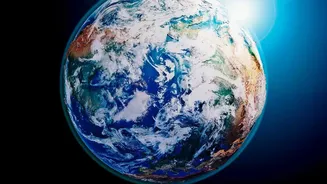
the James Webb Space Telescope (JWST), arrives as graphs and numbers, not as detailed pictures. To turn that data into a portrait of an alien world, scientists need a reference point—a planetary model they understand inside and out. That model is Earth. By treating Earth as if it were a distant exoplanet, researchers can figure out what its chemical signatures would look like from light-years away. This provides a crucial baseline for comparison, helping them interpret the faint signals from newly discovered worlds.
Decoding Alien Atmospheres
One of the most powerful techniques for studying exoplanets is called transmission spectroscopy. When starlight passes through a planet's atmosphere, gases in that atmosphere absorb light at very specific wavelengths. This creates a unique chemical fingerprint, or spectrum, that a telescope like the JWST can read. By simulating what Earth's spectrum would look like to a distant observer, scientists know what to search for. The distinct patterns created by water vapor, carbon dioxide, oxygen, and methane in our own atmosphere become the very signatures they hunt for in others. If an exoplanet’s spectrum shows a dip in the exact place they’d expect to see water on Earth, it’s a strong clue that the distant world might have water, too. This comparative method turns an abstract measurement into a tangible clue about a planet's environment.
The Search for Life's Fingerprints
The ultimate goal for many exoplanet hunters is to find signs of life, known as biosignatures. Here again, Earth is the only guide we have. On our planet, life has fundamentally altered the atmosphere. The large amount of oxygen, for example, is generated almost entirely by living things like plants and algae. Without life constantly replenishing it, oxygen would quickly react with rocks and disappear from the atmosphere. Therefore, detecting oxygen—especially alongside methane, another gas associated with life—is considered a potential sign of a biosphere. Scientists also look for surface biosignatures. On Earth, plants absorb red light for photosynthesis but strongly reflect near-infrared light. This creates a distinct spectral feature called the 'vegetation red edge'. Finding a similar signal from an exoplanet could hint at the presence of widespread photosynthesis.
Beyond Biology: A Geological Guide
Earth doesn't just provide a template for life; it also offers clues about the geological processes that make a planet habitable in the first place. The evolution of our planet, from a hot, anoxic world with different tectonic activity to the oxygen-rich environment we know today, provides a rich library of planetary possibilities. Scientists study Earth’s geological history to understand how planetary atmospheres can change over billions of years. For instance, they can model how volcanic outgassing might create a secondary atmosphere on a rocky world or how the presence of plate tectonics could regulate a planet’s climate over long timescales. This knowledge is vital for distinguishing between a world that is truly habitable and one that might just be showing a 'false positive'—a chemical signature that seems to indicate life but is actually produced by a non-biological geological process.
The Pale Blue Dot in Context
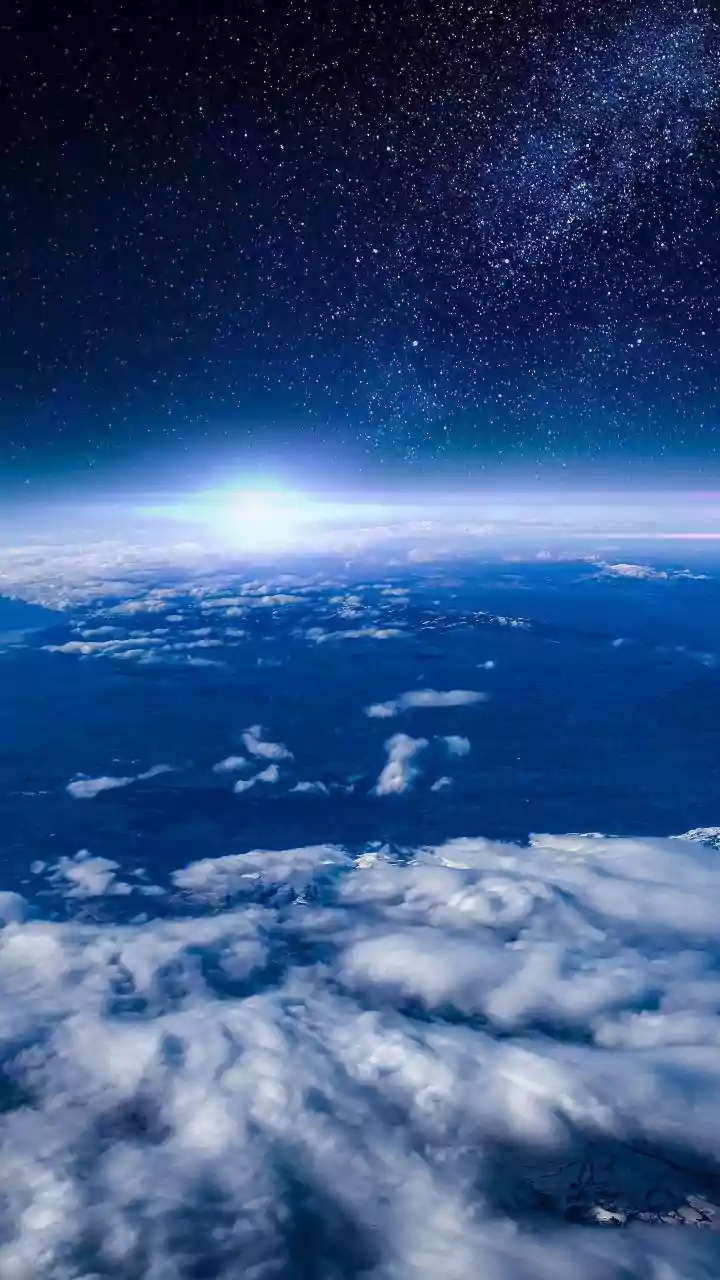
As astronomer Carl Sagan famously noted, from deep space, our world is just a 'pale blue dot'. All its complexity—oceans, continents, clouds, and life—is collapsed into a single point of light. This is precisely the challenge scientists face with exoplanets. By studying Earth at different stages of its history, from its early, methane-heavy atmosphere to its current oxygenated state, scientists can build a more robust 'field guide' to inhabited planets. They've learned that a biosignature like methane might have been more detectable during Earth's early history, while oxygen became prominent much later. This historical perspective is crucial. It reminds researchers that an alien world might not look like modern Earth, but could instead resemble a version of our planet from billions of years ago. Understanding our own world's long, dynamic history is therefore essential for recognizing a habitable—or inhabited—planet, no matter its stage of evolution.