






An Oasis in the Abyss
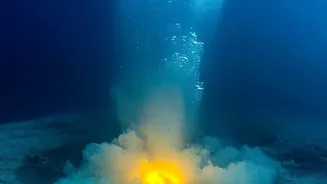
Imagine a world without light, where the pressure is immense and the temperature is near freezing. This is the deep sea, an environment that seems inhospitable to life. Yet, scattered across the ocean floor are bustling ecosystems called cold seeps. These
are areas where fluids rich in hydrocarbons, mainly methane and hydrogen sulfide, percolate up from cracks in the seafloor. Unlike their fiery cousins, hydrothermal vents, which are driven by volcanic heat, cold seeps release fluids at temperatures similar to the surrounding seawater. These seeps are remarkably stable, sometimes lasting for thousands of years, creating long-lived havens for life.
The Chemical Kitchen
On land and in the upper ocean, life is powered by photosynthesis, the process of converting sunlight into energy. But in the dark depths, a different engine drives the ecosystem: chemosynthesis. This remarkable process allows specialised microbes, like bacteria and archaea, to act as the primary producers. Instead of sunlight, they harness the chemical energy locked within the methane and hydrogen sulfide leaking from the seafloor. They convert these inorganic compounds into sugars and other organic molecules, creating food from chemicals in a process that forms the very base of the cold seep food web.
Methane on the Menu
Methane is the star ingredient in this deep-sea banquet. The first organisms to colonise a new seep are typically microbes that form vast, thick mats across the sediment. These bacteria and archaea are experts at metabolising methane and sulfides. By oxidising these chemicals, they generate the energy needed to grow and reproduce, kickstarting the entire ecosystem. In doing so, they also produce calcium carbonate as a byproduct, which over time builds up into rock-like structures, providing a solid foundation for other, larger organisms to settle and thrive.
A Symbiotic Society
The true magic of cold seeps lies in symbiosis—mutually beneficial relationships. Many larger animals have evolved to host these chemosynthetic bacteria within their own bodies. Mussels, for example, grow in dense beds and house bacteria in their gills that consume methane directly from the water, providing nourishment to their host. Similarly, giant tubeworms, which can grow over three meters long, have no mouth or gut. Instead, they contain a special organ packed with bacteria that convert hydrogen sulfide into food. The tubeworm provides the bacteria with a safe home and delivers the necessary chemicals, while the bacteria provide all the nutrition the worm needs to survive. This partnership allows these animals to dominate the seep landscape, creating complex habitats for crabs, snails, fish, and sea cucumbers.
Why These Ecosystems Matter
Cold seeps are more than just a scientific curiosity; they are vital to the health of the deep ocean and have broader implications. They act as a 'benthic filter', where microbes consume vast quantities of methane, a potent greenhouse gas, preventing much of it from reaching the atmosphere. These 'oases of life' also support incredible biodiversity, serving as breeding and nursery grounds for various species. Furthermore, the study of these extremophiles—organisms that thrive in harsh conditions—pushes the boundaries of our understanding of how life can exist, offering clues about the potential for life on other planets and moons in our solar system.