






What Are Air Taxis and eVTOLs?
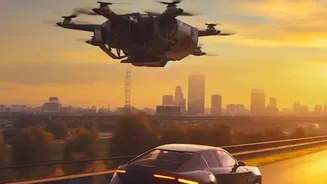
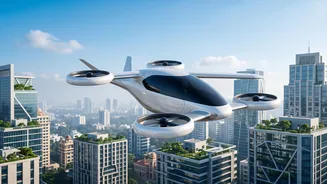
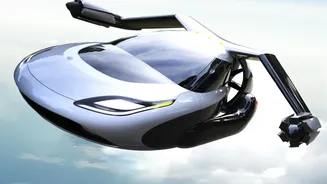
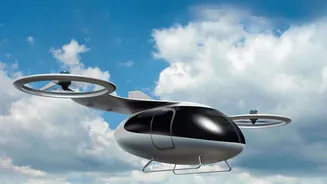
At the heart of this transport revolution is the eVTOL, which stands for electric Vertical Take-Off and Landing aircraft. Think of them as a quiet, eco-friendly crossover between a helicopter and a small plane. They use multiple electric-powered rotors
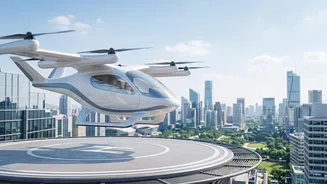
to lift off and land vertically like a helicopter, meaning they don't need a runway. Once airborne, they can transition to flying forward like a conventional aircraft. This design allows them to operate from small, designated areas called vertiports, which can be located on rooftops or in city centres. Being all-electric, they are significantly quieter and have zero operational emissions compared to traditional helicopters, making them ideal for navigating urban environments. The technology combines electric propulsion with lightweight composite materials and advanced flight control systems to create a new form of advanced air mobility (AAM).
Who Are the Key Players in India?
Several companies are vying to launch India's first air taxi services. One of the most prominent partnerships is between InterGlobe Enterprises, the parent company of IndiGo, and US-based Archer Aviation. They plan to launch a service as early as 2026, starting with routes in Delhi, Mumbai, and Bengaluru, and have a deal for up to 200 of Archer's 'Midnight' aircraft. Another major player is Blade India, a joint venture that already operates helicopter services in several states and plans to transition to an eVTOL fleet. On the domestic manufacturing front, Chennai-based startup The ePlane Company, incubated at IIT Madras, is a significant contender. The company has unveiled its full-scale e200X prototype and has received Design Organisation Approval from the Directorate General of Civil Aviation (DGCA), a crucial regulatory step. Other homegrown startups like Sarla Aviation are also developing their own eVTOLs, signalling a growing domestic ecosystem.
What Would a Flight Look Like?
The promise of air taxis is a dramatic reduction in travel time. For instance, a journey from Connaught Place in Delhi to Gurugram, which can take 90 minutes or more by car, could be completed in just seven minutes. The initial aircraft models, like Archer's Midnight, are designed to carry four passengers and a pilot. Passengers would book their seats through an app, similar to current ride-hailing services. The estimated cost for the Delhi-Gurugram trip is projected to be between ₹2,000 and ₹3,000, making it a premium service comparable to high-end cabs but significantly faster. The first planned routes will likely connect city centres with airports and major business hubs, such as Bengaluru Airport to Whitefield or Bandra to Colaba in Mumbai.
The Regulatory Roadmap
For air taxis to become operational, a clear regulatory framework is essential. India's aviation watchdog, the DGCA, is actively paving the way. In 2024, it released crucial guidelines for the airworthiness certification of eVTOLs and specifications for vertiports. These rules cover everything from aircraft design and structural strength to flight performance and crew interface, ensuring safety and reliability. The DGCA's proactive stance is aimed at having the necessary regulations in place for a potential 2026 launch. The Ministry of Civil Aviation (MoCA) is responsible for the overall policy and route approvals, while the Airports Authority of India (AAI) is handling vertiport design standards and airspace integration. This multi-agency effort is designed to create a safe and efficient ecosystem for advanced air mobility in the country.
Challenges and the Path Forward
While the future looks promising, several hurdles remain. Certifying these new types of aircraft is a complex and lengthy process globally. Indian startup ePlane, for example, is targeting certified flight testing in 2027 and plans to launch an air ambulance service first before moving to passenger transport. Building the necessary infrastructure, including a network of vertiports across dense cities, requires significant investment and urban planning. Public acceptance, affordability, and ensuring seamless integration with existing air traffic are other critical factors. However, the push from both private players and government regulators shows strong momentum. The goal is not just to offer a new mode of transport for a select few, but to eventually create a scalable solution that can help alleviate the chronic traffic congestion plaguing India's major cities.