


A Shift From Brute Force to Finesse
For decades, satellites have relied on chemical propulsion, which works much like a traditional rocket. It provides powerful, short bursts of thrust by burning liquid fuel to move a satellite into position or adjust its orbit. Think of it as a drag racer:
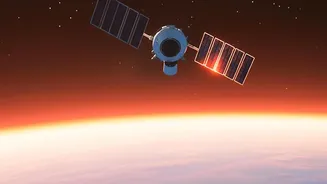
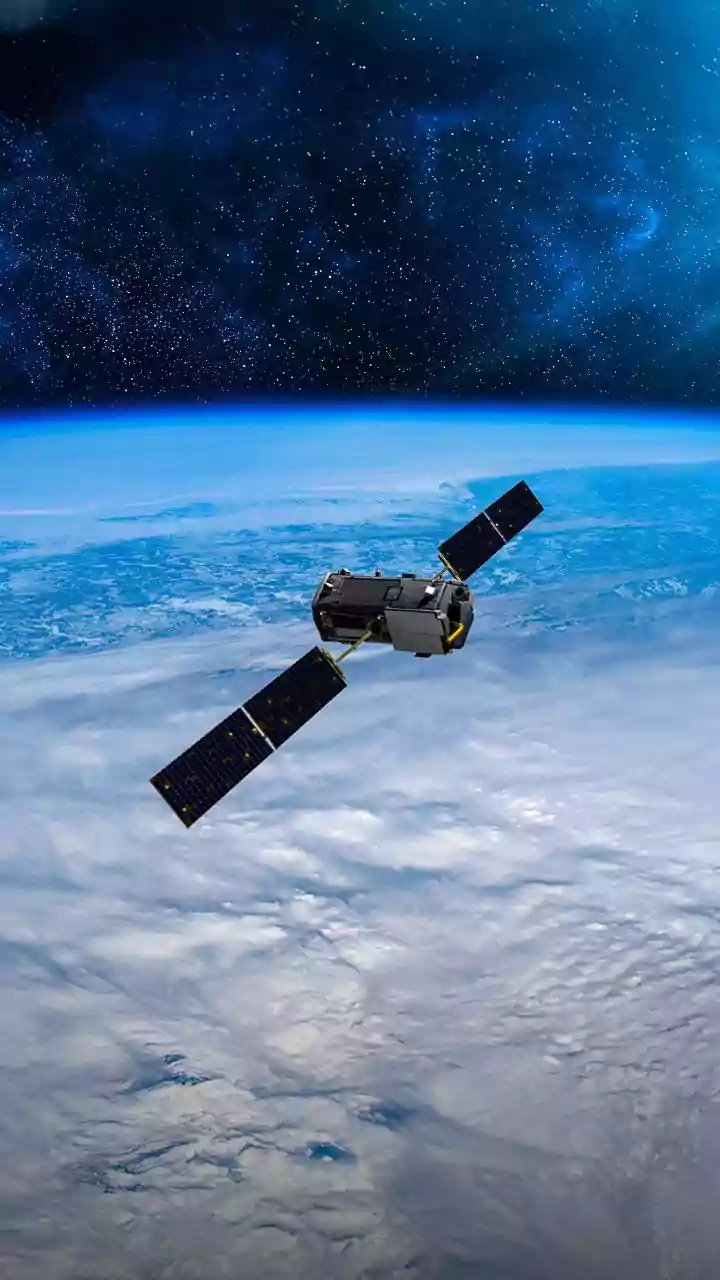
immense power, but it burns through its fuel quickly. Electric propulsion, on the other hand, is the marathon runner of space. Instead of explosive chemical reactions, it uses electrical power, often generated by the satellite's solar panels, to create a gentle but continuous push. While the thrust is much lower—akin to the force of a piece of paper resting on your hand—it can be sustained for months or even years, offering incredible efficiency.
How This Gentle Push Works
The technology at the heart of this innovation is often a Hall thruster or an ion thruster. These devices take an inert gas, like xenon, and use electricity to strip electrons from its atoms, creating positively charged particles called ions. An electric or magnetic field then accelerates these ions at extremely high speeds and shoots them out of the thruster. This stream of ions, though tiny, creates a reaction force that pushes the satellite in the opposite direction. It’s a highly controlled and efficient process that provides the precise maneuvering needed for station-keeping—the small adjustments a satellite must constantly make to maintain its correct orbit against gravitational pulls and other disturbances.
The Fuel Efficiency Game-Changer
The most significant advantage of electric propulsion is its remarkable fuel efficiency. The specific impulse, a measure of how efficiently a rocket uses propellant, is at least six times greater than conventional chemical systems. A traditional 4-tonne communication satellite might need to carry around 2,000 kilograms of chemical propellant. With an electric propulsion system, that requirement can drop to as little as 200 kilograms of xenon gas. This massive weight reduction has a cascading effect. Lighter satellites are significantly cheaper to launch into orbit. Alternatively, the weight saved on fuel can be dedicated to carrying more valuable payload, such as extra transponders on a communication satellite, effectively increasing its functional capacity and return on investment.
Longer Life, More Value
A satellite's operational lifespan is often limited by how much fuel it has for station-keeping. Once it runs out of fuel to correct its orbit, it becomes space debris. By being vastly more fuel-efficient, electric propulsion directly extends a satellite's useful life. A mission designed to last 15 years with chemical thrusters could potentially operate for 20 years or more with an electric system. This longevity means a satellite can provide services—like telecommunications, broadcasting, or navigation—for a longer period, delivering more value and delaying the need for costly replacement missions. ISRO has already been developing and testing these systems, with successful long-duration tests of its Stationary Plasma Thruster, a key component for future missions.
What This Means for India
This technological leap is not just an engineering feat; it has tangible benefits for the nation. For ISRO, mastering indigenous electric propulsion, which it is set to demonstrate on its Technology Demonstration Satellite (TDS-01), marks a major step towards self-reliance and reduces dependence on foreign technology. For the public, it means more robust and reliable services. Extended satellite lifespans can lead to more consistent communication networks, improved accuracy for our own NavIC navigation system, better weather forecasting, and enhanced capabilities for national security and disaster management. By lowering launch costs and increasing satellite capacity, this innovation strengthens India's position in the global commercial satellite market, making our space program more economically competitive and sustainable.